

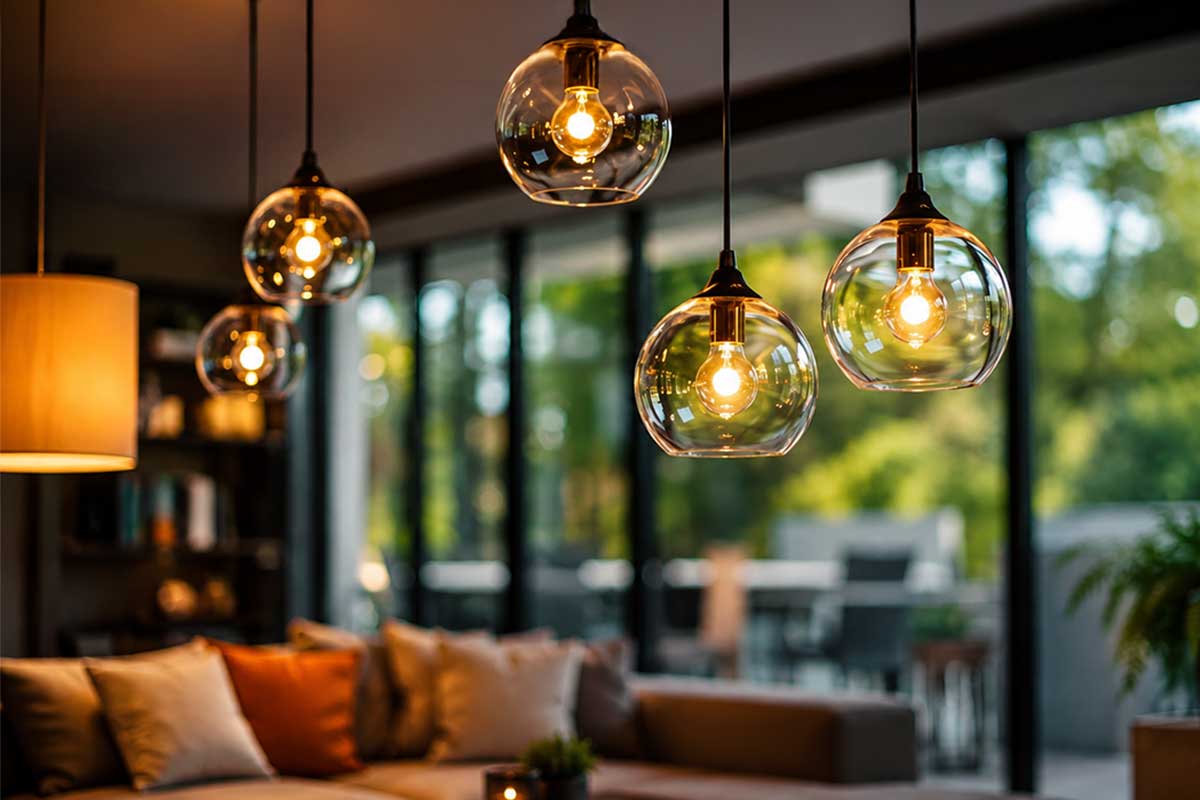
Choosing the right LED bulb isn’t just about whether you select an E27 or GU10 base. Luminous flux, light color, color rendering (CRI), dimmability, and beam angle also play important roles. A properly selected LED bulb will affect not only the appearance of your interior but also your everyday comfort when using it. If you’re interested in how LED technology actually works, be sure to read our article “How LED Technology Works.”
There are hundreds of different LED bulbs on the market today, varying in specifications and quality. It’s no wonder, then, that many people base their choices solely on wattage or price. In reality, however, other technical specifications are far more important, as they have a significant impact on the final lighting effect.
In this guide, we’ll walk you through, step by step, how to choose an LED bulb based on base type, light output, color temperature, CRI, dimmability, and other parameters. This will help you easily select the bulb that best suits your light fixture and intended use.

Article Content
How to Choose an LED Bulb
Choosing an LED bulb today is no longer just a matter of selecting the right thread. Modern LED lighting offers a wide range of bases, light outputs, light colors, CRI values, dimming options, and smart control features. At first glance, therefore, navigating these parameters can be complicated.
The good news is that making the right choice isn’t complicated at all. Just focus on a few key parameters and proceed step by step. This will help you choose an LED bulb that provides enough light, accurately renders colors, and creates a pleasant atmosphere tailored to the purpose of the room.
If you’re just getting started with LED lighting, you may also find our guide, “How to Read Lighting Fixture Specifications,” helpful, where we explain in detail all the important information found on packaging and in technical data sheets.
When shopping, many people still base their decisions primarily on wattage or price. In reality, however, parameters such as luminous flux (lumens), color temperature (CCT), color rendering index (CRI), and the correct socket type are much more important. It is the combination of these factors that determines the overall effect of the light.
You can choose an LED bulb in 5 easy steps
- Check the socket type—for example, E27, E14, GU10, or G9.
- Select the required light output based on the size of the room and the purpose of the lighting.
- Choose the right light color depending on whether you want relaxing or task lighting.
- Check the CRI value if natural color rendering is important to you.
- Decide whether you want to dim the lights or use smart lighting.
In the following sections of this article, we’ll explain all these parameters in detail and show you how to choose an LED bulb for your living room, kitchen, bedroom, bathroom, and other rooms.
If you're unsure, always start by checking the socket type and the number of lumens. These two factors have the greatest impact on making the right choice. The other parameters will then help you fine-tune the quality and comfort of the lighting.
The 5 Most Important Specifications of LED Bulbs
Before you start comparing individual LED bulbs, try answering three simple questions first. Your answers will determine which specifications the bulb should meet.
🏠 Where will the light bulb go?
- Living Room
- Kitchens
- Bedroom
- Bathroom
- Study
- Hallway or utility room
💡 Which lighting fixture?
- Pendant light or chandelier
- Table or floor lamp
- light
- Wall light
- Outdoor light
✨ What do you expect from lighting?
- Bright lighting
- A pleasant atmosphere
- Accurate color rendering
- Dimmable
- The lowest possible energy consumption
You may have just realized that there isn’t a single, one-size-fits-all LED bulb for every situation. You’ll have different requirements for lighting your kitchen countertop, for a bedside lamp, and for the main lighting in your living room.
No matter where you’re shopping for an LED bulb, there are five parameters you should always check. It’s the right combination of these parameters that determines whether the light will be bright enough, easy on the eyes, and suitable for your specific application.
If you remember only one thing, let it be this: choosing the right LED bulb isn’t about watts. What’s more important is the correct base, the number of lumens, the light color, the CRI value, and whether it’s dimmable.
Lighting sockets—it won’t work without the right type
The base determines how an LED bulb connects to lighting. This is the very first thing you should check, because if you choose the wrong base, you simply won’t be able to install the bulb. The base type is usually indicated on the original bulb, on lighting lighting label, or in the manufacturer’s technical documentation.
Compatibility between LED bulbs and light fixtures.
On an old light bulb, on the lighting label, or in the manufacturer's instructions.
E27, E14, GU10, G9, and GX53.
Don't buy a light bulb based solely on its appearance. Two similar light bulbs may have completely different bases.
| Sockets | Most Common Uses |
|---|---|
| E27 | Main lighting, chandeliers, pendant lighting, and floor lighting. |
| E14 | Small chandeliers, table lamps, and wall lighting. |
| GU10 | lighting and recessed lighting. |
| G9 | Decorative and designer lighting. |
| GX53 | Low-profile ceiling and furniture lighting. |

The easiest way to find the right base is to check the markings on the original light bulb. If you don't have it, look for the markings on lighting lighting label or in the manufacturer's documentation.
Lumens – How Much Light Does an LED Bulb Actually Emit?
One of the most common mistakes when choosing an LED bulb is basing the selection on wattage (W). With modern LED bulbs, however, watts do not indicate the amount of light; they only indicate power consumption. The actual brightness is determined by the luminous flux, expressed in lumens (lm).
The higher the number of lumens, the more light the bulb emits. How many lumens you’ll need depends on the size of the room, the type lighting lighting, and the purpose of the lighting. If you’re not sure, we recommend reading our detailed article “What Are Lumens and How Many Do We Need?”
The amount of light emitted by an LED bulb.
On the light bulb packaging or in the manufacturer's technical specifications.
For general lighting, it's better to choose based on lumens rather than watts.
Two LED bulbs with the same wattage can have significantly different light output.
| Luminous flux | Approximate replacement for a traditional incandescent bulb | Typical uses |
|---|---|---|
| 250–470 lm | 25–40 W | Table lamps, decorative lighting. |
| 700–850 lm | 60 W | The most common types of home lighting. |
| 1,050–1,520 lm | 75–100 W | Large rooms, kitchens, or workspaces. |
| 2,000 lm and above | 150 W | High-intensity lighting for large spaces or commercial buildings. |
If you're choosing an LED bulb instead of a traditional one, don't look at the watts—look at the lumens. Luminous flux is the best indicator of whether the new bulb will shine as brightly as or brighter than the original.
Light Color (CCT) – creates the right atmosphere
The same LED bulb can emit a warm, pleasant light reminiscent of a sunset or, conversely, a cool white light suitable for work. This is determined by the color temperature (CCT), which is measured in kelvins (K).
The right light color significantly affects a room’s atmosphere, sense of comfort, and ability to concentrate. That’s why it’s just as important as the light output itself. If you’re interested in learning more about this topic, be sure to read our article “What Is CCT and How to Choose the Right Light Color.”
White light tones—ranging from very warm to cool white.
On the packaging or in the technical specifications of the light bulb, such as 2700 K, 3000 K, 4000 K, or 6500 K.
For living spaces, 2700–3000 K is usually the most pleasant, while 4000 K is often preferred for home offices and kitchens.
Light that is too cold in the living room or bedroom can make the space feel uninviting and strain the eyes.
| Light Color | Temperature | Most Common Uses |
|---|---|---|
| Very warm white | 2200–2700 K | Bedrooms, restaurants, relaxation areas. |
| Warm white | 2700–3000 K | Living room, dining room, most homes. |
| Neutral White | 4000 K | Kitchen, bathroom, home office, or office. |
| Cool White | 5000–6500 K | Workshops, warehouses, technical areas, or specialized workstations. |

If you’re designing an entire interior, try to use a similar light color in interconnected rooms. The transition from warm light (2700 K) to cool light (6500 K) tends to look unnatural and can be distracting.
CRI – How Accurately an LED Bulb Reproduces Colors
You may have noticed that colors look natural under some lights, while under others they appear faded or inaccurate. This is determined by the CRI (Color Rendering Index).
The higher the CRI value, the more accurately the light renders the true colors of objects, furniture, clothing, or human skin. If you want to understand why this parameter is so important, we recommend reading the article “What Is CRI and How Does It Affect the Appearance of Colors in Interiors.”
How natural the colors will look under the light.
On the packaging or in the technical specifications, such as CRI 80, CRI 90, or Ra ≥90.
For most households, we recommend choosing LED bulbs with a CRI of at least 90.
Inexpensive LED bulbs with a CRI of around 80 can distort the shades of wood, fabrics, food, and even the color of human skin.
| CRI | Color rendering quality | Recommended Use |
|---|---|---|
| CRI 80 | Basic quality | Utility rooms, basements, or garages. |
| CRI 90 | Very accurate color reproduction | Living rooms, kitchens, bedrooms, and most homes. |
| CRI 95+ | Superior color rendering | Galleries, designer interiors, photography studios, and luxury projects. |

The difference between CRI 80 and CRI 90 may not be immediately apparent in a store. At home, however, you’ll notice that furniture, decorations, food, and even your skin look significantly more natural under higher-quality lighting. If you’re choosing lighting for living spaces, a higher CRI will pay off in the long run.
Dimmable and smart LED bulbs
Not all LED bulbs offer the same features. If you want to adjust the brightness or control the lights using your smartphone or voice assistants, you’ll need to choose the right type of LED bulb. While these features aren’t essential for every household, they can significantly enhance the convenience of everyday use.
When making your selection, be sure to check that the bulb is labeled “Dimmable” if you plan to use it with a dimmer. If you’re setting up a smart home, choose models compatible with a specific system, such as Philips Hue, WiZ, Tuya, or Apple HomeKit.
We discuss the selection of suitable dimmers, the compatibility of LED bulbs, and the various types of control systems in detail in the article “Dimmable Lighting: Types, How It Works, and Proper Installation.”
Options for dimming or smart lighting control.
On the packaging or in the technical specifications, such as "Dimmable," "Smart," "Zigbee," "Wi-Fi," or "Bluetooth."
If you use a dimmer, always choose a dimmable LED bulb that is compatible with your type of dimmer.
Standard LED bulbs cannot be safely dimmed. Using them with an incompatible dimmer may cause flickering or shorten their lifespan.
| Features | When is it worth it? | Advantage |
|---|---|---|
| Dimmable LED bulb | Living room, bedroom, or dining room. | Ability to adjust the light intensity according to current needs. |
| Smart LED Bulb | Modern homes and smart systems. | Control via smartphone, voice, timers, or automation. |
| Standard LED bulb | Most households without special requirements. | A simple solution with a lower purchase price. |
If you plan to use a dimmer or smart lighting in the future, it’s worth keeping that in mind when purchasing an LED bulb. This way, you’ll avoid having to replace it later with a compatible model.
What other features of LED bulbs are worth paying attention to?
Luminous flux, light color, CRI, and the correct base are among the most important parameters. However, there are several other characteristics that can significantly affect user comfort or compatibility with the light fixture.
📐 Beam angle
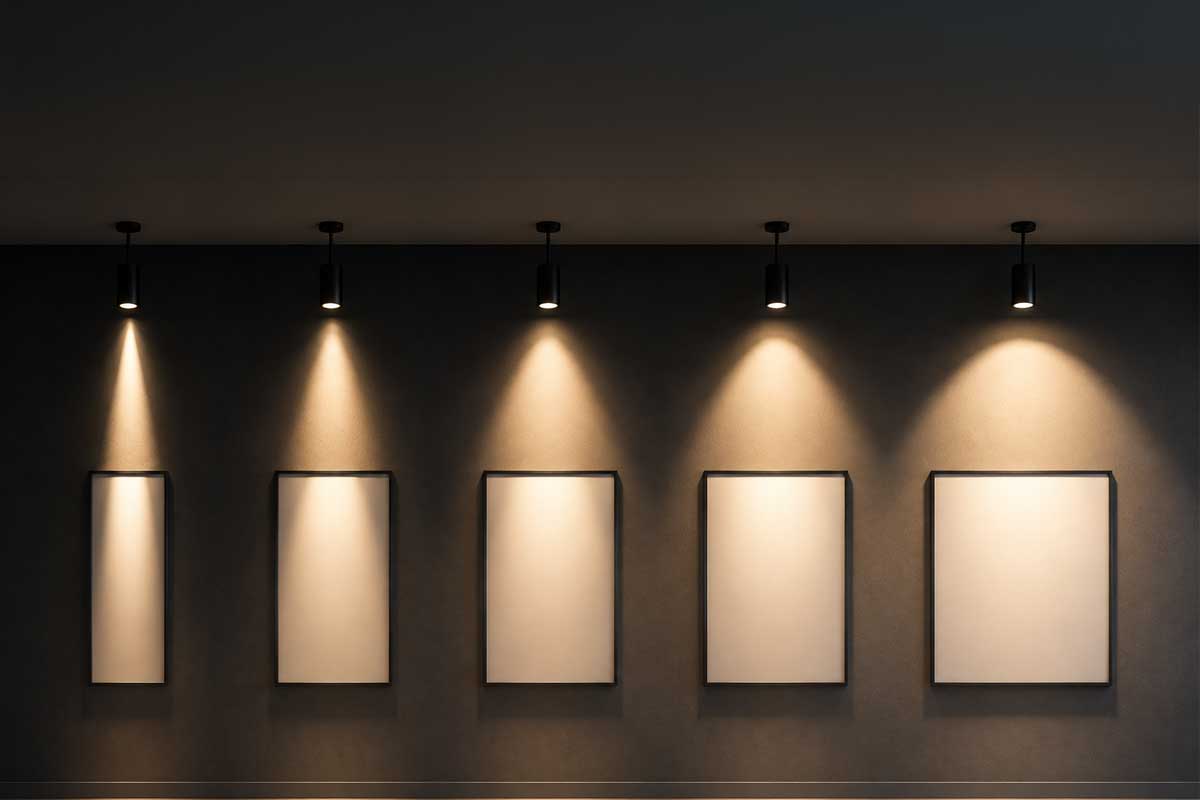
A wide beam angle (180–360°) is suitable for general lighting. A narrower beam angle (24–60°) is primarily used for spotlights or to highlight specific objects.

⚡ Energy efficiency class
The new energy labels use a scale from A to G. Even an E or F rating is not uncommon for LED bulbs today, yet they can still be very energy-efficient.
⏳ Lifespan
High-quality LED bulbs typically last between 15,000 and 30,000 hours of operation. It’s therefore worth choosing reputable manufacturers that offer a longer warranty.
If you’re choosing an LED bulb for a typical household, you don’t need to worry about every technical detail. In most cases, it’s enough to choose the right base, light output, light color, and good color rendering (CRI). Other parameters are usually important mainly for specific applications.
How to Choose an LED Bulb for Each Room
Every room has different lighting requirements. While most people appreciate a pleasant, warm light in the living room, a neutral white light with higher luminous flux is often more practical in the kitchen or home office. The following overview will help you choose the right LED bulb for your specific space.
If, in addition to choosing LED bulbs, you’re also planning the lighting design for individual rooms, we recommend our specialized guides for the living room, kitchen, or bedroom.
🛋️ Living Room
- Lumens: 700–1,200 lm
- Light color: < 2700–3000 K
- CRI: at least 90
- Recommendation: a dimmable LED bulb to create a cozy atmosphere.
🍳 Kitchen
- Lumens: 900–1,500 lm
- Light color: < 3000–4000 K
- CRI: at least 90
- Recommendation: High-quality color rendering makes cooking and food preparation easier.
🛏️ Bedroom
- Lumens: 400–800 lm
- Light color: < 2700 K
- CRI: at least 90
- Recommendation: Warm light promotes relaxation before bedtime.
🚿 Bathroom
- Lumens: 800–1,200 lm
- Light color: < 3000–4000 K
- CRI: 90+
- Recommendation: You'll appreciate the high CRI when applying makeup or shaving.
💼 Home Office
- Lumens: 1,000–1,500 lm
- Light color: < 4000 K
- CRI: at least 90
- Recommendation: Neutral white promotes concentration and reduces eye strain.
🚪 Hallway and Staircase
- Lumens: 500–800 lm
- Light color: < 3000 K
- CRI: 80–90
- Recommendation: Even lighting without glare is ideal.
If you’re furnishing an entire interior, try to maintain a similar light color in all adjoining rooms. This will make your home feel more natural, and the light between the different spaces won’t be distracting.
Common Mistakes When Choosing LED Bulbs
Most dissatisfaction with new LED bulbs isn’t caused by the technology itself, but by poor selection. People often choose the wrong light output or color temperature, or overlook important technical specifications. Yet these mistakes are easy to avoid. You can find more common mistakes in lighting design in the article “The Most Common Mistakes in Interior Lighting (and How to Avoid Them).”
Many people still compare LED bulbs based on wattage. In reality, however, watts only indicate electricity consumption. The brightness of the bulb is determined by its luminous flux, measured in lumens.
Cool white light can be great for a home office, but it often feels uncomfortable in a living room or bedroom. Conversely, light that’s too warm may not be ideal in places where you need to see clearly.
Cheaper LED bulbs may have a lower color rendering index. This often results in less natural-looking shades of furniture, food, or human skin.
Even if an LED bulb meets all the required specifications, it won't work unless it matches the base type of your lighting.
Not all LED bulbs are dimmable. Using a standard bulb with a dimmer may cause flickering or malfunction.
Conclusion
Choosing the right LED bulb isn’t difficult if you know which specifications to focus on. The factors that most influence your overall satisfaction are the correct light output (lumens), light color (CCT), color rendering index (CRI), and the right base. In some cases, it’s also worth considering dimmability, beam angle, or the bulb’s lifespan.
When shopping, don’t base your decision solely on price or wattage. It’s much more important to choose an LED bulb that’s suitable for the specific light fixture and the room where you’ll be using it. The right combination of light output, light color, and high-quality color rendering will significantly impact not only the appearance of your interior but also your everyday comfort while working and relaxing.
If you’re not sure which specifications to choose, use the recommendations in this article or read our detailed guides on lumens, light color (CCT), CRI, or the differences between integrated LED modules and replaceable LED bulbs. This will ensure that you choose lighting that will serve you reliably for many years.
Frequently Asked Questions (FAQ)
How to Choose the Right LED Bulb?
When choosing an LED bulb, we recommend paying particular attention to the base type, light output in lumens, light color (CCT), CRI value, and, if applicable, dimmability. These parameters have the greatest impact on the resulting lighting quality and your comfort.
How many lumens should an LED bulb have?
It depends on the intended use. For general household lighting, LED bulbs with a luminous flux of approximately 700 to 1,000 lumens are most commonly used. For larger rooms or workspaces, a higher light output may be more suitable.
What color of light is best for the home?
Warm white (2700–3000 K) is most often recommended for living rooms and bedrooms, while neutral white around 4000 K is usually more suitable for kitchens, bathrooms, or home offices.
What does CRI mean for an LED bulb?
CRI (Color Rendering Index) indicates how accurately light renders true colors. For most households, we recommend LED bulbs with a CRI of 90 or higher, which provide more natural color rendering.
How do I know which LED bulb base is the right one?
You can find the socket type on the original light bulb, on the lighting label, or in its technical documentation. The most common types are E27, E14, GU10, and G9.
Can I replace a traditional incandescent bulb with an LED bulb?
Yes. In most cases, all you need to do is choose an LED bulb with the same base and the appropriate light output. No modifications lighting are necessary.
Are all LED bulbs dimmable?
No. If you want to use an LED bulb with a dimmer, it must be explicitly labeled as “Dimmable.” Standard non-dimmable models will not work properly with a dimmer.
How long does a high-quality LED bulb last?
Modern, high-quality LED bulbs typically have a lifespan of approximately 15,000 to 30,000 hours of operation. The actual lifespan depends on the manufacturer’s quality and how the bulbs are used.
Is it worth buying cheap LED bulbs?
Not always. Cheaper models may have lower light output, poorer color rendering, a shorter lifespan, or lower-quality electronics. When it comes to lighting you use every day, it’s usually worth investing in higher-quality products.
What should you pay the most attention to when choosing an LED bulb?
The most common mistakes are choosing based on watts instead of lumens, selecting the wrong light color, or using an incompatible socket. If you pay attention to light output, CCT, CRI, socket type, and dimmability (if applicable), you’ll usually make the right choice.
Choose the right LED bulb for your light
Our selection includes LED bulbs with various bases, light outputs, and light colors. Choose the model that best suits your light fixture and the desired atmosphere.

Share:
The most common mistakes in interior lighting (and how to avoid them)
How to Choose the Right Beam Angle for LED Lighting