

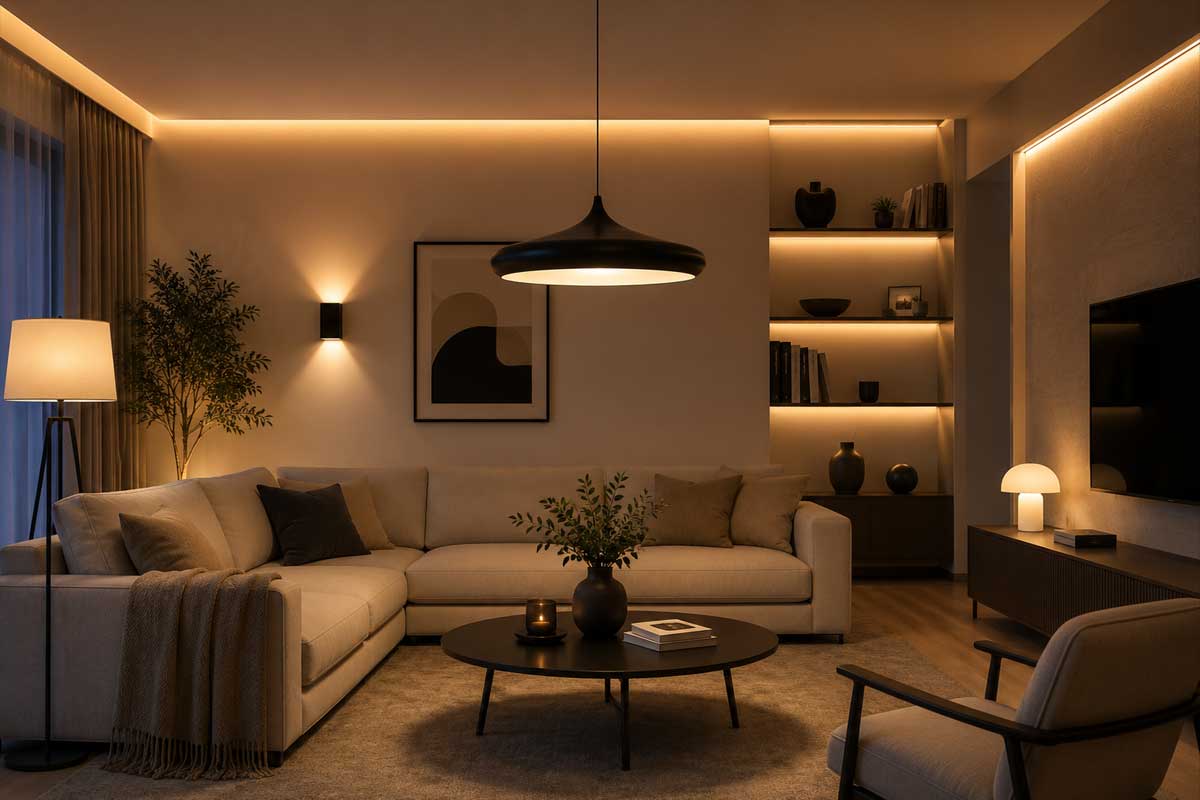
At first glance, the technical specifications of lighting fixtures may seem complicated. On the product pages, you’ll find abbreviations such as CRI, CCT, IP44, 1800 lm, or 18 W, but without an explanation, it’s hard to know which details are truly important when making a selection.
In fact, each parameter describes a different feature lighting—from the amount of light and its color to moisture resistance or dimmability. If you know what each value means, you’ll be able to choose lighting that not only looks good but is also functional and pleasant for everyday use.
In this guide, we’ll explain all the most important technical specifications, show you which ones have the greatest impact on lighting quality, and advise you on what to look for when choosing lighting for different types of rooms.
Article Content
Key Technical Specifications
On the product pages for lighting fixtures, you’ll find a range of technical specifications. Some affect the quality of light, while others relate to energy consumption or suitability for use in various spaces. If you understand what each parameter means, choosing the right lighting will be much easier for you.
The following overview presents the most important technical specifications you’ll most often encounter when selecting lighting.
| Parameter | What sets it apart | Why is it important? |
|---|---|---|
| Lumens (lm) | Amount of light. | They determine how well a space will be lit. |
| Color temperature (K) | Light color. | It influences the atmosphere and comfort. |
| CRI | Accurate color reproduction. | The colors will look more natural. |
| UGR | Glare level. | An important factor for eye comfort. |
| IP rating | Water- and dust-resistant. | It provides guidance on where light can be safely installed. |
| Power (W) | Electricity consumption. | It helps you compare energy efficiency. |
| Beam angle | Beam angle. | It affects the distribution of light. |
| Dimming | Light intensity control. | It enhances user comfort. |
| LED Lifespan | Estimated duration of operation. | It gives you an idea of how long light will last. |
If you're not sure which specifications to focus on first, we recommend paying particular attention to lumens, color temperature, and CRI. These three values have the greatest impact on the overall quality of the lighting.
Explanation of all important parameters
Technical specifications determine how light will illuminate a space, how accurately it will render colors, how durable it will be, and what control options it will offer. To make it as easy as possible to navigate, we've divided the products into three categories.
Light Quality
These factors have the greatest impact on the final look of an interior.
Lumens (lm)
They indicate the actual amount of light that light produces. The higher the number of lumens, the brighter the light will be.
→ Read the full guide to lumensColor temperature (K)
It determines whether the light will be warm, neutral, or cool. It affects both the atmosphere and comfort during use.
→ Read the full guide on light temperatureCRI
It indicates how naturally light renders colors. For living spaces, we recommend a CRI of 90 or higher.
→ Read the full guide on CRISafety and Comfort
This includes parameters that determine lighting suitability for a specific environment.
UGR
It indicates the degree of glare. A lower value means more comfortable light.
→ Read the full guide on UGRIP rating
Indicates resistance to dust and water. Essential for bathrooms and outdoor use.
→ Read the full guide on IP ratingsDimming
It allows you to adjust the light intensity. Compatibility with a dimmer is important.
→ Read the complete guide to dimmingTechnical Specifications
Additional specifications help you compare individual lighting.
Power (W)
Indicates power consumption. Does not specify the amount of light.
Beam angle
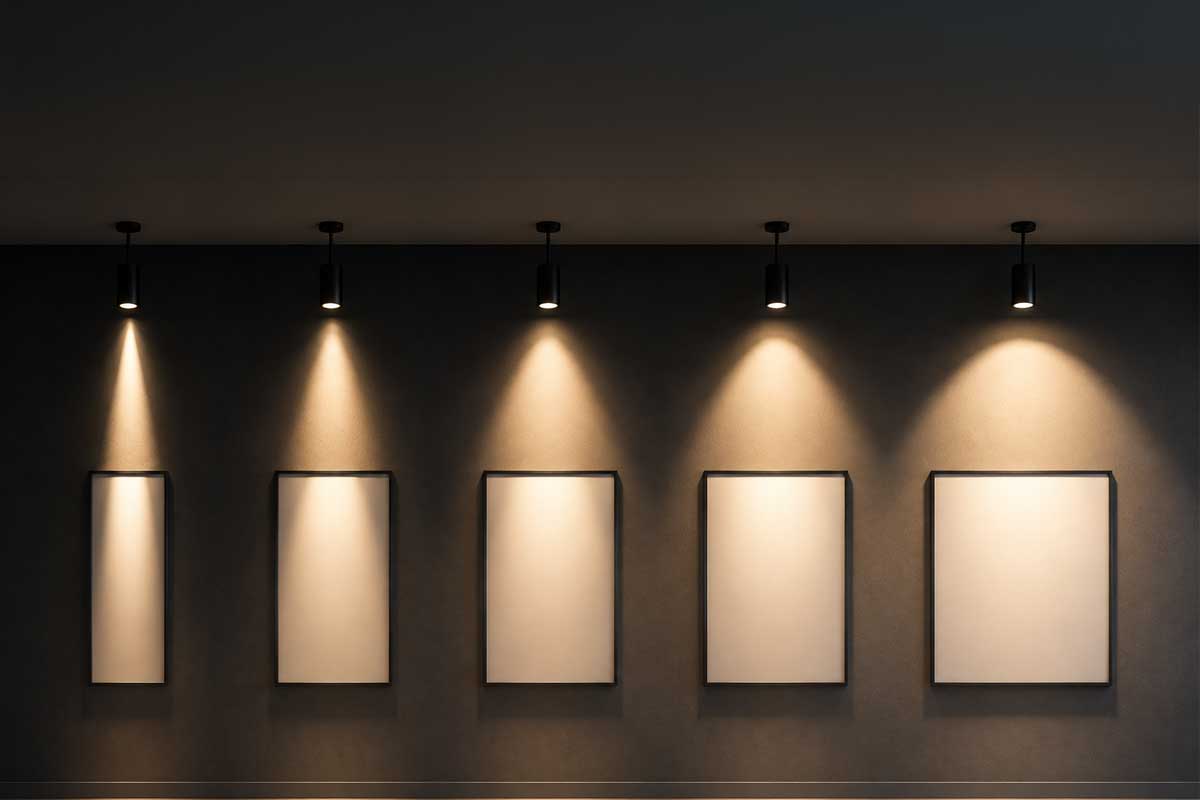
Determines how widely the light will be dispersed.
→ Read the full guide on beam angleLED Lifespan
High-quality LEDs typically last 30,000–50,000 hours.
How to Choose lighting
When choosing lighting, you don’t need to know all the technical specifications by heart. Just follow a few simple steps. This will help you select light that not only complements the look of your interior but, above all, suits its purpose, size, and intended use.
Determine how much light the space needs
First, determine the purpose of the room. A kitchen work area requires a different light output than a living room or bedroom. When comparing light fixtures, pay particular attention to the light output in lumens (lm), which determines the actual amount of light emitted.
Choose the right light temperature
Color temperature affects both the atmosphere and comfort of use. For most living spaces, we recommend 2700–3000 K, while neutral white is usually more suitable for home offices, offices, or kitchens, around 4000 K.
Focus on the quality of light
Be sure to check the CRI value, which determines color rendering accuracy. For homes, we recommend lighting with a CRI of 90 or higher, which will make the colors of your furniture, decor, and skin appear natural.
Check whether lighting is suitable for a given space
Finally, check whether light meets the requirements of the specific environment. In damp areas, an appropriate IP rating is important; if you plan to use a dimmer, compatibility with the dimmer or smart home system is essential. Only then should you choose the design, material, and color.
If you follow this order—lumens → color temperature → CRI → IP rating and dimmability—you’ll significantly reduce the risk of choosing light that looks good but doesn’t meet the requirements of the space in question.
Common Mistakes When Choosing lighting
Even light high-quality light may not meet your expectations if you overlook important technical specifications when making your selection. These specifications determine how the lighting will perform in everyday use, how pleasant it will be, and whether it will be suitable for a specific space. Below, you’ll find the most common mistakes we encounter in lighting design.
Do you base your choice solely on wattage (W)?
One of the most common mistakes is comparing light fixtures based on wattage. This made sense for traditional incandescent bulbs, but with modern LED technology, wattage no longer indicates light intensity. Watts only determine electricity consumption, while actual light output is measured in lumens. Therefore, two lighting with the same power consumption can produce significantly different levels of light.
When comparing light fixtures, pay close attention to the number of lumens. This will help you easily determine how much light light will actually provide.
You may underestimate the color temperature
The color of light significantly affects the atmosphere of an entire room. Light that is too cool can make a living room feel uninviting, while light that is too warm may not be suitable for work or cooking. Choosing the right color temperature enhances both comfort and the overall appearance of the interior.
For most living spaces, we recommend a color temperature of 2700–3000 K. For offices or workspaces, a neutral white around 4000 K is usually more suitable.
Are you ignoring the CRI value?
When choosing lighting, many people focus only on light output or design, but overlook the CRI (Color Rendering Index). This index determines how accurately the light renders colors. A low CRI makes furniture, wood, fabrics, food, and skin tones appear unnatural and less vibrant. The difference is particularly noticeable in living rooms, kitchens, and bathrooms.
For homes, we recommend choosing lighting with a CRI of 90 or higher. Colors will appear more natural, and the entire interior will have a higher-quality look.
You'll forget to check the IP rating
A higher IP rating does not automatically mean light better light. Every environment requires a different level of protection against dust and moisture. While IP20 is usually sufficient for a living room, in a bathroom or on an exterior patio, it is necessary to choose light with an appropriate IP rating to ensure safety and a long service life.
Before making a purchase, always check the recommended IP rating based on the installation location. This will help you avoid unnecessary problems and the potential need to replace lighting unsuitable lighting.
You cannot verify compatibility with a dimmer
The label “dimmable” does not necessarily mean that light will work with every dimmer. Modern LED lighting supports various control methods, such as TRIAC, DALI, Casambi, or other smart home systems. An incorrect combination may cause flickering, a limited dimming range, or complete failure of the dimming function.
Before making a purchase, always check which dimming methods light supports and whether it is compatible with your dimmer or smart home system.
Do you rely solely on a single central light
light single ceiling light usually cannot provide even and pleasant lighting for the entire room. Dark corners and sharp shadows form, and the space feels flat. Modern lighting designs therefore combine several layers of light, which together create a functional and aesthetically pleasing interior.
Combine general lighting with wall sconces, table lamps, or pendant lights, and perhaps even indirect LED lighting. The room will feel more natural and cozy, while also being better lit for various activities.
The right lighting isn't just a matter of design
light beautiful light alone does not guarantee high-quality lighting. The overall effect of a space during everyday use depends primarily on correctly selected technical specifications. If you consider luminous flux, color temperature, CRI, IP rating, and dimming options when making your selection, you’ll end up with lighting that is not only aesthetically pleasing but also functional, comfortable, and built to last for many years.
Key takeaways from the article
You don’t need to know every technical detail. If you focus on a few key factors when choosing lighting, you’ll significantly increase your chances of selecting lighting that’s high-quality, pleasant to use, and truly suited to your space.
Don't just look at the wattage. Actual light output is always expressed in lumens (lm).
For most living spaces, warm white (2700–3000 K) is ideal, while neutral white (around 4000 K) is suitable for workspaces.
For homes, we recommend choosing lighting with a CRI of at least 90, which will make colors appear more true to life.
A higher IP rating does not automatically mean light better light. It is important that it be suitable for the environment in which the lighting will be used.
When making your selection, consider not only the design but also the light output, color temperature, CRI, IP rating, and any dimming options. It is the right combination of these factors that determines how the lighting will perform on a daily basis.
Frequently Asked Questions (FAQ)
Which is more important—watts or lumens?
Lumens (lm) are more important for assessing light output. They indicate the actual amount of light light light produces. Watts (W) indicate only power consumption, not light intensity.
What is the best color temperature for a home?
For most living spaces, we recommend warm white with a color temperature of 2700–3000 K...which creates a pleasant and cozy atmosphere. For home offices, offices, or kitchens, a neutral white around 4000 K is usually more suitable.
What CRI should I choose?
For homes, we recommend lighting with a CRI of at least 90. A higher CRI means more accurate color rendering, which makes furniture, fabrics, food, and skin tones appear more natural.
What does the IP44 rating mean?
IP44 indicates protection against the ingress of solid particles larger than 1 mm and against water spray from all directions. For this reason, it is often used, for example, in bathrooms or in covered outdoor areas.
How can I tell if light is dimmable?
Information about dimmability is always provided by the manufacturer in the product’s technical specifications. If light is not labeled as dimmable, you cannot assume that the light intensity can be adjusted.
How long does light LED light last?
High-quality LED lighting typically have a lifespan of 30,000 to 50,000 hours, and some professional models last even longer. The actual lifespan also depends on the quality of the components and operating conditions.
What is the difference between 2700 K and 3000 K?
Both values fall within the warm white light range. 2700 K creates a very cozy and warm atmosphere, while 3000 K It has a slightly more neutral look and is a popular choice for modern interiors.
Does a higher lumen output always mean light better light?
No. The number of lumens should correspond to the size and purpose of the room. Lighting that is too bright can be just as unpleasant as insufficient light output. The right combination of light output, color temperature, and fixture placement is important.
What does the UGR value mean?
UGR (Unified Glare Rating) measures the degree of glare. The lower the UGR value, the less likely the light is to cause eye discomfort during prolonged use. This parameter is particularly important in offices and workspaces.
Which technical specifications should I look at first?
When choosing lighting we recommend paying particular attention to lumens, color temperature (K), CRI, IP rating, and dimming capabilities. These parameters have the greatest impact on lighting quality, user comfort, and lighting lighting suitability for a specific space.
How can I tell if light high-quality?
You can recognize light high-quality light by a combination of several factors—sufficient light output (lumens), a high CRI, appropriate color temperature, high-quality materials, a long LED lifespan, and clearly stated technical specifications. A reputable manufacturer and the availability of replacement parts or service support also play an important role.
Need help choosing lighting?
Choosing lighting right lighting isn’t just a matter of design. We’d be happy to help you select lighting with the appropriate light output, color temperature, CRI, and IP rating so that it perfectly complements your interior.
Share:
IP protection explained: how to choose lighting for the bathroom and for exterior use
How to properly place spot lights in a room