

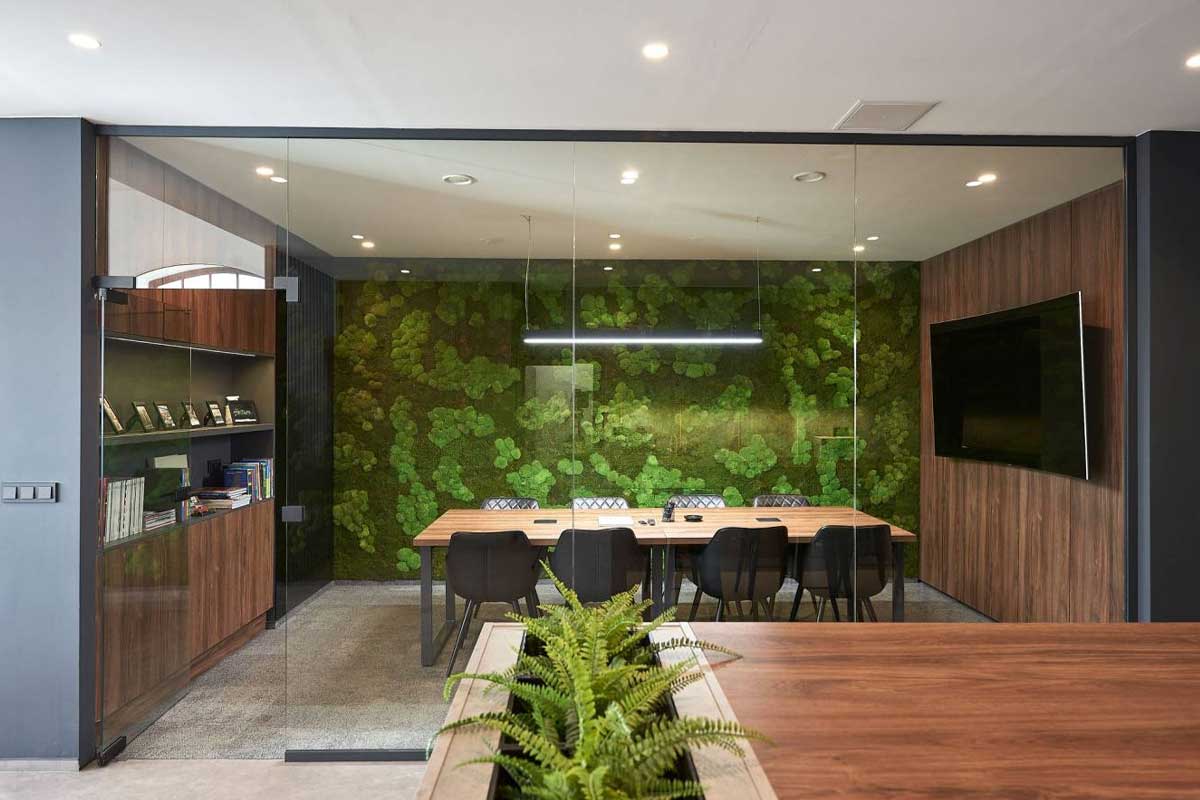
When choosing lighting, most people focus on power, luminous flux, or color temperature. However, there is another important parameter that significantly affects the comfort of using a space—the UGR value. This value determines the degree of glare caused by a light fixture and helps assess whether the lighting will be comfortable for the eyes even during prolonged stays in the room.
Glare can negatively affect concentration, cause eye strain, or reduce visual comfort while working. For this reason, the UGR value is commonly used in the design of offices, schools, healthcare facilities, and other spaces where people spend extended periods of time under artificial lighting.
The lower the UGR value, the less likely it is to cause uncomfortable glare. light properly selected light therefore not only provides sufficient light intensity but also contributes to a comfortable and healthy environment.
In this guide, we’ll explain what UGR means, how the UGR value works for lighting fixtures, what the recommended UGR values are for offices and homes, and how to choose lighting with low glare.
Article Content
What does UGR mean?
UGR (Unified Glare Rating) is an international measure of the degree of glare caused by artificial lighting. It is used to assess how comfortably a person will perceive light from lighting in a specific space.
The UGR value helps determine whether the lighting will cause uncomfortable glare during prolonged use. The lower the UGR value, the higher the visual comfort and the lower the risk of eye strain.
That is why UGR is commonly considered when designing offices, schools, healthcare facilities, home offices, and other spaces where people spend extended periods of time under artificial lighting.
How does UGR work?
The UGR value is not determined solely by the light fixture itself. The result is influenced by several factors, such as lighting lighting brightness, its placement in the room, the observer’s position, or the level of ambient lighting. Thus, light same light can have a different effect on perceived glare in different spaces.
The higher the UGR value, the greater the likelihood that the light will be distracting or unpleasant. Conversely, a lower value means greater visual comfort and less strain on the eyes.
The following factors are primarily taken into account when calculating the UGR:
- lighting brightness—very bright light sources are more likely to cause glare.
- Size of the illuminated area—smaller, more intense light sources tend to be perceived more distinctly than diffused lighting.
- The position lighting relative to the observer—lighting placed directly in the field of view can be more distracting.
- Ambient light level—in darker environments, glare is usually perceived more intensely. Therefore, it may be beneficial to use dimmable lighting, which allows you to adjust the light intensity to current conditions.
- Lighting layout in a space—properly designed lighting helps distribute light evenly and reduces glare.
That is precisely why it is not enough to consider only power or luminous flux when selecting lighting. The quality of light and its impact on user comfort also play an important role. In offices, schools, or home offices, a properly selected UGR value can significantly contribute to better concentration, reduced eye strain, and a more pleasant environment.

What UGR values are considered appropriate?
The UGR (Unified Glare Rating) value is expressed numerically and indicates the degree of glare caused by lighting. The lower the UGR value, the less likely it is that glare will be uncomfortable, and the greater the visual comfort for users.
The required UGR value varies depending on the type of space and the activities performed there. In environments where people work on computers or perform visually demanding tasks, the requirements for glare control are significantly stricter than, for example, in warehouses or technical rooms.
The most common requirement you’ll encounter is UGR < 19, which is the standard for office spaces and other environments where people work at computers for long periods or perform tasks that require concentration. In these situations, excessive glare can cause eye strain, impaired concentration, or a general feeling of discomfort.
When choosing lighting it is therefore advisable to consider not only the luminous flux, CRI, or color temperature, but also the UGR value. The right combination of these parameters helps create pleasant and functional lighting for everyday use.
Why is a low UGR important?
The UGR value directly affects how comfortable people find the lighting. Even if light has sufficient output and good color rendering, excessive glare can cause discomfort during everyday use of the space.
Glare occurs when a light source in the field of view is too bright relative to the surrounding environment. The eyes must constantly adjust to differences in brightness, which can lead to faster fatigue and reduced visual comfort.
Lighting with a low UGR value help create a more pleasant lighting environment and offer several important benefits:
- Less eye strain—reduced glare decreases the strain on your eyes during prolonged work or reading.
- Better concentration—pleasant lighting helps maintain focus and reduces distractions in the workplace.
- Greater visual comfort—the light is not harsh and makes the space more pleasant for everyday use.
- Lower risk of glare—especially important when working with monitors, screens, or glossy surfaces.
- A more pleasant atmosphere—evenly distributed light without glare contributes to an overall sense of comfort.
The importance of a low UGR is most evident in offices, schools, healthcare facilities, and home offices, where people spend many hours a day under artificial lighting. In these spaces, properly designed lighting can significantly impact productivity, concentration, and overall well-being.
For this reason, when designing modern lighting, it is recommended to consider not only the lighting power or luminous flux, but also the UGR value, which helps ensure comfortable and pleasant lighting conditions over the long term.

Where is UGR most important?
The UGR value is important in all spaces where people spend extended periods of time under artificial lighting. The more demanding the visual tasks and the longer the space is used, the more important it is to reduce glare and ensure a high level of visual comfort.
While a low UGR may not be a priority in some technical or warehouse spaces, it is one of the key parameters in lighting design for offices, schools, and healthcare facilities.
Offices and computer workstations
In office spaces, a low UGR value is essential. Employees often spend many hours a day working at computer monitors, where glare can cause eye strain, impaired concentration, or annoying reflections on the screen.
For offices, an UGR value of less than 19 is generally recommended, which helps ensure a comfortable working environment and pleasant lighting over the long term.
Schools and Educational Institutions
In schools, classrooms, and study rooms, high-quality lighting is essential for concentration, reading, and writing. Excessive glare can negatively affect students’ attention and increase fatigue during class.
Here, too, a UGR value of less than 19 is typically required, which contributes to better conditions for learning.
Medical Equipment
Hospitals, doctors’ offices, and healthcare facilities require high-quality lighting not only for the comfort of staff but also for accurate recognition of details and colors.
Reducing glare helps create a more comfortable environment for both healthcare staff and patients and supports the safe performance of professional duties.
Home Office
S the growing prevalence of working from home, the importance of proper lighting is also shifting to the home. When working on a computer for long periods, improperly chosen lighting can cause problems similar to those found in offices.
Lighting with a lower UGR value help reduce glare from computer screens, alleviate eye strain, and increase comfort while working or studying.
Conference and Meeting Rooms
Screens, projectors, and presentation equipment are often used in conference rooms. Excessive glare can reduce the readability of presentations and distract meeting participants.
Properly designed lighting with a low UGR contributes to better visibility and a more pleasant atmosphere during meetings and presentations.
Although the UGR value is most commonly associated with offices, its importance is growing in any setting where people work, study, or focus on detailed tasks for extended periods. Therefore, it should be one of the parameters you consider when selecting lighting fixtures, alongside luminous flux, color temperature, and the color rendering index (CRI).

How can you identify light with a low UGR?
The UGR value is typically listed in the technical documentation or product sheet lighting. If visual comfort is important to you—especially in an office, home office, or educational setting—it’s worth paying attention to this parameter when making your selection, just as you would with luminous flux, color temperature, or the color rendering index (CRI).
Lighting with a low UGR value are designed to limit direct viewing of very bright parts of the light source and distribute light more evenly throughout the space. As a result, they provide greater comfort during prolonged use.
Typical features of low-UGR lighting fixtures include:
- Microprismatic diffuser—a special optical cover that diffuses light and reduces glare while maintaining high efficiency.
- Deep-set optics—lighting light source is recessed deeper into lighting lighting body, reducing its visibility from typical viewing angles.
- Anti-glare grilles—used primarily in office and technical lighting fixtures, where they help direct light and reduce direct glare.
- High-quality optical systems – High-quality optical systems – modern LED lighting use lenses and reflectors that better control the distribution of light in a space.
When selecting lighting for offices, schools, or home offices, lighting with a UGR value of less than 19 are often recommended. Such lighting help reduce eye strain, minimize glare on monitors, and create a more pleasant working environment.
However, it is important to realize that the UGR value alone does not guarantee high-quality lighting. The resulting comfort is also influenced by the proper placement of light fixtures, their installation height, lighting intensity, and the overall design of the space. The best results can be achieved by combining lighting right lighting with a well-thought-out lighting design.

UGR vs. lumens vs. CRI: What’s the difference between them?
When choosing lighting, you may encounter several technical parameters that affect the quality of lighting. Among the most important are UGR, lumens (lm), and CRI. However, each of these specifications describes a different property of light.
Understanding their importance will help you choose lighting that is not only powerful enough but also comfortable for everyday use.
UGR – glare rating
UGR (Unified Glare Rating) indicates how much light dazzles people in the room. The lower the UGR value, the lower the risk of uncomfortable glare.
For example, office spaces often require lighting with a UGR value of less than 19 to ensure comfortable computer work without excessive eye strain.
Lumens – the amount of light
Lumen (lm) expresses the total amount of light produced by light light. A higher number of lumens means greater light output.
However, it is important to realize that a high lumen output does not automatically mean greater comfort. A light fixture can provide very bright light while also causing unpleasant glare if its optics are not properly designed.
CRI – Color Rendering Index
CRI (Color Rendering Index) refers to a light source’s ability to render colors naturally and accurately. The higher the CRI value, the more accurately the colors of illuminated objects appear.
For most households, a CRI of at least 80 is recommended, while for interiors where accurate color rendering is important, a CRI of 90 or higher is usually appropriate.
- UGR determines comfort and the level of glare.
- Lumens determine light output.
- CRI affects the quality of color rendering.
When selecting lighting fixtures, it is therefore advisable to evaluate all these parameters together. Only the right combination of these factors will ensure lighting that is functional, easy on the eyes, and suitable for a specific application.
Why monitor all three parameters at the same time?
High-quality lighting isn’t determined by just one technical specification. light ideal light should provide sufficient light, accurately render colors, and minimize glare.
Tip: When choosing lighting, don’t focus solely on light output. Sufficient lumens, a low UGR value, and a high CRI combine to create lighting that is not only bright enough but also comfortable and pleasant for everyday use.
Common Mistakes When Choosing Lighting from a UGR Perspective
Although many people pay attention to lighting design, light output, or color temperature, the UGR value is often overlooked. The result can be lighting that is bright enough but, when used for long periods, causes unpleasant glare and reduces visual comfort.
Some of the most common mistakes include:
- Choosing light fixtures based solely on appearance—Modern design does not automatically mean low glare. The design of the optics and the way light is distributed are also important.
- Ignoring the UGR value in technical specifications – Especially in offices, workspaces, or conference rooms, the UGR value should be one of the main parameters when selecting lighting.
- Excessive light output without proper diffusion—A light fixture with a high lumen output may provide sufficient light, but if it isn’t properly shielded, it can cause unpleasant glare.
- Incorrect placement of light fixtures—Even light high-quality light with a low UGR value can cause glare if it is placed directly in the user’s field of vision.
- Relying on just one central light source—A combination of ambient, task, and accent lighting often yields better results than a single strong light source. We explore this principle in more detail in our article on layered lighting.
- Underestimating the Importance of Lighting in Workspaces – In home offices, study rooms, or computer rooms, a low UGR is important for reducing eye strain and increasing comfort during long periods of work.
Properly selected lighting should provide not only sufficient light but also high visual comfort. Therefore, it is advisable to consider the UGR value along with other parameters, such as lumens, CRI, and color temperature.
Conclusion
UGR (Unified Glare Rating) is an important parameter that helps determine how comfortable the lighting will be during everyday use. While lumens indicate the amount of light and CRI indicates color rendering quality, the UGR value expresses the degree of glare produced by light light.
Lighting with a low UGR value can significantly improve visual comfort, reduce eye strain, and create a more pleasant environment for work, study, and everyday activities. This is particularly important in offices, home offices, schools, healthcare facilities, and conference rooms, where people spend long hours engaged in focused activities.
When selecting lighting fixtures, it is therefore not enough to consider only the design or light output. The UGR value should be evaluated alongside other parameters, such as lumens, CRI, color temperature, and lighting lighting installation method. Only the right combination of these factors will ensure lighting that is functional, efficient, and easy on the eyes.
If you’re looking for high-quality lighting for an office, home office, or modern interior, pay attention not only to the lighting appearance but also to its technical specifications. A low UGR can have a significant impact on the comfort of the space and the overall quality of the lighting.
Frequently Asked Questions About UGR and Glare from Light Fixtures
What does UGR mean for lighting fixtures?
UGR (Unified Glare Rating) is a standardized method for evaluating glare caused by artificial lighting. It indicates the extent to which light can cause glare for people in a given space. The lower the UGR value, the higher the visual comfort.
What UGR value is considered good?
For offices, home offices, and computer workstations, a UGR value of < 19 is generally recommended. In typical living spaces, a UGR value of < 22 is usually sufficient. The lower the value, the lower the risk of uncomfortable glare.
What is the difference between UGR and lumens?
Lumens indicate the amount of light light light emits, while UGR measures the degree of glare. A fixture can have high light output and a low UGR at the same time if it is equipped with high-quality optics and properly distributes the light.
Why is a low UGR important in offices?
A low UGR helps reduce glare from monitors, eye strain, and loss of concentration. For this reason, standards for office lighting often require the use of luminaires with a UGR value lower than 19.
How can I tell if light has a low UGR?
The UGR value is typically listed in the manufacturer’s technical documentation. Low UGR values are often found in lighting with microprismatic optics, deeply recessed light sources, or special anti-reflective elements.
Does a low UGR affect the brightness of lighting?
No. A low UGR does not mean lower light output. light well-designed light can provide sufficient light while minimizing glare through proper light direction and distribution.
Is UGR important in the home as well?
Yes. Although UGR is most commonly addressed in offices and commercial spaces, it can also significantly affect comfort in home offices, kitchens, living rooms, or rooms with TVs and computers.
What does UGR 19 mean?
A UGR value of 19 represents the maximum recommended glare level for offices and computer workstations. Lighting with a UGR lower than 19 help reduce glare on computer monitors and increase comfort during long periods of work.
How is the UGR value calculated?
The UGR calculation takes into account the luminous intensity lighting, its size, its position relative to the observer, the level of ambient lighting, and the arrangement of luminaires in the space. For this reason, the UGR value is usually specified directly in the manufacturer’s technical documentation.
Are you looking for lighting with a low UGR?
Browse our selection of interior lighting fixtures for offices, home offices, and living spaces. Choose lighting that offers high-quality light output, pleasant color rendering, and comfortable use without unnecessary glare.
Browse interior lighting
Share:
Lighting installation for the 2peaks Apartments in the Ore Mountains
How to install LED strips? A complete step-by-step guide