

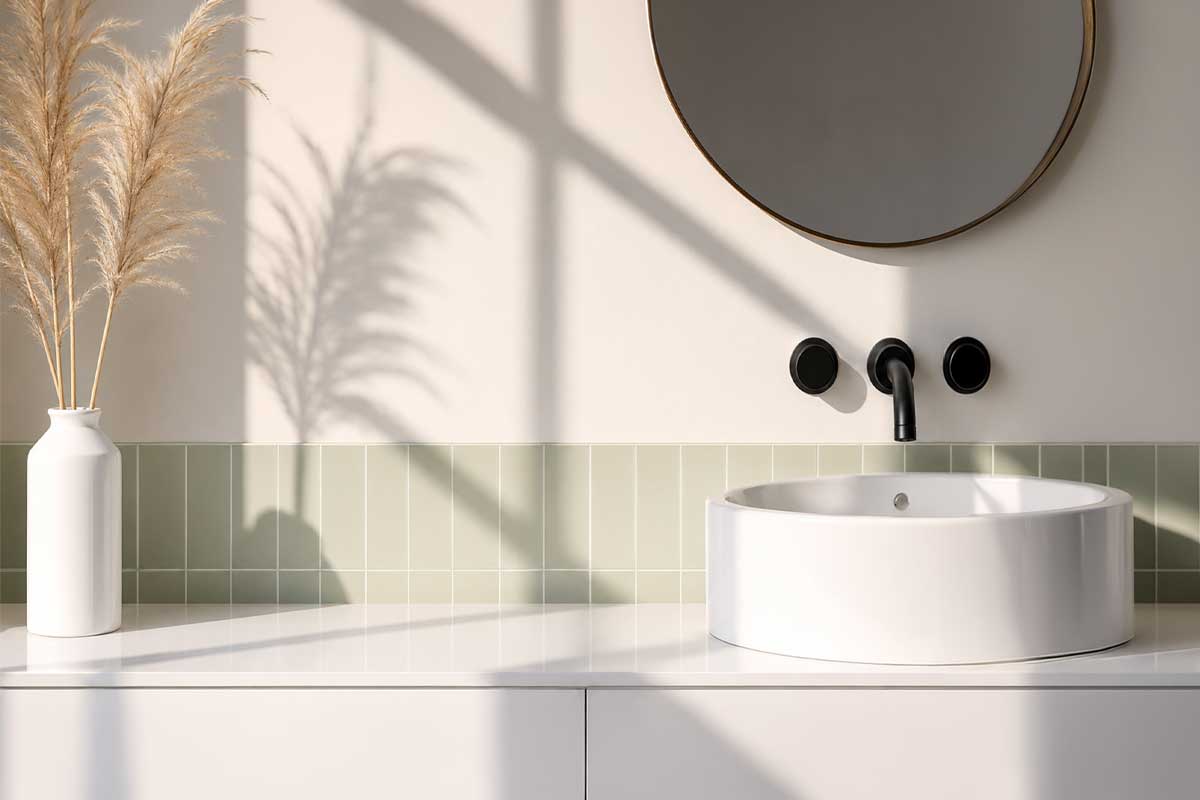
Bathroom lighting is one of the most important aspects of the entire interior. It’s not enough to simply choose light designer light or a bright ceiling light. In the bathroom, proper lighting placement, high-quality mirror lighting, the right color temperature, and safety in a humid environment all play a crucial role.
It is in bathrooms where we most often encounter unpleasant shadows, glare, or uneven lighting, which can make everyday activities like applying makeup, shaving, or relaxing in the evening more difficult. Well-designed lighting, however, can significantly enhance both the comfort and overall appearance of the space.
In this article, we’ll show you how to properly design bathroom lighting, how to choose lighting right lighting, where to place a light near the mirror, what color temperature to select, and what mistakes to avoid when designing bathroom lighting.
Article Content
- Why is proper bathroom lighting important?
- How much light do you need in a bathroom?
- Main bathroom lighting
- How do you properly light a bathroom mirror?
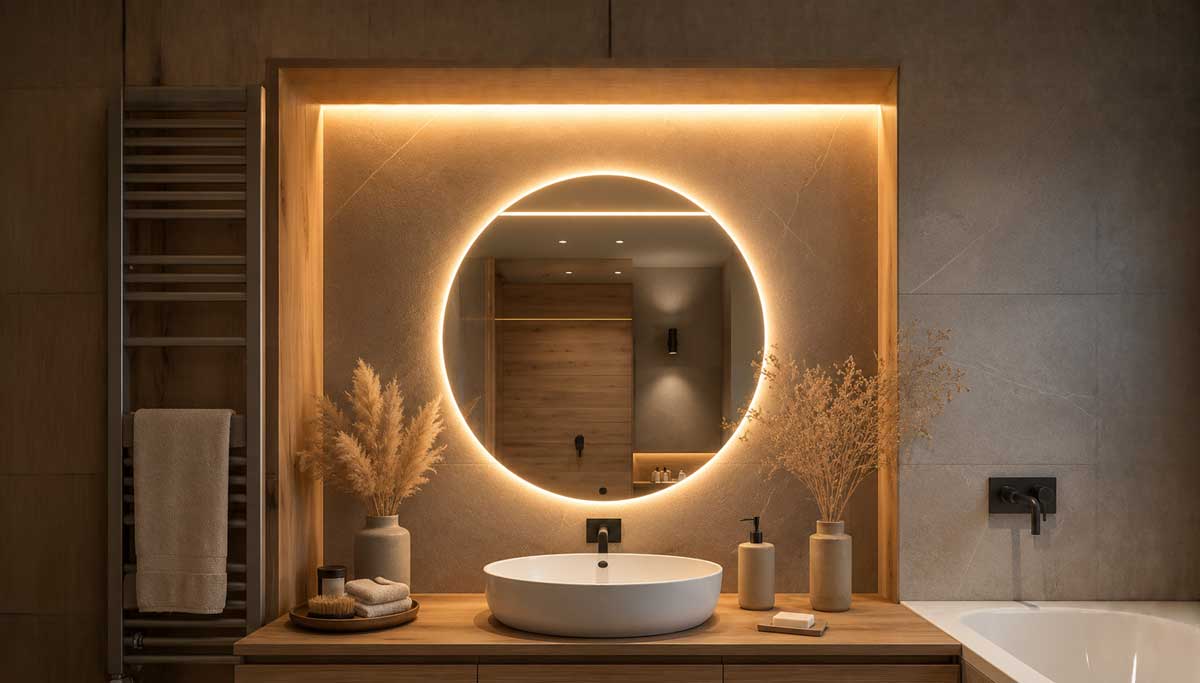
- Indirect bathroom lighting
- What color temperature should you choose for your bathroom?
- What IP rating should you choose for the bathroom?
- Common Mistakes in Bathroom Lighting
- Modern Trends in Bathroom Lighting
- FAQ: Frequently Asked Questions About Bathroom Lighting
- For the bathroom, we recommend combining multiple layers of lighting.
- A color temperature of 3000–4000 K is suitable for most bathrooms.
- Mirror lighting has a greater impact on comfort than the output of lighting main lighting itself.
- Always check the required IP rating when using the product near water.
- Indirect lighting helps create a more pleasant atmosphere.
Why is proper bathroom lighting important?
The bathroom is one of those rooms where high-quality lighting has a much greater impact on everyday comfort than most people realize when designing their interiors. It’s not enough to simply choose light designer light or a light that’s bright enough. What’s most important is the proper placement of individual light sources, minimizing shadows, and creating a pleasant atmosphere for different situations throughout the day.
It is precisely in bathrooms that we very often encounter poorly placed ceiling lighting, which creates harsh shadows on the face or unpleasant glare when looking in the mirror. This is especially problematic when applying makeup, shaving, or performing daily skincare routines, where high-quality, even lighting is absolutely essential.
Well-designed bathroom lighting should therefore combine general lighting for the space, high-quality mirror lighting, and softer ambient lighting to create an evening atmosphere. It is precisely this combination of multiple layers of lighting that forms the basis of modern bathroom designs today.

The right color temperature, CRI value, and appropriate IP rating for fixtures in damp environments also play a major role. When all these elements are properly combined, lighting can significantly improve not only the functionality of the bathroom but also the overall appearance and atmosphere of the space.
How much light do you need in a bathroom?
When choosing bathroom lighting, people often focus on wattage. With modern LED fixtures, however, it is more important to consider the luminous flux, measured in lumens (lm), which indicates the actual amount of light emitted.
The amount of light needed depends primarily on the size of the bathroom, the ceiling height, the color of the surfaces, and the amount of natural light. It is generally recommended to aim for an illuminance of approximately 200 to 300 lux for general bathroom lighting. It is often advisable to increase the illuminance even further around the mirror.
| Bathroom Size | Recommended luminous flux |
|---|---|
| 3–4 m² | 1,500–2,000 lm |
| 5–8 m² | 2,000–3,500 lm |
| 8 m² and larger | 3,500 lm and above |
In most bathrooms, combining several light sources yields better results than installing a single, very powerful lighting. This typically results in more even lighting without unpleasant shadows and greater comfort during everyday use of the bathroom.
Main bathroom lighting
General lighting provides the basic lighting for the entire bathroom. Its purpose is to illuminate the space evenly and ensure there is enough light for safe movement and everyday use of the bathroom.
In smaller bathrooms, light single high-quality ceiling light is often sufficient. In larger spaces, a combination of multiple light sources is usually more suitable, as they help eliminate dark corners and create a more pleasant lighting experience.
The most common mistake is relying on light single light in the center of the room. While the bathroom may seem sufficiently lit, some parts of the space remain in shadow, and the light is often not ideal for tasks at the mirror.
When designing a bathroom, we recommend planning the placement of light fixtures before the electrical work is completed. Adding lighting later is often much more complicated and usually requires compromises.
How do you properly light a bathroom mirror?
Mirror lighting is one of the most important elements of any bathroom. This is where most daily activities take place, such as shaving, applying makeup, styling hair, or skincare. If the mirror isn’t properly lit, unpleasant shadows can form, impairing visibility and reducing comfort when using the bathroom.
A common mistake is relying solely on overhead lighting. Light coming from above creates shadows under the eyes, nose, or chin, making it difficult to perform precise tasks in front of a mirror. You’ll achieve much better results if the light hits your face from the front or from both sides.
We also discuss how to choose the right lighting solution for a mirror in more detail in the article “How to Choose the Right Lighting for a Bathroom Mirror,” where we explain the differences between a mirror light, side lighting, and a backlit LED mirror.
Which solution works best?
You can achieve the most natural facial lighting by using wall sconces placed on either side of the mirror or by using a high-quality backlit LED mirror. Both options help minimize shadows and create more even lighting conditions for everyday use.

In smaller bathrooms, light placed above the mirror is also a popular solution. However, it’s important to choose a model with a sufficiently wide light spread so that not only the upper part of the face is illuminated.
If you’re choosing lighting for above a mirror, it’s worth focusing on high-quality wall-mounted lighting with sufficient light output, appropriate IP rating, and high color rendering.
When choosing bathroom lighting, many people focus primarily on the brightness of the fixtures or their design. However, the most common cause of dissatisfaction is often insufficient or improperly placed mirror lighting. Even light high-quality ceiling light can cast unpleasant shadows on the face, making shaving, applying makeup, and routine skincare more difficult. That’s why we recommend paying just as much attention to mirror lighting as you do to choosing the main lighting for the entire bathroom.
For mirror lighting, we recommend choosing lighting with high-quality color rendering. This is where you’ll most appreciate a higher CRI (Color Rendering Index), which helps accurately display skin tones, makeup, and clothing colors.
Indirect bathroom lighting
Today, a modern bathroom is no longer just for morning hygiene. It is increasingly becoming a place of relaxation, where we want to unwind after a busy day and create a pleasant atmosphere. This is where indirect lighting plays an important role.
Unlike main light fixtures, its purpose is not to illuminate the entire space. Indirect lighting serves primarily to create a more comfortable environment, highlight architectural elements, and add depth to the space.
Where is indirect lighting most commonly used?
- Behind the Mirror – It creates a soft ambient light and visually adds depth to the wall.
- In niches and on shelves – It highlights architectural details and makes it easier to find your way around a space.
- Under the bathroom cabinet – It makes the furniture appear lighter and creates a pleasant glow near the floor.
- In suspended ceilings and ceiling recesses – Provides soft, diffused light without significant glare.
- Around the bathtub – helps create a calmer atmosphere suitable for evening relaxation.
The most common solution is LED strips, which can be easily integrated into furniture and building elements. Thanks to their concealed placement, there is no unpleasant glare, and the light appears much softer than that from traditional lighting.


Does indirect lighting make sense even in a small bathroom?
Yes. Especially in smaller bathrooms, it can make the space appear larger and give the interior a more airy feel. Often, a single LED strip under a cabinet or a backlit mirror is all it takes to make the bathroom look more modern and cozy.
If you’re planning to use LED strips, our guide on how to install LED strips can also help you.
What color temperature should you choose for your bathroom?
Light temperature affects not only the look of your bathroom but also your overall comfort during daily use. The right choice will help create a pleasant environment for your morning routine, grooming, and evening relaxation.
| Light color temperature | The Nature of Light | Recommended uses |
|---|---|---|
| 3000 K | Warm white | Cozy and modern bathrooms |
| 4000 K | Neutral White | Practical family bathrooms |
| 5000 K+ | Cool White | Primarily technical and commercial spaces |
3000 K – a pleasant atmosphere and a modern look
Warm white is one of the most popular options in today’s bathrooms. It creates a cozier feel, complements the lighting in other living spaces, and helps create a pleasant atmosphere even during evening relaxation.
4000 K – a versatile solution for most households
Neutral white offers excellent visibility and a natural rendering of the space. That is why it is a common choice in family bathrooms, where practicality and comfort in everyday use are paramount.
Is cool white suitable for the bathroom?
Light with a color temperature above 5000 K can appear very harsh and clinical. It is rarely used in home bathrooms because it often creates a less pleasant atmosphere than warmer options.
You can also find more information about individual color temperatures in the article “What Is CCT and How to Choose the Right Color Temperature.”
What IP rating should you choose for the bathroom?
When choosing bathroom lighting, it’s not enough to consider only the design, output, or color temperature of the light. Equally important is the correct IP rating, which determines lighting lighting resistance to moisture and water ingress. The bathroom is one of the rooms with the highest safety requirements, so it’s advisable to pay attention to this parameter as early as the lighting planning stage.
The IP (Ingress Protection) rating consists of two digits. The first digit indicates protection against dust and solid particles, while the second indicates protection against water. It is the second value that is crucial in the bathroom. The closer light is to the bathtub or shower stall, the higher the level of water protection it must provide.
Bathroom Areas and Required IP Ratings
Safety standards apply to the installation of light fixtures in bathrooms, dividing the space into several zones based on their distance from water sources. Each zone has specific minimum requirements for the protection of light fixtures.
| Zone | Location | Minimum IP rating |
|---|---|---|
| Zone 0 | The interior of a bathtub or shower stall | IP67 |
| Zone 1 | The area directly above the bathtub or shower, up to a height of 225 cm | IP65 |
| Zone 2 | A 60-cm-wide strip around the bathtub or shower stall | IP44 |
| Outside the zones | Other parts of the bathroom not in direct contact with water | IP20 to IP44 |

In a typical home bathroom, you’ll most often find light fixtures with an IP44 rating, which are suitable for installation above a mirror or near a sink, for example. However, if you’re planning to install lighting directly in the shower or above the bathtub, you’ll need to choose models with a higher level of water protection.
The right IP rating ensures not only safe operation but also a longer lifespan for light fixtures in environments with high humidity. When selecting bathroom lighting, it should therefore be considered just as important a factor as wattage, color temperature, or the overall design lighting.
If you’re not sure what protection rating light specific light needs, be sure to read our detailed guide to IP protection ratings for bathrooms and bathroom areas, where we explain the different protection levels, proper placement of light fixtures, and requirements for Zones 0, 1, and 2.
Common Mistakes in Bathroom Lighting
Even in modern bathrooms, the same mistakes are often made, which can negatively affect comfort, the interior’s appearance, and everyday use. Yet these mistakes can usually be easily avoided as early as the lighting design phase.
A bathroom may seem well-lit, but shadows form around the mirror, and some parts of the space remain dark. General lighting should serve only as the foundation of the overall lighting design.
Lighting positioned only above the head often casts shadows on the face. This makes it more difficult to apply makeup, shave, or perform daily skincare routines.
Lighting that is either extremely cool or too warm can distort colors and look unnatural. In bathrooms, neutral white in the 3000–4000 K range is usually the best choice.
Not every designer light is suitable for humid environments. Around showers and bathtubs, it is essential to follow bathroom zoning guidelines and ensure the appropriate IP rating.
Many bathrooms are designed solely for use in the morning. In the evening, they can seem too harsh and uninviting. Soft, indirect, or dimmable lighting can significantly improve the atmosphere of the space.
If we had to pick one mistake we see most often when designing bathroom lighting, it would be underestimating the importance of mirror lighting. This is where most people spend the most time on their daily hygiene routine, and it’s also where shadow issues tend to be the most pronounced.
Modern Trends in Bathroom Lighting
Modern bathrooms combine functionality with a pleasant atmosphere. In addition to high-quality general lighting, lighting elements that help create a more comfortable and visually interesting space are becoming increasingly popular.

-
Backlit mirrors
They are among the most sought-after solutions in recent years. They provide even lighting for the face while looking elegant and modern. -
Indirect LED lighting
LED strips behind the mirror, under the cabinets, or in ceiling niches create a pleasant, diffused light and give the bathroom greater depth. -
Minimalist ceiling lighting
Simple surface-mounted or recessed models do not detract from the clean look of the interior and ensure even lighting throughout the room. -
Pendant lighting above the sink
In larger bathrooms, decorative pendant lighting are becoming increasingly common, serving not only a practical purpose but also a design function. -
Dimmable lighting
The ability to adjust the light intensity allows you to tailor your bathroom to both your morning routine and evening relaxation. -
Smart lighting control
Modern systems allow you to set up lighting scenes, automatically turn lights on, or adjust brightness based on the time of day.
In new projects, we most often see a combination of a backlit mirror, simple ceiling lighting, and unobtrusive indirect LED backlighting. The result is a bathroom that looks modern and airy while providing ample light for everyday use.
Conclusion
Proper bathroom lighting affects not only the appearance of the interior but, above all, your daily comfort when using the space. A well-designed combination of general lighting, a mirror light, and, if desired, indirect lighting helps create a space that is functional in the morning and pleasant during evening relaxation.
When designing bathroom lighting, it’s not just the brightness of the fixtures that matters, but above all their proper placement. You’ll achieve the best results by combining general lighting, a well-lit mirror, the right color temperature, high color rendering (CRI), and the correct IP rating. These elements are what determine whether the bathroom will feel natural, safe, and comfortable during everyday use.
Frequently Asked Questions About Bathroom Lighting
How much light should a bathroom have?
The amount of light needed depends on the size of the bathroom and how the space is used. In general, a bathroom should be sufficiently lit for daily hygiene, skincare, and cleaning. Proper placement of light fixtures and a combination of general and task lighting are often more important than the light output itself.
How many lumens are suitable for a bathroom?
The required luminous flux depends on the size of the bathroom. Smaller bathrooms typically require approximately 1,500 to 2,000 lumens, medium-sized bathrooms 2,000 to 3,500 lumens, and larger spaces even more. To achieve even lighting, it is generally better to combine multiple light sources than to use a single, very powerful light.
What is the best color temperature for a bathroom?
In most bathrooms, light in the 3000–4000 K range works best. It provides natural color rendering while also offering enough light for everyday activities. Warmer light creates a cozier atmosphere, while neutral light tends to be more practical.
Is 3000 K or 4000 K better for a bathroom?
Both options have their advantages. A color temperature of 3000 K creates a warmer and more pleasant atmosphere, while 4000 K offers a more neutral light suitable for daily hygiene, applying makeup, or shaving. Most modern bathrooms use one of these two options.
How do you properly light a bathroom mirror?
The ideal lighting is on either side of the mirror or even backlighting of the mirror. The light should fall on the face from the front and minimize shadows. light ceiling light alone often cannot provide sufficient lighting for shaving or applying makeup.
What kind of light should I put above the bathroom mirror?
For mirror lighting, lighting with even light distribution and high-quality color rendering are ideal. Popular choices include wall lighting above the mirror, lighting on either side of the mirror, or modern backlit LED mirrors. It is important to minimize shadows on the face.
What IP rating is suitable for a bathroom?
The required IP rating depends on lighting lighting location. IP44 is commonly used around the sink, while a higher rating, such as IP65, is often required near the shower or bathtub. It is always important to take into account the different zones within the bathroom.
Is one ceiling light enough for the bathroom?
In smaller bathrooms, light single high-quality ceiling light may be sufficient, but in most cases it is advisable to add lighting near the mirror as well. In larger bathrooms, a combination of several layers of lighting is often used to provide greater comfort, more even lighting, and a more pleasant atmosphere.
Choose lighting suitable for the bathroom
The right lighting can significantly enhance comfort during everyday use of the bathroom while also highlighting the look of the entire interior. Browse our selection of bathroom fixtures, mirror lights, and designer solutions with high IP ratings suitable for humid environments.
Browse bathroom lighting
Share:
What is CRI and how does it affect the appearance of colors in an interior?
What are lumens, and how many do we need for each room?