

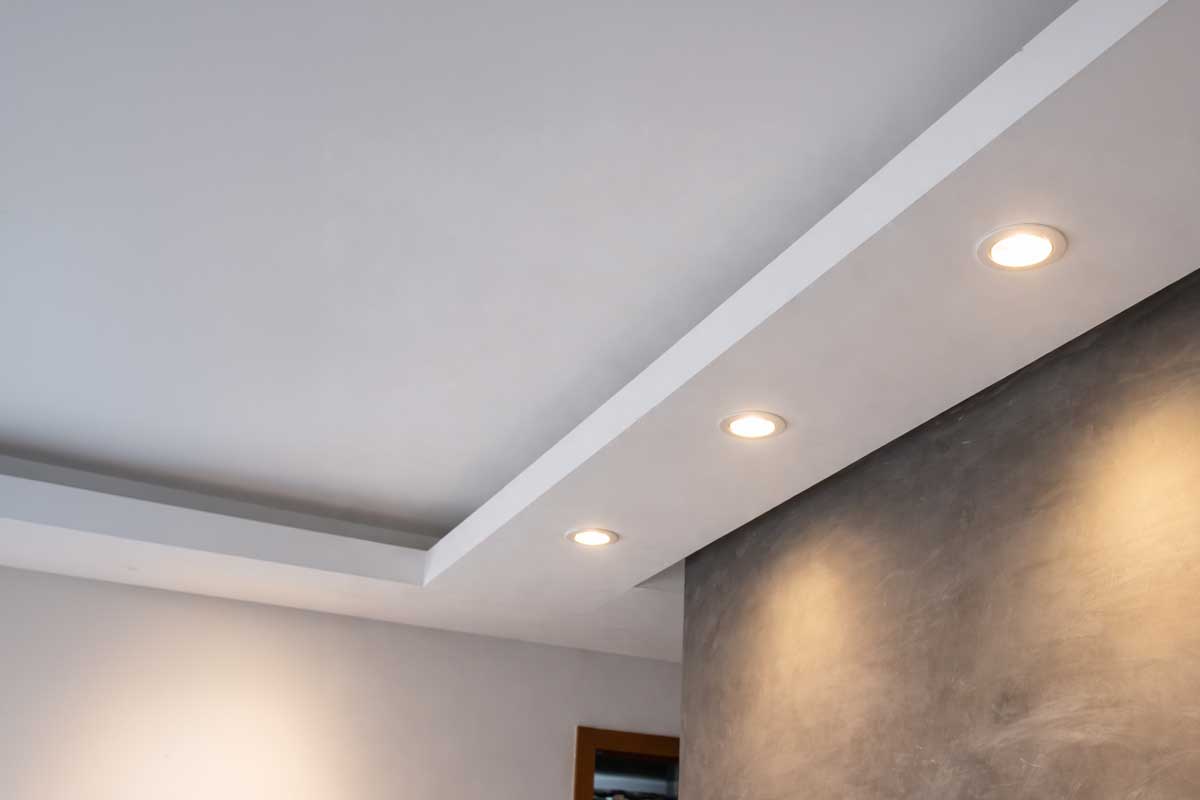
The proper placement of spotlights has a significant impact on how the interior looks and how comfortable you’ll feel in it. It’s not enough to simply choose high-quality lighting—their spacing, distance from walls, beam angle, and the number of spotlights in the room are just as important. Poorly designed lighting can create dark spots, harsh shadows, or unpleasant glare, while a well-thought-out layout ensures even and pleasant lighting throughout the entire space.
Whether you’re planning lighting for your living room, kitchen, bathroom, or bedroom, there are several tried-and-true rules that will help you achieve a professional result. Properly placed spotlights will not only improve the functionality of your interior but also highlight architectural features.
In this guide, you’ll learn how far apart to place spotlights, how many to choose based on the size of the room, what the distance from the walls should be, how to select the appropriate beam angle, and which common mistakes to avoid when designing lighting.
Top Tips for Properly Placing Spotlights
- The spacing between spotlights is most often between 0.5 and 0.75 times the ceiling height. The exact distance also depends on the beam angle and light output.
- Spotlights are typically installed 50–80 cm from the wall to achieve even lighting without noticeable shadows.
- The number of spotlights is determined primarily by the room’s dimensions, light output (lm), beam angle, and the desired illuminance.
- Warm white (2700–3000 K) is suitable for most living spaces, as it creates a pleasant and cozy atmosphere.
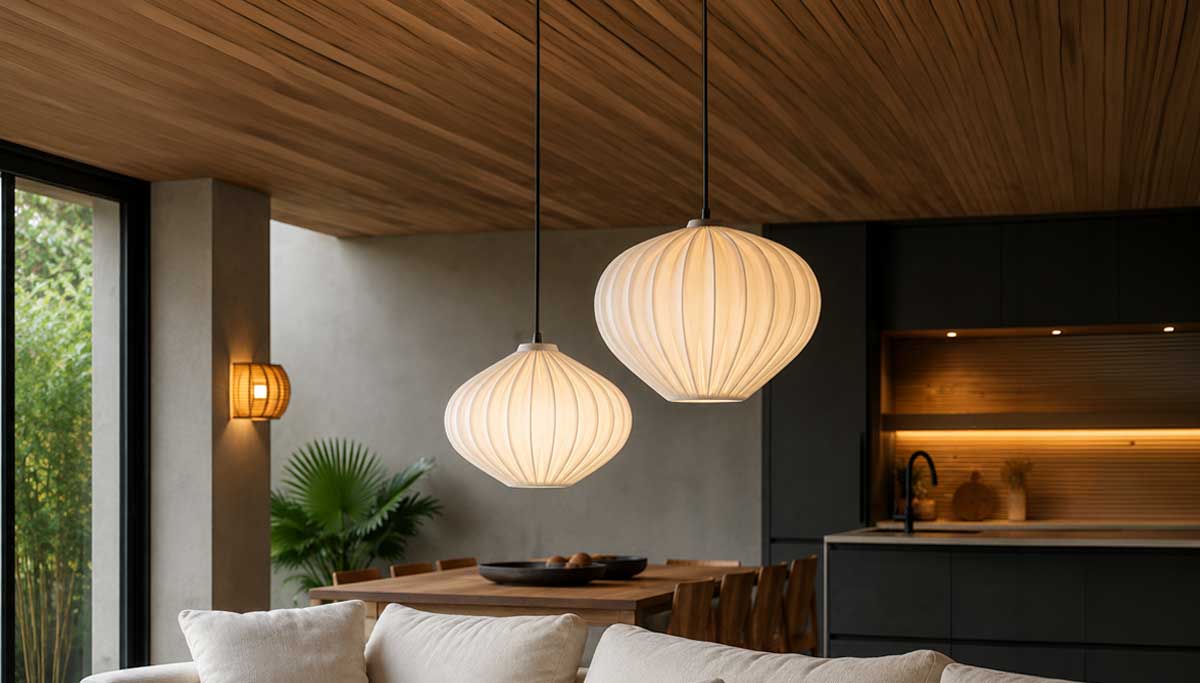
- You’ll achieve the most natural result by combining different layers of lighting, such as pendant, wall-mounted, or indirect fixtures.
Article Content
Why the Proper Placement of Spotlights Is Important
Spotlights are among the most popular ways to light modern interiors. Thanks to their minimalist look, the ability to precisely direct the light, and a wide range of designs, they are used in living rooms, kitchens, bathrooms, and commercial spaces. However, for lighting to serve its purpose, it’s not enough to simply choose high-quality lighting—their proper placement is just as important.
Improperly placed spotlights can create dark spots, harsh shadows, or unpleasant glare. Conversely, a well-thought-out design ensures even lighting throughout the space, highlights architectural features, and contributes to a pleasant atmosphere in the entire room. Proper placement also often means that there is no need to install more light fixtures than are actually necessary.

When designing spot lighting, several factors must be taken into account—the size of the room, the ceiling height, the distance of the fixtures from the walls, the beam angle, and the purpose of each zone. It is precisely the combination of these parameters that determines whether the light will appear natural and comfortable, or whether the interior will appear uneven and unbalanced.
In the following sections, we’ll look at the tried-and-true rules that lighting designers use when designing spot lighting, and we’ll explain how to easily apply them when furnishing a typical home.
How to Properly Position Spotlights
There is no single universal layout for spotlights that will work in every interior. The ideal design depends on the size of the room, the ceiling height, the purpose of the space, and the type of fixtures chosen. Nevertheless, there are several tried-and-true rules that will help you achieve even lighting without dark spots or unpleasant glare.
When planning spot lighting, focus primarily on the spacing between individual fixtures, their distance from walls, the appropriate beam angle, and the correct color temperature. These parameters are closely related, and only their proper combination will create lighting that is both functional and aesthetically balanced.
How far apart should spotlights be placed?
Proper spacing between spotlights is essential for even lighting. If lighting are too close together, areas become unnecessarily overlit and the light cones overlap significantly. Conversely, spacing that is too wide creates dark areas that reduce comfort and detract from the overall impression of the interior.
As a general rule, the distance between spotlights should be approximately half to three-quarters of the ceiling height. However, the exact value may vary depending on the beam angle, the lighting light output, and the desired lighting intensity.
Please consider these values as general guidelines. If you use spotlights with a narrower beam angle (such as 24° or 36°), it is usually best to place them closer together. Conversely, lighting with a wide beam angle—such as 60° or more—can evenly illuminate a larger area and can therefore be spaced farther apart.

If you plan to use only spotlights for the main lighting in a room, it’s a good idea to create a simple layout plan before the final installation. Take into account the placement of furniture, kitchen cabinets, or the dining table so that the light falls exactly where you’ll actually need it.
The correct spacing between spotlights is only one part of the design. Equally important is their placement relative to the walls, which affects not only the evenness of the lighting but also how the walls, paintings, or other architectural elements of the interior will stand out.
How far from the wall should spotlights be placed?
The correct distance between spotlights and the wall has a major impact on the final look of the interior. If lighting are placed too close, they can create distinct light spots on the wall and sharp transitions between light and shadow. Conversely, if the distance is too great, the walls will remain dark, and the space will appear smaller and less airy.
In most residential interiors, it is recommended to install spotlights approximately 50 to 80 cm from the wall. The exact distance depends primarily on the ceiling height, the beam angle, and whether you want to illuminate the entire room or highlight a wall, a painting, or a decorative element.

If you want to make a room appear larger, don’t direct all the spotlights solely toward the center of the space. Lighting the walls adds depth to the interior, making the room appear brighter and more spacious.
What Beam Angle to Choose
Just as important as the placement of spotlights is the beam angle. It is this angle that determines how widely the light spreads across the floor, walls, or work surface. Two lighting with the same output can create completely different lighting effects simply because of their different beam angles.
Generally speaking, the narrower the beam angle, the more the light is concentrated in a single spot. Conversely, a wider beam angle spreads the light over a larger area and helps create more even overall lighting. Therefore, it is best to always choose the beam angle based on the purpose of the space.
If you're not sure which angle to choose, approximately 60° is the safest option for most households. It offers a good balance between light intensity and even illumination of the space, without creating pronounced light cones or dark spots.

When choosing spotlights, don’t just look at the light output in lumens. The beam angle is just as important. A fixture with a narrower beam angle can appear significantly brighter than a model with the same output because it concentrates the light into a smaller area.
Practical Tips for Designing Spot Lighting
Well-designed spot lighting isn’t just about the right spacing or beam angle. It’s equally important to consider how the room will actually be used. When planning the placement of spotlights, we therefore recommend following a few tried-and-true rules that lighting designers use when designing modern interiors.
Start by arranging your furniture
Before you start planning the placement of spotlights, consider the location of your kitchen cabinets, dining table, sofa, or built-in closets. The light should shine where you actually need it, not in the middle of your furniture or in areas that will remain hidden.
One layer of light isn't enough
Even perfectly placed spotlights may not create a pleasant atmosphere on their own. You’ll achieve the best results by combining ceiling, wall, pendant, or indirect lighting. The individual layers of light complement each other, making the interior feel more natural. You can learn more about common mistakes in lighting design in the article “The Most Common Mistakes in Interior Lighting.”
You’ll appreciate dimming every day
Dimmable spotlights make it easy to adjust the light intensity to suit the current situation. You’ll appreciate different light levels when working in the kitchen, relaxing in the evening, or watching TV. If you’re not sure which solution is right for you, be sure to read our article “Dimmable Lighting: Types, How It Works, and Proper Installation.”
Light temperature creates atmosphere
For living rooms, bedrooms, or dining rooms, we recommend warm white (2700–3000 K), which creates a pleasant atmosphere. Neutral white (4000 K) is more suitable for kitchens, home offices, or utility rooms, where good visibility is important.
If you’re unsure about your design, it’s a good idea to create a simple sketch of the room and mark not only the spotlights but also the main interior furnishings. This way, even during the planning stage, you can easily identify areas where shadows might form or, conversely, areas that might be unnecessarily bright.
Common Mistakes When Placing Spotlights
Even high-quality spotlights may not meet your expectations if they aren’t positioned correctly. In practice, several common mistakes lead to uneven lighting. If you’re unsure about the right light intensity, we also recommend the article “How Much Light Do Living Rooms, Kitchens, and Bedrooms Need?”
❌ Too much space between the light fixtures
Too much distance between spotlights creates dark spots and uneven lighting. The result is an interior that feels unbalanced and less comfortable.
❌ Installation too close to the wall
If spotlights are placed too close to the wall, they create pronounced light cones and sharp transitions between light and shadow. The correct distance will help spread the light evenly and highlight the wall naturally.
❌ Incorrectly chosen lighting angle
A narrow beam angle is suitable for highlighting details, but when used as the main light source, it can create stark contrasts. Conversely, a beam angle that is too wide is not ideal when you need to direct light to a specific spot.
❌ Only one layer of lighting
Relying solely on spotlights is not ideal. Combining them with pendant lights, wall sconces, or indirect lighting creates a more pleasant atmosphere and allows you to better adapt the lighting to different situations.
Before you start drilling holes in the ceiling, it’s worth carefully planning the placement of your spotlights. A few minutes spent drawing a simple sketch can save you costly modifications and ensure that the final lighting setup is both functional and aesthetically balanced.
Summary of the most important recommendations
Proper placement of spotlights affects not only the appearance of the interior but also your everyday comfort when using the room. If you follow a few basic rules when designing your lighting, you’ll create a lighting scheme that is functional, pleasing to the eye, and highlights the character of the entire space.

What to Keep in Mind When Planning Spotlights
- ✔ Maintain appropriate spacing between individual spotlights.
- ✔ Place lighting approximately 50–80 cm from the walls if you want to achieve even lighting.
- ✔ Choose the beam angle based on the room’s purpose—a narrower angle to highlight details, a wider angle for general lighting.
- ✔ Think about the placement of furniture and the main areas in the room before installing the light fixtures.
- ✔ Combine spotlights with other types of lighting to create a more natural and comfortable lighting scene.
- ✔ Whenever possible, choose dimmable lighting that allow you to easily change the atmosphere to suit your current needs.
There is no single universal layout for spotlights that will work for every interior. Every room has different dimensions, ceiling heights, and uses. That’s exactly why it’s worth paying close attention to lighting design. Well-designed spot lighting will serve you reliably for many years and significantly influence the overall impression of your home.
Frequently Asked Questions (FAQ)
How far apart should spotlights be placed?
In most homes, spotlights are placed approximately 1.2 to 2 meters apart, depending on ceiling height, light output, and beam angle. The wider the beam angle light light, the greater the spacing between individual spotlights can be.
How far from the wall should spotlights be placed?
For standard living spaces, it is recommended to place spotlights approximately 50 to 80 cm from the wall. This ensures that the light falls evenly on vertical surfaces, preventing the formation of pronounced shadows or sharp beams of light.
How many spotlights do I need for my living room?
The number of spotlights depends on the size of the room, the light output (lm), and the beam angle. A smaller living room often only needs four to six spotlights, while larger rooms usually require more fixtures or a combination with other types of lighting.
What is the best beam angle for spotlights?
Spotlights with a beam angle of around 60° are most commonly used for general lighting in living spaces. Narrower beam angles are suitable for highlighting paintings, decorations, or architectural details, while wider beam angles provide more even illumination throughout the entire space.
Can spotlights be used as the only source of lighting in a room?
Yes, but only if they are designed correctly. In most interiors, however, we recommend supplementing spotlights with, for example, pendant lights, wall sconces, or indirect LED lighting. Combining multiple layers of light creates a more pleasant atmosphere and enhances comfort in everyday use.
What color temperature should you choose for spotlights?
Warm white (2700–3000 K) is most often recommended for living rooms, bedrooms, and dining rooms, as it creates a cozy atmosphere and promotes relaxation. For kitchens, home offices, or utility rooms, neutral white (4000 K) is more suitable, as it provides better visibility while working. For a more detailed explanation, see the article “How to Create a Cozy Atmosphere Using Light Temperature.”
Which are better: fixed or adjustable spotlights?
Fixed spotlights are ideal for even, general lighting. Adjustable spotlights allow you to direct the light beam toward a painting, bookshelf, workspace, or other specific feature, offering greater flexibility when designing your interior.
Find spotlights for your interior
Properly placed spotlights will create a pleasant atmosphere only if you choose the right type of fixtures. Discover our selection of recessed and surface-mounted spotlights, or browse our complete collection of interior lighting for your entire home.

Share:
How to Read Lighting Fixture Specifications: A Complete Guide Before You Buy
Magnetic 48V track systems: A Complete Guide to Selection, Installation, and Applications