

Kitchen countertops are among the most frequently used surfaces in the home. Whether it’s preparing meals, chopping ingredients, washing dishes, or serving food, the countertop is a workspace that requires bright and comfortable lighting. Despite its importance, many kitchens still rely solely on general ceiling lighting, which often creates shadows and uneven lighting on the work surface.
Properly designed kitchen countertop lighting improves visibility, enhances safety, and makes cooking more enjoyable. It also highlights the beauty of materials such as stone countertops, backsplashes, and kitchen cabinets. In modern kitchen design, lighting is considered both a functional and decorative element.

Designing lighting for a kitchen countertop involves more than just adding lighting. It requires an understanding of how light interacts with surfaces, where shadows may appear, and which lighting solutions provide the best visibility.
In this guide, we’ll look at how to design lighting for a kitchen countertop and what factors should be considered to create an efficient and visually balanced workspace in the kitchen.
Why is kitchen countertop lighting important?
Kitchen countertops are work surfaces designed for specific tasks where precision and visibility are essential. Activities such as chopping vegetables, measuring ingredients, and preparing meals require bright lighting.
If the lighting is poorly designed, shadows from overhead fixtures can fall directly onto the work surface, making work more difficult and less comfortable.
Well-designed kitchen countertop lighting can offer several benefits:
- Improved visibility while working—bright lighting helps people see materials, tools, and surfaces more clearly.
- Increased safety – proper lighting reduces the risk of accidents when handling knives or hot cookware.
- Enhanced kitchen aesthetics – lighting highlights textures such as stone countertops or tile backsplashes.
- A more functional workspace—balanced lighting creates a comfortable environment for cooking.

Thanks to these benefits, kitchen designers often pay special attention to lighting above work surfaces.
Understanding task lighting for kitchen countertops
Kitchen countertop lighting is primarily a form of task lighting. Task lighting is designed to illuminate specific areas where activities take place.
In kitchens, this usually includes areas such as countertops, sinks, and cooking zones.
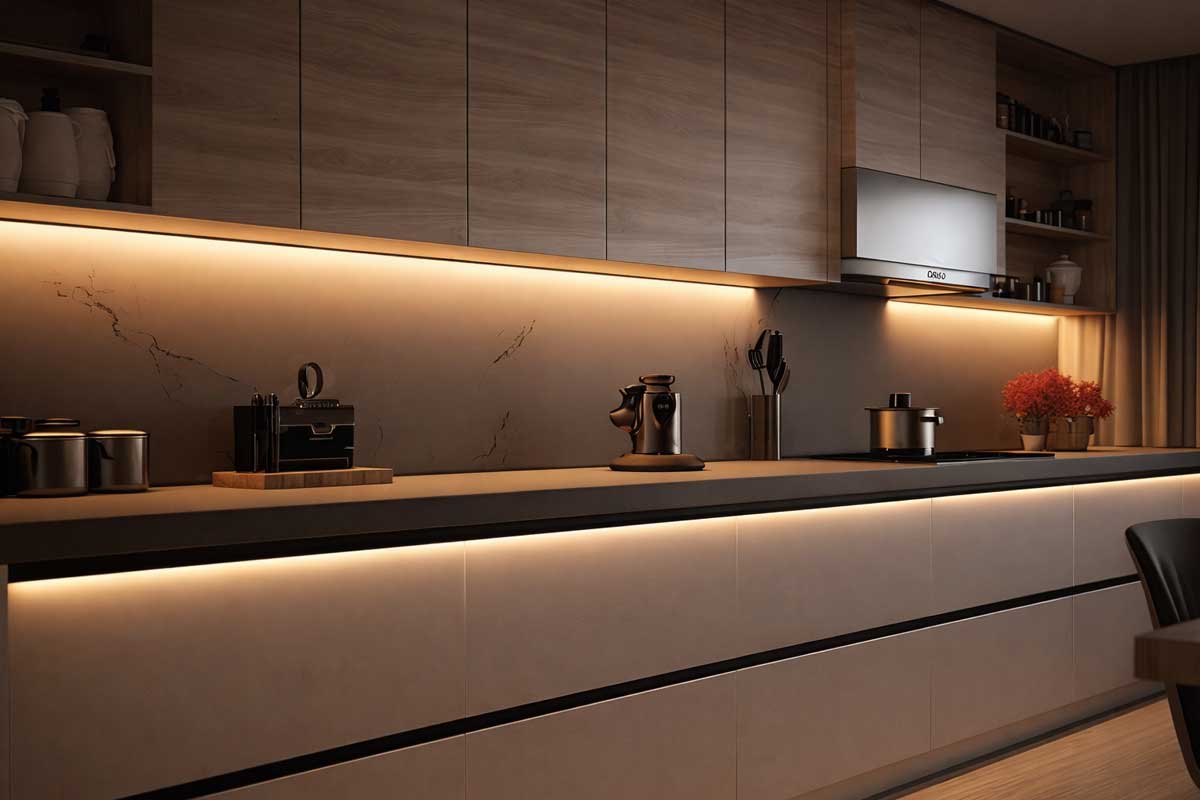
Under-cabinet lighting

One of the most effective solutions for lighting a kitchen countertop is under-cabinet lighting. These lighting are installed under the upper cabinets and shine directly onto the countertop.
This placement eliminates shadows caused by ceiling lighting and ensures that the work area is evenly lit.
Under-cabinet lighting is commonly available in the form of LED strips or small linear fixtures, which are easy to install and highly energy-efficient.
Pendant lighting above the countertop
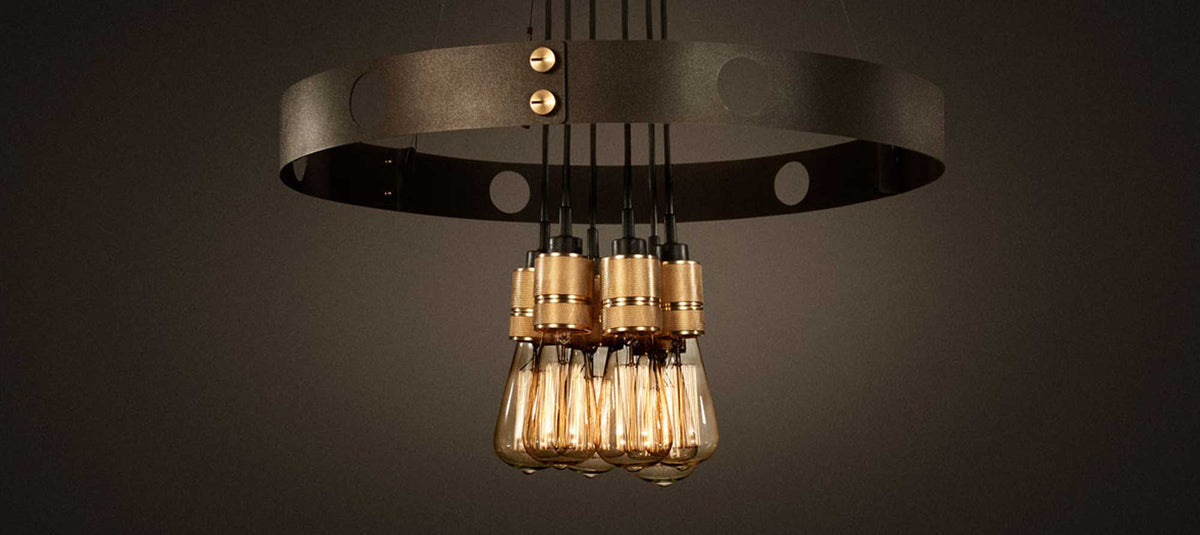
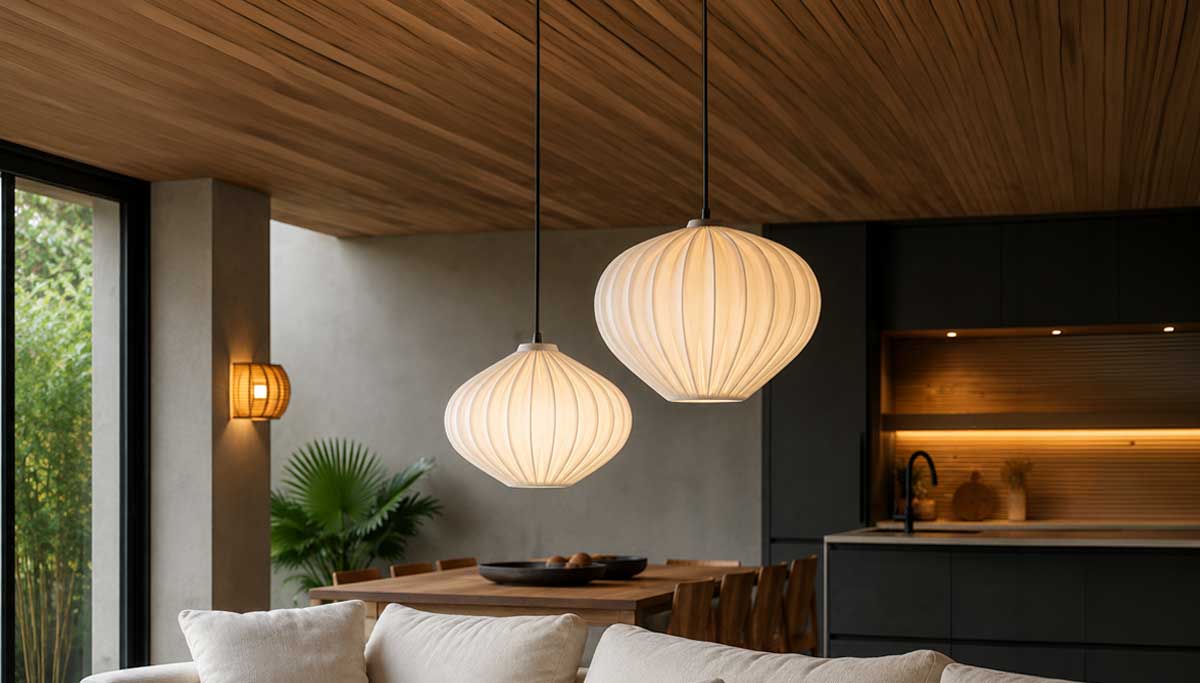
In kitchens with islands or open work areas, pendant lighting are often used for accent lighting.
Pendant lighting hang from the ceiling and can illuminate larger work surfaces while also serving as decorative elements.
When placed correctly, pendant lighting adds both style and functionality to the kitchen.
Choosing the right light intensity
Brightness plays a crucial role in effective kitchen lighting. Countertops require brighter lighting than many other areas of the home, as kitchen tasks demand precision.
Modern light intensity is measured in lumens.
For kitchen countertop lighting, designers often recommend approximately 300–500 lumens per square meter of work surface.
This brightness level ensures that the entire work surface is clearly visible without creating overly harsh light.
The combination of task lighting and ambient lighting also helps maintain balanced lighting throughout the kitchen.
Choosing the Right Light Temperature
Light temperature affects how the lighting in the kitchen looks and how comfortable we feel while preparing food.
It is measured in Kelvins (K) and determines whether the light appears warm or cool.
Neutral white light (3500K–4000K)
Neutral white light is commonly recommended for kitchen countertops because it provides bright and natural lighting.
This type of light improves visibility while preparing food and helps maintain accurate color perception.
Warm white light (2700K–3000K)
Warm light can be used in dining areas or for decorative kitchen lighting, but it is generally less common for work surfaces.
A common question people search for online is:
Why is warm lighting suitable for home use?
Warm light creates a cozy and relaxing atmosphere that is ideal for living rooms or bedrooms. Kitchen countertops, however, usually benefit more from neutral lighting, as it provides better visibility while cooking.
Proper placement of worktop lighting
Even high-quality lighting can perform poorly if they are not positioned correctly. Proper placement ensures that light covers the entire work surface without creating shadows.

For under-cabinet lighting, lighting should generally be installed facing the front edge of the cabinet, not the back.
This position directs light across the entire work surface and prevents shadows from forming on the back wall.
Pendant lighting should also be carefully positioned above kitchen islands or countertops. The typical hanging height is approximately 70–90 cm above the countertop surface, which provides good visibility without obstructing the view across the kitchen.
Proper placement ensures that the lighting supports both functionality and visual comfort.
Avoiding Common Mistakes in Kitchen Lighting
Many kitchens suffer from lighting problems because task lighting is not taken into account during the design phase.
Common mistakes include relying solely on ceiling lights, installing lights too far from the workspace, or choosing the wrong light intensity.
These issues can make the countertop difficult to use and reduce the overall effectiveness of the kitchen design.
Practical tips for lighting your kitchen countertop
Designing effective lighting for a kitchen countertop is easier if you follow a few practical rules.
Helpful tips for kitchen lighting include:
- Install under-cabinet lighting to eliminate shadows on the countertop.
- Choose neutral white light (approximately 3500K–4000K) for clear visibility while cooking.
- Position the lights toward the front edge of the cabinets for better light distribution.
- Combine task lighting and ambient lighting for balanced illumination.
- Consider dimmable lighting to adjust the brightness according to the time of day.
These simple strategies help ensure that your kitchen countertop remains bright, comfortable, and visually appealing.
Visual inspiration for worktop lighting
The images can help readers better understand how lighting works in real kitchens.
Useful visuals for this topic may include:
- Examples of LED under-cabinet lighting illuminating countertops
- pendant lighting positioned above kitchen islands
- diagrams showing the correct placement of lighting under cabinets
- Comparison of poorly and well-lit kitchen countertops
These visuals help demonstrate how proper lighting design improves both functionality and aesthetics.
Conclusion

Kitchen countertop lighting is an essential part of modern kitchen design. By using task lighting, such as under-cabinet lights or pendant lighting, homeowners can significantly improve visibility and comfort while cooking.
Choosing the right intensity, selecting the appropriate color temperature, and placing the fixtures correctly all contribute to an efficient and visually balanced workspace in the kitchen.
A well-thought-out lighting design not only improves functionality but also enhances the overall look of the kitchen interior.

Share:
How to properly illuminate a desk
How lighting affects the atmosphere of an interior