

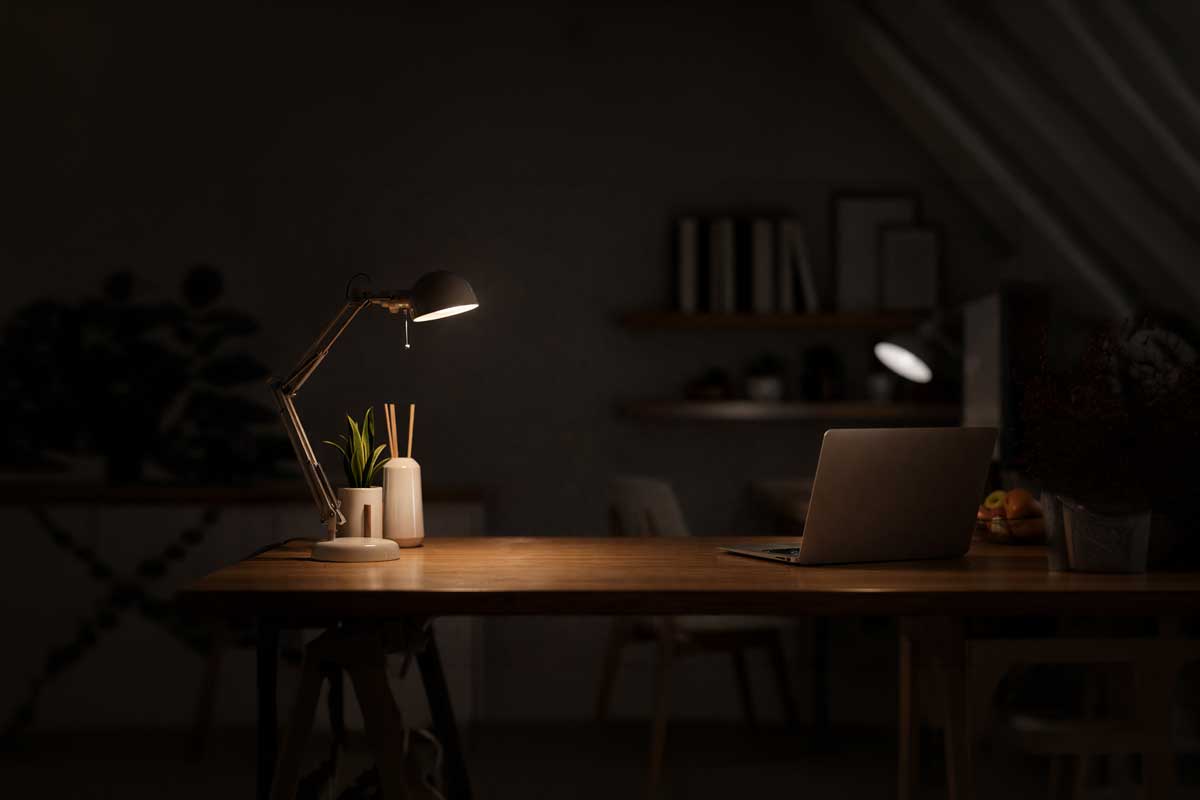
The start of the school year means children will be spending more time at their desks—reading, doing homework, drawing, and working on the computer. That’s exactly why it’s worth paying attention to lighting as well. Well-chosen lighting helps create a pleasant environment for concentration while also improving visual comfort during daily learning activities.
But a table lamp alone isn’t enough. What matters is its proper placement, the direction of the light, sufficient brightness, appropriate color temperature, and minimizing glare and reflections. In this article, we’ll show you how to properly light a work or study desk, how to choose the right table lamp, and what to keep in mind when setting up a workspace for both children and adults.
If you’re currently looking for lighting for a child’s or student’s desk, be sure to check out our table lamps, where you’ll find models suitable for work, reading, and studying.

Article Content
- Why Proper Desk Lighting Is Important
- How to Choose the Right table Lamp
- Where to Place a table Lamp Correctly
- How bright does a desk need to be?
- What color temperature should you choose for studying and working?
- How to Prevent Glare and Reflections
- Practical Tips for Proper Lighting
- Frequently Asked Questions About Desk Lighting
Why Proper Desk Lighting Is Important
Reading, writing, drawing, and working on a computer all require sustained concentration on a relatively small work area. That’s why it’s not enough for a table lamp to simply “provide light.” What matters is where the light falls, how it’s distributed, and whether it creates unpleasant shadows or glare.
Good lighting is especially important for a child’s desk. When studying, a child needs to be able to see text, pictures, and small details clearly, and may spend a significant portion of the day at the desk. Properly designed lighting therefore helps create an environment that is comfortable for reading, writing, and other study activities.
What should good desk lighting provide?
The light should cover a sufficiently large area of the table without any significantly dark spots or overly bright areas.
Notebooks, books, drawings, and other materials should be easy to read without straining your eyes.
Properly positioning the lamp helps prevent a child from casting a shadow with their own hand while writing or drawing.
The light source should not shine directly into your eyes or create unpleasant reflections on a monitor, laptop, or glossy tabletop.

The quality of lighting, therefore, does not depend solely on the wattage of a table lamp. The resulting comfort is also influenced by its placement, the direction of the light, the uniformity of illumination, the color temperature, and the relationship between task lighting and the room’s general lighting. We explain the combination of individual layers of light in a child’s room in more detail in the article “How to Properly Combine Layers of Lighting in a Child’s Room.”
The best task lighting isn't necessarily the brightest. The goal is to provide enough light where you need it while maintaining a pleasant and balanced lighting environment throughout the room.
How to Choose the Right table Lamp
A Table lamp is an important part of task lighting. While the room’s main lighting provides general visibility, a table lamp delivers focused light directly onto the work surface. This is especially important when reading, writing, drawing, or doing homework, when a child needs to see text and small details clearly. If you’re currently looking for the right model, you can also browse our selection of desk lamps.
When making your selection, the lamp’s appearance isn’t the only important factor. Also consider the ability to adjust the direction of the light, stability, the size of the work surface, and how the light falls on the desk. For a child’s desk, it’s also practical when the controls are simple and easily accessible. If you’d like to better understand the technical specifications of lighting fixtures, our guide to lighting fixture technical parameters will also help you.

Adjustable table lamp
An adjustable table lamp is very practical for a work or study desk, as it allows you to change the direction or position of the light source. This way, your child can adjust the light depending on whether they are reading, writing in a notebook, drawing, or working on a laptop.
Another advantage is the ability to adjust the lighting to the size of the workspace. The light should primarily shine where the child is working, not directly into their eyes or onto the screen.
What to Look for When Choosing a table Lamp
The ability to adjust the direction or position of the light allows you to adapt the lamp to various activities and the size of your workspace.
The base should be sturdy enough to prevent the lamp from tipping over or sliding across the table during normal use.
The light source should illuminate the work surface, not shine directly into your eyes or create glare on the screen.
The light should cover a sufficiently large area of the table without any noticeable transitions between very bright and dark spots.
A children’s desk lamp should have a practical, easily accessible on/off switch. For more advanced models, the ability to adjust the light’s intensity or color temperature can also be an advantage.
Modern LED light sources offer low energy consumption, a long service life, and, in high-quality models, the ability to adjust light intensity or color temperature.
How to Position a table Lamp Correctly

The quality of lighting isn’t just about choosing the right lamp. Proper placement on your desk is just as important. Even a high-quality table lamp can cast unpleasant shadows or cause glare if the light hits your work surface from the wrong angle.
Ideally, the lamp should be positioned so that the light falls on the work surface from the side and slightly from above. At the same time, the light source should not be directly in the child’s field of vision or reflect off the computer or laptop screen.
On which side of the table should you place the lamp?
A simple rule is to place the table lamp on the opposite side from the hand the child uses to write. Right-handed children generally do best with the lamp on the left, while left-handed children do best with it on the right. This way, the hand casts less of a shadow on the work surface while writing.
For children who frequently switch between writing, drawing, and working on the computer, an adjustable lamp is particularly practical. Its position can be easily adjusted to suit specific activities and the current layout of the desk.
How high should you hang a lamp, and where should you place it?
The lamp should be positioned high enough above the work surface to illuminate the necessary area of the desk, but the light source should not shine directly into your eyes. It is also practical to tilt the lamp slightly toward the work surface.
When working on a laptop or monitor, pay attention to glare as well. Do not position the lamp so that its light reflects directly off the screen. Proper placement will help create more even lighting conditions and reduce unpleasant glare.
Right-handed → lamp on the left. Left-handed → lamp on the right. The light should fall on the work surface from the side and slightly from above, not directly into your eyes.
How much light does a desk need?
When choosing lighting for a desk, you’ll often come across specifications in lumens (lm). However, it’s important to distinguish between luminous flux and the actual illuminance of the work surface. Lumens indicate how much light a light source emits in total, while lux (lx) express how much light actually falls on a specific surface.
For work and study areas, illuminance levels of around 500 lx are typically used, although specific requirements depend on the type of activity, the user’s age, ambient lighting, and the characteristics of the work surface.
Therefore, the lumen rating alone is not enough to determine whether a table lamp will provide sufficient light for a specific table. The beam angle, the distance of the lamp from the work surface, the way the light is distributed, and the overall lighting in the room are also important factors.
Furthermore, a desk should not be significantly brighter than its surroundings. Combining a table lamp with sufficient ambient lighting helps reduce sharp contrasts between the illuminated work surface and the dark surroundings, which contributes to better visual comfort.
Lumens (lm) indicate how much light a light source emits. Lux (lx) indicate how much light actually falls on a given surface. When evaluating desk lighting, lux is therefore a more practical measure.
Would you like to learn more about units of light? Be sure to read our guide to lumens, lux, and watts, where we explain what each value means and how they relate to one another.
What color temperature should you choose for a desk lamp?
Color temperature determines whether light appears warm, neutral, or cool. It is measured in Kelvin (K), and when choosing desk lighting, it can affect not only the appearance of the space but also overall visual comfort.
Neutral white is generally the best choice for a work or study desk. However, the specific choice also depends on the child’s age, the type of activity, the time of day, and the lighting in the entire room.
Pleasant and cozy lighting, ideal for relaxation, evening reading, and living spaces.
A great choice for a work or study desk. It offers good visibility and natural light without a noticeably warm or cool tone.
It provides a more pronounced and cooler light. It is better suited for certain work and technical spaces.
Is warm or cool light better for a child's desk?
For everyday home learning, reading, and writing, a neutral white color temperature of around 3500–4000 K is a practical choice. The light appears sufficiently bright and natural without having a distinctly warm or cool tint.
Warmer light around 2700–3000 K is more pleasant for relaxation and evening reading, while very cool light may not always be comfortable for long-term use at home. If you’re interested in how light temperature and intensity affect the overall feel of an interior, check out our article on how lighting influences the atmosphere of a room.
How to Avoid Glare and Reflections on Your Screen
The right light temperature alone does not guarantee a comfortable work environment. Glare and light reflection are also very important factors. Unpleasant glare can occur, for example, when a light source shines directly into your eyes or is reflected off a monitor or a shiny work surface.
When it comes to a child’s desk, it is therefore important to consider not only the intensity of the light, but also its direction and placement. The goal is to create an evenly lit work surface without any significant bright spots, glare, or deep shadows. The UGR parameter is also related S the issue of glare; we explain it in more detail in our guide on what UGR is and why it’s important when choosing lighting.
Light can reflect off the monitor and create annoying glare.
The light source should illuminate the table, not shine directly into your eyes.
A lampshade or diffuser helps scatter the light and soften unpleasant sharp contrasts.
Combining a table lamp with soft ambient lighting in the room helps reduce the contrast between the desk and the surrounding area.
The most comfortable work environment isn’t created by a bright table lamp alone. It’s important to balance the lighting of your workspace with the ambient light so that there isn’t too much contrast between a bright desk and a dark room.
Practical Tips for Lighting Your Desk
Properly designed desk lighting doesn’t have to be complicated. Just follow a few basic rules that will help you create a comfortable, well-lit, and pleasant space for work and study.
Adjust the direction of the light
Choose a table lamp that allows you to adjust the direction or position of the light source. This way, you can direct the light exactly where your child is reading, writing, or drawing.
Place the lamp opposite your dominant hand
Right-handed people usually prefer a lamp on the left side of the desk, while left-handed people prefer one on the right. This way, when writing, the hand casts fewer shadows on the work surface.
Select the appropriate light temperature
For homework, reading, and other study activities, a neutral white color temperature of around 3500–4000 K is usually practical. If the lamp allows you to adjust the color temperature, you can tailor it to the time of day and the specific activity.
Light up the area around your table, too
A Table lamp should not be the only light source in a room. Soft ambient lighting helps reduce the contrast between a bright work surface and a darker surroundings.
Control glare and reflections
The light should not shine directly into your eyes or cause glare on the screen. Lamps with a diffuser and adjustable light direction are practical.
If a child’s hand casts a noticeable shadow on the work surface while writing or reading, the light is probably not positioned optimally. Try changing the position or angle of the lamp and see if the work surface is illuminated more evenly.
Conclusion: How to Create a Well-Lit Children’s Desk
Good desk lighting isn’t just a matter of choosing a table lamp. To create a comfortable environment, it’s important to combine the right lamp, its placement, and the appropriate light intensity and color temperature, while also considering the lighting of the entire room.
For a child’s desk, it’s worth choosing an adjustable lamp that allows you to direct the light toward specific activities. It’s also practical to have the option to adjust the light’s intensity or color temperature, making it easy to adapt the lighting to different situations throughout the day.
If you’re planning the lighting for an entire children’s room or a home office, you can follow up on this guide with our interior lighting design guide, where we focus on combining ambient, task, and accent lighting.

Frequently Asked Questions About Desk Lighting
What kind of table lamp is suitable for a child’s desk?
A stable and adjustable table lamp that allows you to direct the light directly onto the work surface is particularly suitable for a child’s desk. Another practical advantage is the ability to adjust the light’s intensity or color temperature.
Which side should I place the table lamp on?
Right-handed people are usually advised to place the lamp on the left side of the desk, while left-handed people should place it on the right. This minimizes shadows on the work surface while writing. With an adjustable lamp, you can further customize its position to suit specific tasks.
What color temperature is best for a child’s desk?
Neutral white light at approximately 3500–4000 K is generally suitable for reading, writing, and homework. Warmer light around 2700–3000 K is more pleasant for relaxation and evening reading, while very cool light may not always be comfortable for long-term use at home.
How many lumens should a table lamp have?
The number of lumens alone is not decisive when evaluating desk lighting. Lumens indicate the total luminous flux of the light source, while the actual illumination of the work surface is measured in lux (lx). Therefore, the distance of the lamp, the beam angle, and the way the light is distributed also play an important role.
Is an LED table lamp suitable for children?
Yes. A high-quality LED table lamp can be a very practical solution for a child’s desk. It offers low energy consumption, a long service life, and, in some models, the ability to adjust the light intensity or color temperature.
How can you prevent glare on your monitor?
Position the Table lamp so that its light does not reflect directly off the screen. The light source should illuminate the work surface from the side and should not be directly in your field of vision. A diffuser that evenly disperses the light can also be helpful.
Is a table lamp enough as the only light source for a desk?
Usually not. A Table lamp should complement the overall lighting in the room. Combining task lighting with ambient lighting helps reduce the contrast between a bright work surface and a darker surroundings, creating a more comfortable environment.
Is an adjustable table lamp better?
In most cases, yes. An adjustable lamp allows you to change the direction and, if necessary, the height of the light source depending on whether your child is writing, reading, drawing, or working on a computer.
How can you avoid shadows when writing?
Place the lamp on the opposite side of the table from the hand the child uses to write. For right-handed children, this is usually on the left, and for left-handed children, on the right. The light should fall on the work surface from the side and slightly from above.
Choose a table lamp for your work desk
A well-chosen table lamp will help create a comfortable and functional space for homework, reading, and creative work. Choose from lighting that combines high-quality craftsmanship, practical features, and timeless design.
Browse table lamps
Share:
How to visually enlarge the space
How to design kitchen worktop lighting