

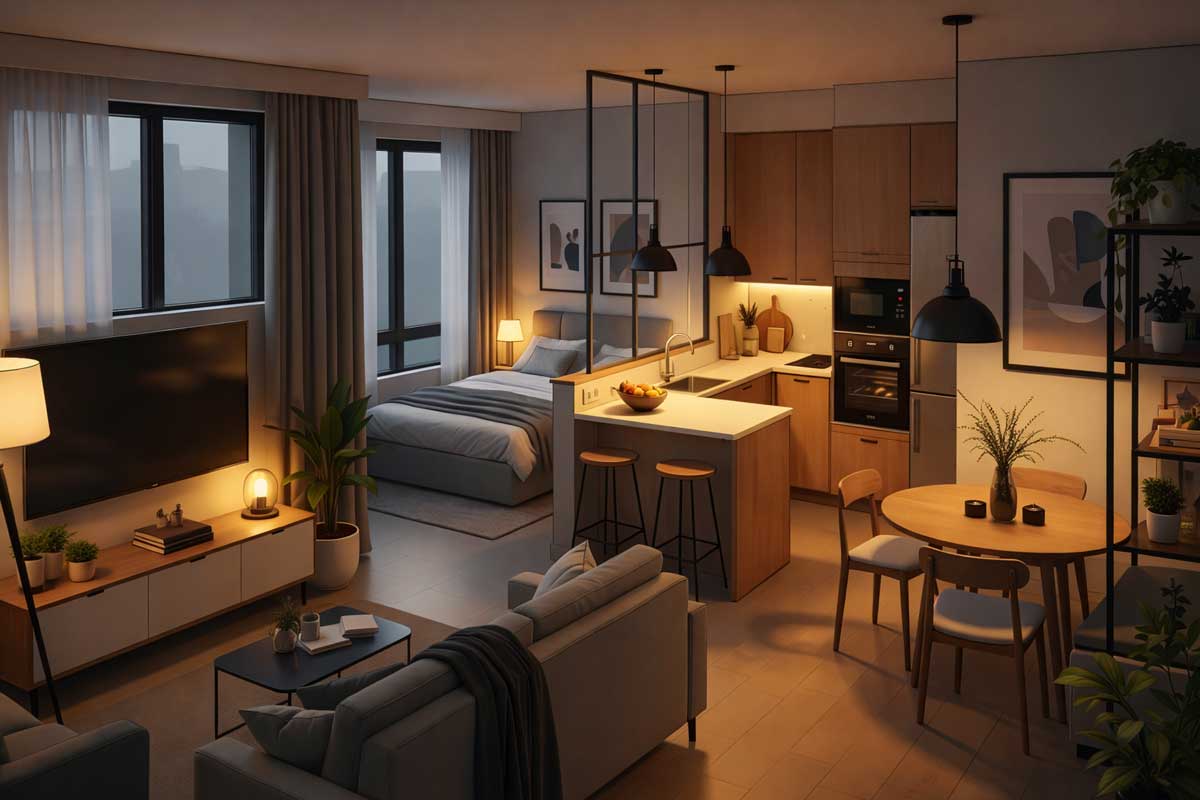
Lighting design for a small apartment requires a thoughtful approach. Limited space often means fewer windows, compact rooms and tighter layouts. Without the right lighting, small apartments can easily appear dark, cramped or visually closed in.
Lighting plays a vital role in how we perceive a space. The right lighting techniques can make rooms visually larger, brighter and more open. By carefully combining different layers of lighting, brightness levels and light temperature, it is possible to transform even a small apartment into a comfortable and visually spacious environment.

Many interior designers use lighting as a tool to enhance the perception of space. Strategic placement of light can highlight walls, expand visual depth and eliminate dark corners that make a space feel smaller.
In this guide we look at how lighting can visually enlarge a small apartment and what lighting techniques work best in compact interiors.
Why lighting in small apartments is key
In small apartments, every design element plays an important role in how the space feels. Lighting is even more important as it directly affects brightness, depth and visual openness.
Poor lighting can make a small apartment feel cramped, while thoughtful lighting can create the illusion of a larger space.
Good lighting design can:
- Visually enlarge rooms - the right distribution of light reduces shadows and expands visual boundaries.
- Improve brightness - well-placed lighting eliminates dark corners that reduce the perceived size of a room.
- Highlight interior features - light can accentuate walls, textures and architectural features.
- Create a pleasant atmosphere - balanced lighting makes small spaces cosy and relaxing.

Thanks to these advantages, interior designers always take lighting into account at an early design stage when working with small apartments.
Using layered lighting to increase space

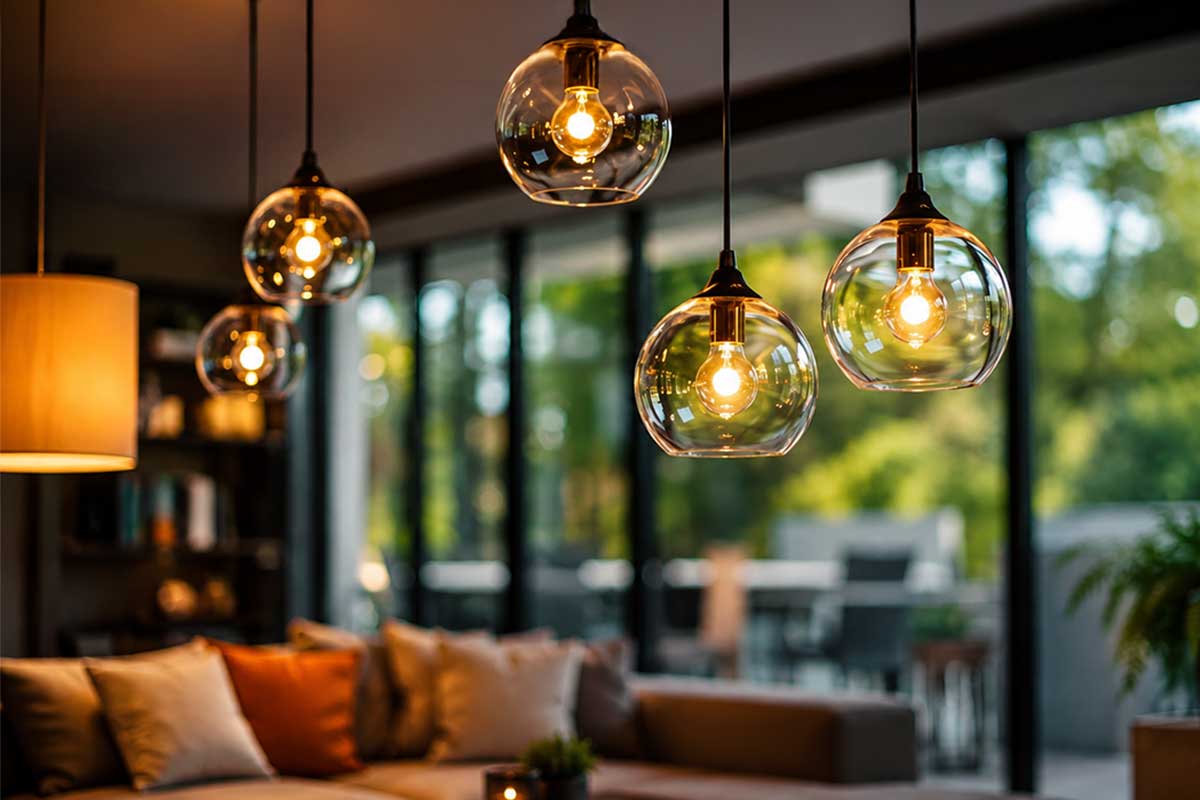
One of the most effective strategies for small apartments is layered lighting. Instead of relying on one central ceiling light, designers combine multiple light sources that have different functions.
Layered lighting improves brightness and helps distribute light evenly throughout the room.
Ambient lighting
Ambient lighting provides overall illumination of a space. It ensures that the room is sufficiently illuminated for everyday activities.
In small apartments, ambient lighting is often created by ceiling lights, recessed lighting or indirect LED lighting installed along the ceiling or walls.
Indirect lighting is particularly useful because it diffuses light gently over surfaces, making the space feel more open.
Work lighting
Work lighting focuses on areas where specific activities take place. Examples are table lamps, reading lamps or lighting under kitchen cabinets.
Work lighting improves visibility without increasing brightness throughout the room.
This approach is ideal for small apartments as it allows you to illuminate specific zones while maintaining a calm overall atmosphere.
Accent lighting
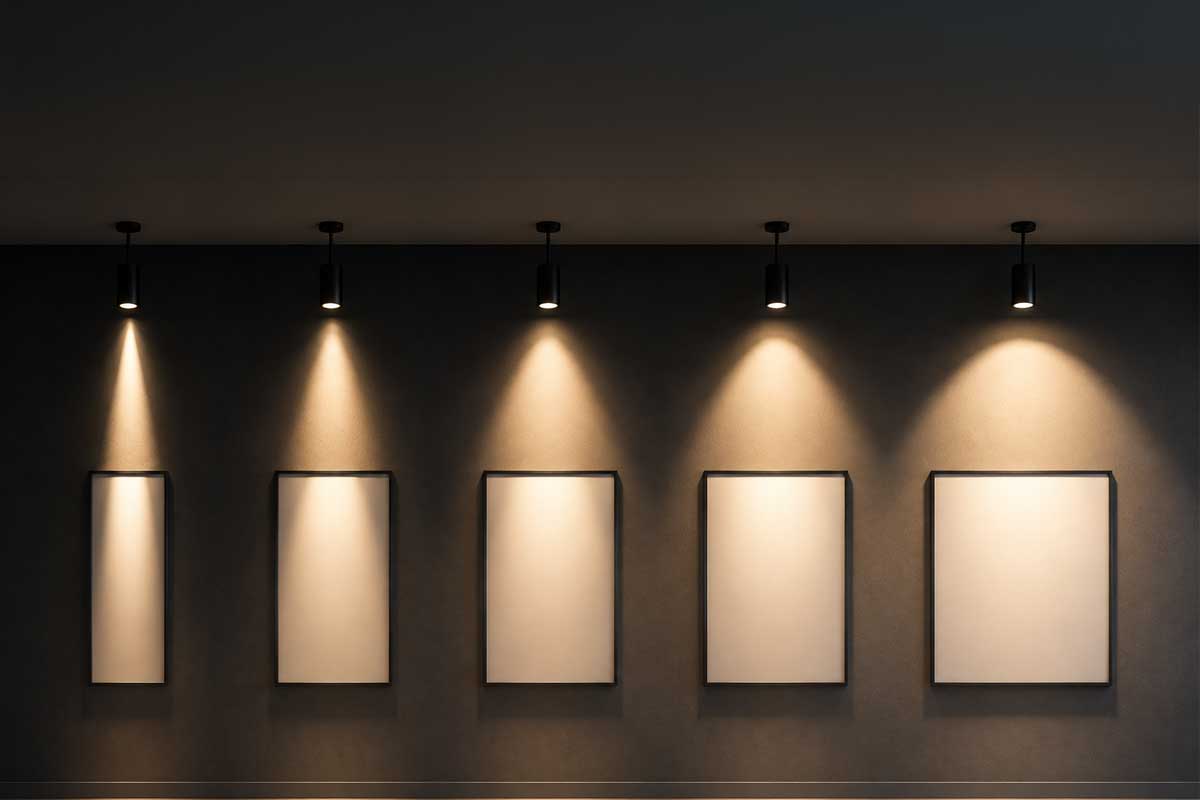
Accent lighting highlights decorative elements such as artwork, textured walls or shelves.
This type of lighting creates depth in a room and prevents the space from looking flat or monotonous.
Accent lighting can be created with wall spot lights, LED strips or directional strip lights.
Choosing the right light temperature
The temperature of the light significantly influences how spacious a room feels. It is measured in Kelvin (K) and determines whether the light feels warm or cool.
Choosing the right light temperature helps maintain comfort and visual openness.
Warm light (2700K-3000K)
Warm light creates a soft and relaxing atmosphere. It is often used in living rooms and bedrooms because it creates a cosy environment.
A common question people search for online is:
Why is warm lighting suitable for home use?
Warm light is pleasing to the human eye and helps create a relaxing atmosphere in residential interiors.
Neutral light (3500K-4000K)
Neutral light looks brighter and more natural. It is commonly used in kitchens, bathrooms or work areas where good visibility is important.
In small apartments, the combination of warm ambient lighting with slightly brighter work lighting can create a balanced environment.
Using light placement to create the illusion of space

The location of the luminaires is as important as the type of lighting used. Strategic placement can visually enlarge a small apartment.
Wall lighting
Wall lighting direct light onto vertical surfaces. When the walls are well lit, the room appears wider and more open.
The wall washing technique is often used to highlight textured walls or decorative panels.
Ceiling lighting
Ceiling lighting that evenly diffuses light throughout the room helps eliminate dark corners.
Recessed lighting or indirect ceiling lighting can create a clean and minimalist look that fits small apartments.
Indirect lighting
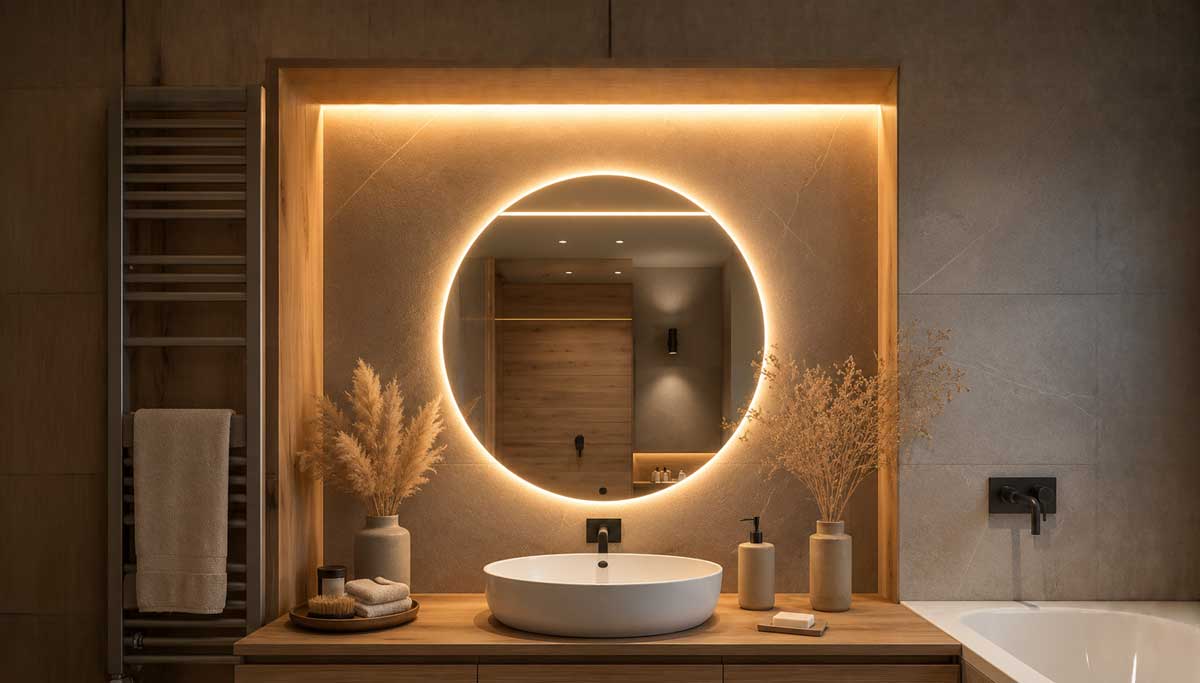
Indirect lighting reflects light from ceilings or walls instead of shining directly into the space.
This technique creates soft lighting that visually enlarges the space.
Practical tips for lighting small apartments
Lighting design for compact interiors is easier if you follow a few practical rules.
Useful tips include:
- Use multiple light sources instead of one central ceiling lighting. Layered lighting creates a better visual balance.
- Install wall or indirect lighting to highlight vertical surfaces and visually enlarge the space.
- Choose lighting with a simple and minimalist design to avoid visual overwhelm.
- Use mirrors in combination with lighting to reflect light and increase brightness.
- Consider dimmable lighting so that the intensity can be adjusted according to the activity.
These strategies help make small apartments feel more open, comfortable and visually balanced.
When used thoughtfully, lighting becomes a powerful design tool that enhances both the functionality and appearance of compact interiors.
Visual inspiration for lighting small apartments
Visual examples can help readers better understand how lighting techniques affect small spaces.
Useful visuals for this topic may include:
- examples of indirect ceiling lighting in small apartments
- Wall lighting highlighting vertical surfaces
- Layered lighting in compact living rooms
- Comparison of poorly and well lit small interiors
These visuals help illustrate how lighting can visually enlarge a small apartment.
Conclusion
Lighting is one of the most effective tools for improving the perception of space in a small apartment. By combining ambient, task and accent lighting, designers can create balanced lighting that improves both comfort and visual openness.
Choosing the right intensity, selecting the right light temperature and strategically positioning luminaires contribute to making a small apartment look bigger and more inviting.
With careful design, even a compact interior can look bright, spacious and visually appealing.

Share:
Modern kitchen lighting.
How to properly illuminate a desk