

Kitchen lighting plays a crucial role in both functionality and interior design. Of all the lighting elements in the kitchen, countertop lighting is among the most important. This is the area where food preparation, cooking, and many daily activities take place. Without proper lighting above the countertop, even a well-designed kitchen can feel uncomfortable and impractical.
Modern kitchen design focuses not only on aesthetics, but also on efficiency and usability. Lighting above the countertop must provide clear visibility while maintaining a pleasant atmosphere in the space. Properly placed lighting reduces shadows, increases safety when using kitchen tools, and enhances the overall appearance of the kitchen.
In this guide, we’ll look at the best lighting solutions for kitchen countertops and explain how to choose lighting that combine functionality, energy efficiency, and modern design.

Article Content
Why Proper Countertop Lighting Is Important
The kitchen countertop is one of the most frequently used areas in every home. Activities such as chopping vegetables, preparing ingredients, reading recipes, or cleaning require bright and even lighting.
If the lighting is positioned incorrectly, cabinets or a person standing at the countertop can block the light, casting shadows directly onto the work surface.
High-quality work surface lighting offers several important benefits:
- Improved visibility—proper lighting ensures that the workspace is well lit.
- Increased safety—bright lighting helps reduce the risk of accidents when using knives or kitchen equipment.
- Improved functionality—task lighting allows for comfortable work at the countertop.
- Enhanced kitchen design—well-designed lighting highlights countertops, tiles, and materials in the kitchen.
Thanks to these advantages, modern kitchens almost always feature separate lighting above or near the countertop.

Understanding Task Lighting in the Kitchen
In lighting design, task lighting refers to lighting for work surfaces. Task lighting focuses on specific areas where detailed activities take place.
Unlike ambient lighting, which illuminates the entire room, task lighting is directed at the work area.
How Work Lighting Works

Task lighting provides focused light exactly where it's needed. In kitchens, this usually means lighting that shines directly onto the countertop surface.
Common solutions for task lighting include LED strips installed under cabinets, recessed lights above the countertop, or adjustable recessed lighting.
When installed correctly, task lighting improves visibility while preventing shadows caused by overhead lighting.
Why Kitchens Need Brighter Lighting
Kitchen work surfaces require brighter lighting than many other areas of the home.
Typical kitchen countertop lighting should provide 300–500 lux, which ensures that tasks such as cutting or measuring ingredients can be performed comfortably.
The use of energy-efficient LED lighting allows for high brightness with low energy consumption.
The best lighting solutions for above the countertop

In modern kitchens, several types of lighting are commonly used to effectively illuminate the countertop. Choosing the right solution depends on the kitchen layout, cabinet design, and overall interior style.
LED lighting under cabinets
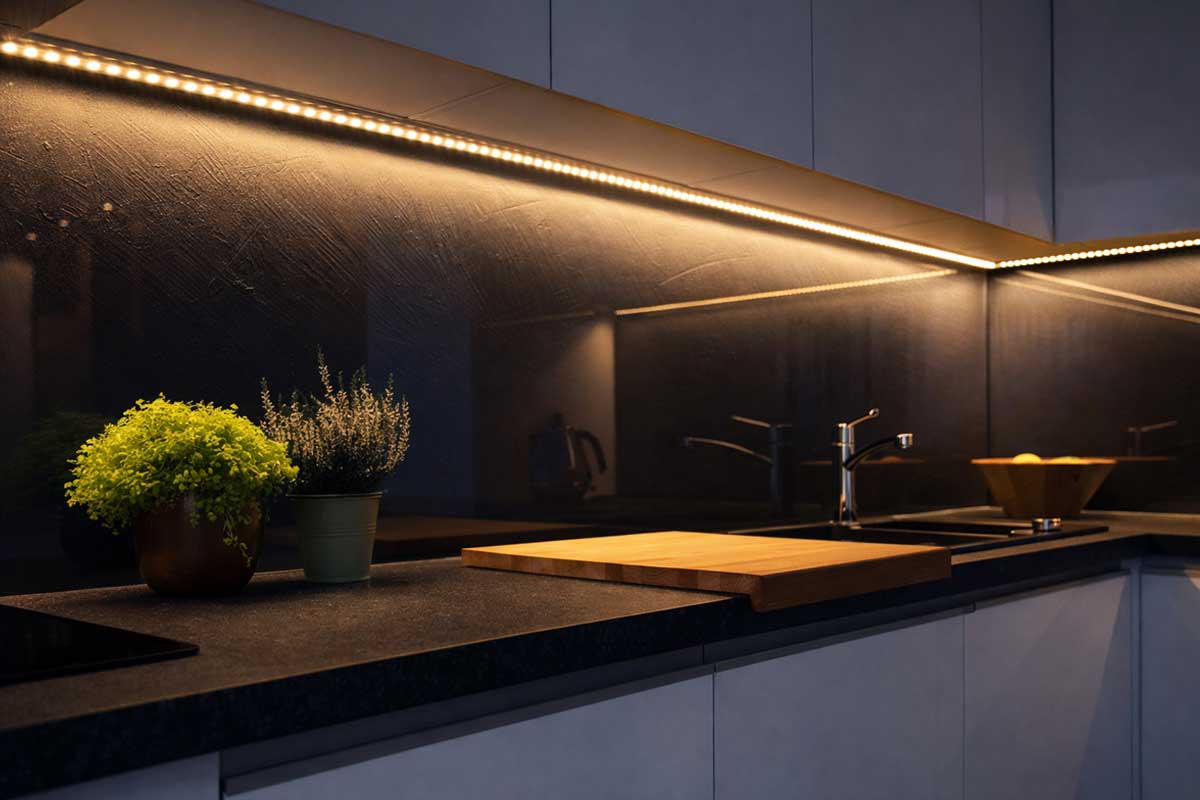
Under-cabinet lighting is one of the most popular solutions for illuminating kitchen countertops. LED strips or LED tracks are installed under the upper cabinets and direct light downward onto the work surface.
This solution works well because it eliminates the shadows created when ceiling lights are blocked by cabinets or by a person working at the countertop.
LED under-cabinet lighting also creates a clean and modern look, making it a popular choice in contemporary kitchen design.
Recessed ceiling lights
Recessed ceiling lighting installed above the countertop can provide additional brightness for the work area.
These lights are recessed into the ceiling and distribute light evenly throughout the kitchen. When properly placed, recessed lights can complement other layers of lighting in the kitchen.
However, recessed lights alone may not always provide sufficient task lighting, especially if cabinets block the light.
Pendant lighting above the kitchen island
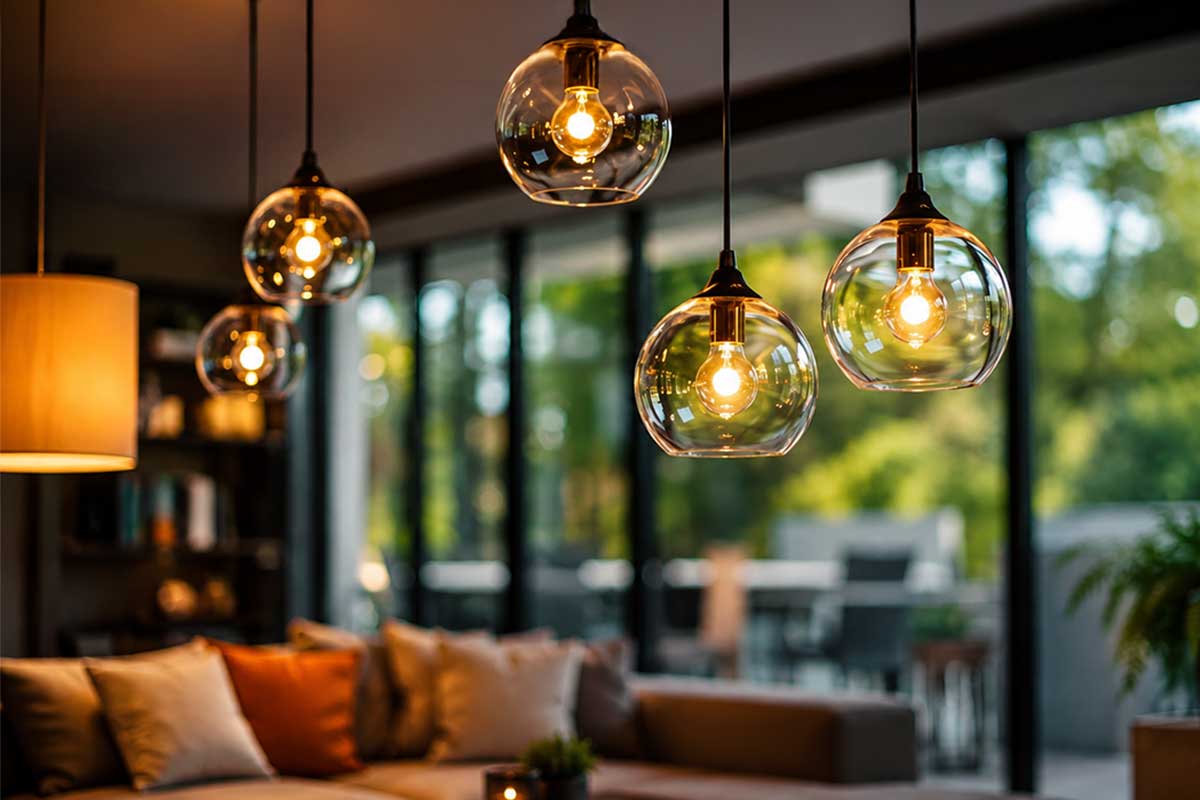
Pendant lighting are commonly used above kitchen islands or extended countertops. These lighting combine functionality with decorative design.
Pendant lights provide direct light for food preparation or dining while also serving as a stylish visual element in the kitchen.
In modern kitchens, pendant lighting often feature minimalist designs, glass shades, or metal finishes that complement contemporary interiors.
Choosing the Right Color Temperature
Color temperature is an important factor in kitchen lighting. It is measured in Kelvin (K) and determines whether the light appears warm or cool.
Different light temperatures affect how comfortable and functional a space feels.
Neutral light (3500K–4000K)
Neutral white light is commonly recommended for kitchens. It provides bright, balanced lighting that improves visibility while preparing food.
This color temperature helps you perceive colors accurately, which is important when cooking or selecting ingredients.
Warm light (2700K–3000K)
Warm light is often used in dining areas or for decorative lighting in the kitchen.
A common question that people search for online is:
Why is warm lighting suitable for home use?
Warm light creates a cozy atmosphere and makes living spaces more pleasant. Although task lighting in the kitchen is usually neutral, combining it with warm ambient lighting can create a comfortable overall environment.
Practical Tips for Lighting a Countertop
Designing effective lighting for your kitchen countertop is easier if you follow a few practical rules.
Helpful tips include:
- Install LED lighting under your cabinets to illuminate your entire workspace without creating shadows.
- Combine task lighting with ambient ceiling lighting for balanced lighting throughout the kitchen.
- Choose light lighting with a neutral color temperature for better visibility while cooking.
- Ensure even light distribution across the entire work surface.
- Consider dimmable lighting so you can adjust the brightness depending on the time of day or your activity.
These strategies help create a kitchen environment that is both functional and visually appealing.
With a well-thought-out design, the countertop becomes a comfortable and efficient workspace that supports everyday cooking.
Common Mistakes in Work Surface Lighting
When designing lighting for kitchen countertops, the same mistakes are often made, which can negatively affect cooking comfort, safety, and the overall appearance of the kitchen. Even high-quality lighting may not provide satisfactory results if they are improperly placed or if the wrong color temperature is chosen.
Properly designed work surface lighting should provide even light without glare or shadows, allowing you to work comfortably during your daily activities.
- Relying solely on central ceiling lighting—A single ceiling light is usually not enough to adequately illuminate a work surface. When working, you often stand between the light source and the countertop, which creates unwanted shadows and impairs visibility.
- Improper placement of light sources—If lighting are too far from the work surface or are not properly aimed, the light will not be distributed evenly. This can result in dark spots on the countertop and reduced comfort while cooking.
- Insufficient lighting intensity – Lighting that is too dim makes it difficult to prepare food, read recipes, and use kitchen utensils. For countertops, an intensity of approximately 300 to 500 lux is recommended, which ensures sufficient visibility without excessive glare.
- Inappropriate light temperature – Light that is too warm can distort the colors of food and reduce the visibility of details. Conversely, very cool light can feel impersonal and unpleasant. Neutral white light in the range of 3500K to 4000K is most often recommended for lighting kitchen countertops.
- Uneven lighting of the work surface—Using only a single light source can result in some parts of the countertop being well-lit, while others remain in shadow. Even distribution of light across the entire length of the work surface significantly improves the comfort of using the kitchen.
- Lack of dimming options – The kitchen isn’t just for cooking. Dimmable lighting allows you to adjust the light intensity to suit different situations throughout the day and create a more pleasant atmosphere for dining or relaxing in the evening.
Avoiding these mistakes will help you create kitchen countertop lighting that is safe, functional, and aesthetically harmonious with the entire interior. The combination of high-quality task lighting, the right color temperature, and proper fixture placement will ensure maximum comfort during everyday use of the kitchen.
Many problems with inadequate lighting arise as early as the interior design phase. If you want to avoid other common mistakes, be sure to read our article on the most common lighting design errors.
Conclusion
Proper lighting above the kitchen countertop is essential for both safety and functionality. Activities such as food preparation, cooking, and cleaning require bright and consistent lighting.
Modern kitchens often combine multiple types of lighting, including LED under-cabinet lighting, recessed ceiling fixtures, and decorative pendant lights. By applying the principles of layered lighting, you can create a space that is both functional and visually appealing.
Choosing the right brightness, selecting the appropriate color temperature, and properly positioning the lights ensure that your workspace remains comfortable and efficient.

Frequently Asked Questions About Kitchen Countertop Lighting
What is the best lighting for a kitchen countertop?
Among the most popular solutions is LED lighting installed under upper cabinets. The light shines directly onto the work surface, minimizes shadows, and provides even lighting for food preparation, cooking, and cleaning.
How many lux should a kitchen countertop have?
For everyday food preparation, a light intensity of approximately 300 to 500 lux is recommended. This level provides sufficient visibility without excessive glare and ensures a comfortable working environment in the kitchen.
What color temperature is best for lighting a countertop?
Neutral white light in the range of 3500K to 4000K is most often recommended. It provides natural color rendering and good visibility, and is ideal for food preparation and other kitchen activities.
Are LED strips suitable for use under kitchen cabinets?
Yes. LED strips are among the most common ways to light a kitchen countertop. They offer even light distribution, low energy consumption, a long lifespan, and easy installation under upper cabinets.
Can you combine different types of lighting in the kitchen?
Yes. Modern kitchens often combine task lighting for the countertop, central ceiling lighting, and decorative pendant lighting above the kitchen island or dining table. This layered lighting provides both better functionality and a more pleasant atmosphere.
Where should you place lighting above the countertop?
Ideally, place the light source under the upper cabinets or directly above the work surface so that the light falls on the countertop from the front. This minimizes shadows cast by a person standing at the work surface.
Is dimmable lighting worth it in the kitchen?
Yes. Dimmable lighting allows you to adjust the light intensity to suit the situation. You can use full brightness while cooking, while creating a more pleasant and cozy atmosphere during an evening get-together or dinner.
Are you looking for lighting for your kitchen countertop?
Browse our selection of LED lighting, spotlights, pendant lights, and other solutions for modern kitchens. Choose lighting that ensures perfect visibility while cooking and also highlights the design of your interior.
Browse kitchen lighting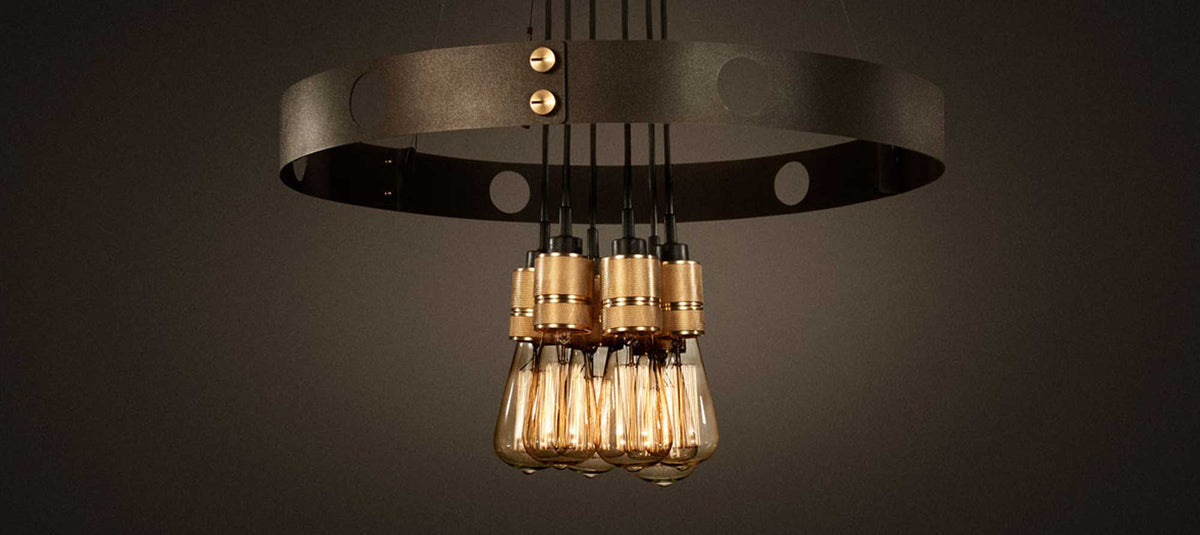
Share:
Design lighting in a minimalist interior
How to visually enlarge the space