

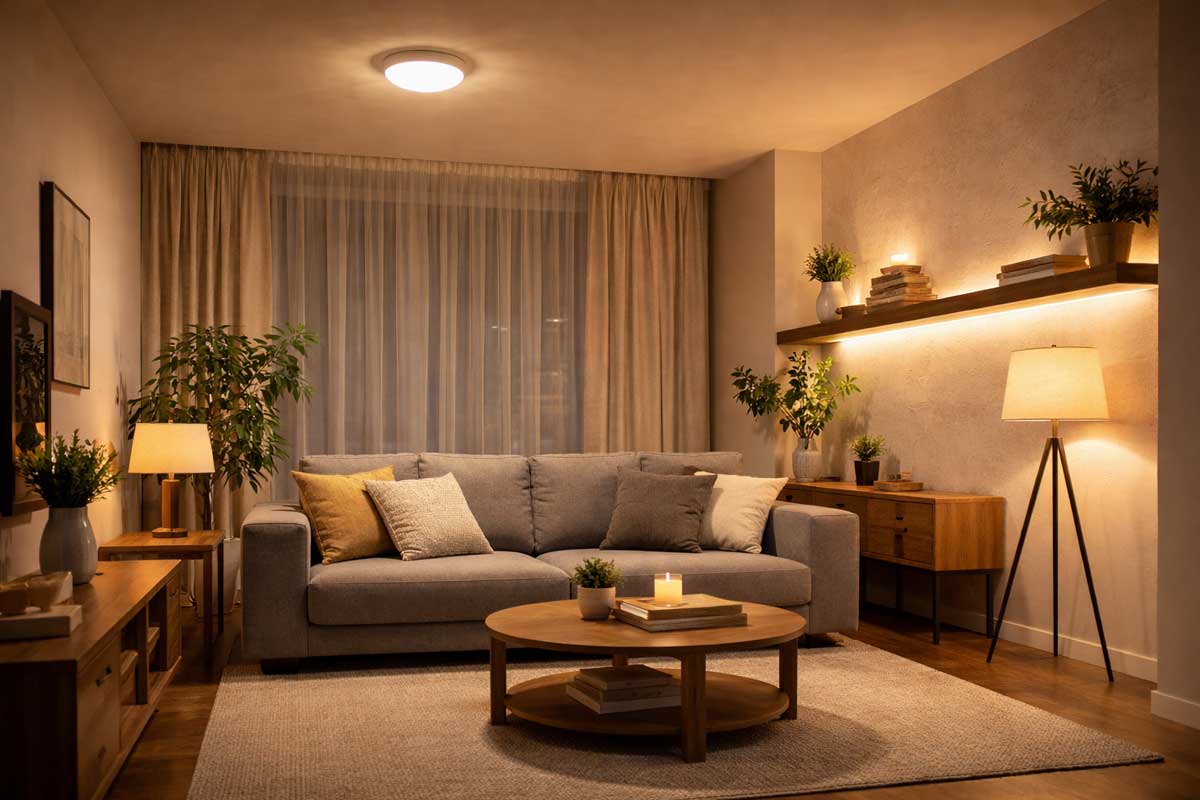
Lighting is one of the most important elements in interior design. While furniture, wall colors, and decorative details shape the visual style of a space, lighting determines how the environment is actually perceived. A well-designed lighting plan can create a home that feels comfortable, inviting, and functional. Meanwhile, poor lighting can make even a beautifully designed apartment feel dull or impractical.
Many homeowners focus on furniture and decor during renovations or interior design, but lighting is often addressed only later. This can lead to uneven lighting, dark corners, or unpleasant glare. Proper lighting design for an apartment should always be part of the early planning phase, as it directly affects both the atmosphere and the usability of the space.
In this guide, we’ll explain how to design apartment lighting step by step. You’ll learn how to plan individual lighting layers, how to choose the right light intensity and color temperature, and how to avoid common mistakes. With the right strategy, lighting can transform an apartment into a balanced and comfortable place to live and enhance the overall interior lighting design.

Article content
Why is high-quality lighting design important in an apartment?
Apartments often contain several functional zones within a limited space. The living room may also serve as a workspace, while the kitchen may be connected to the dining area. For this reason, the lighting must support various activities throughout the day.
High-quality lighting design improves both comfort and practicality and helps create functional interior lighting. It enhances visibility during everyday activities while creating a pleasant atmosphere for relaxation.
Well-designed apartment lighting helps:
- Improve visual comfort – Proper lighting reduces eye strain during activities such as reading, cooking, or working on a computer.
- Highlight interior elements – Lighting can accentuate materials such as wood, brick, or decorative wall surfaces.
- Create a pleasant atmosphere – Warm light can make a space feel cozy, while brighter light promotes productivity.
- Support various daily activities – Different lighting zones allow a single apartment to serve multiple purposes.
For these reasons, professional designers usually plan the lighting before selecting furniture or decorations.
Understanding Layered Lighting in Apartment Design

One of the most effective lighting strategies is what is known as layered lighting. Instead of relying on a single ceiling light, designers combine several types of lighting that work together to create balance and flexibility.
Ambient lighting
Ambient lighting provides the main lighting for the home. It ensures that the room is sufficiently lit for safe movement and everyday activities.
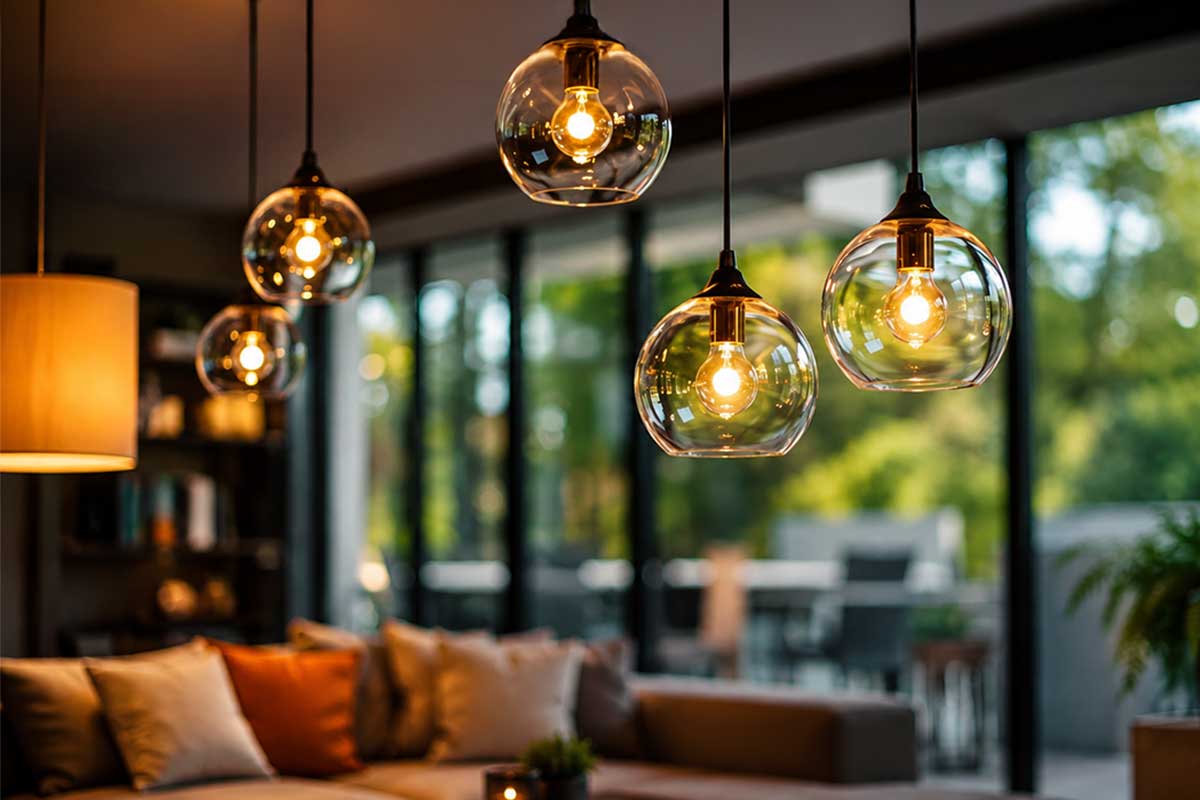
Typical ambient lighting fixtures include ceiling lighting, recessed LED lights, and pendant lighting. Many modern homes also use indirect LED lighting installed along ceilings or walls, which creates soft, evenly diffused light.
Ambient lighting forms the foundation of the entire lighting system, so it should provide consistent brightness without causing glare or feeling too intense.
Work lighting
Task lighting is designed for specific activities that require brighter or precisely directed light. This type of lighting improves visibility during detailed tasks.
Examples of task lighting include table lamps for work or study, under-cabinet lighting in the kitchen, and reading lamps placed next to a bed or sofa. In bathrooms, mirror lighting also serves this purpose.
By placing lights exactly where they are needed, task lighting makes everyday activities more comfortable and efficient.

Accent lighting
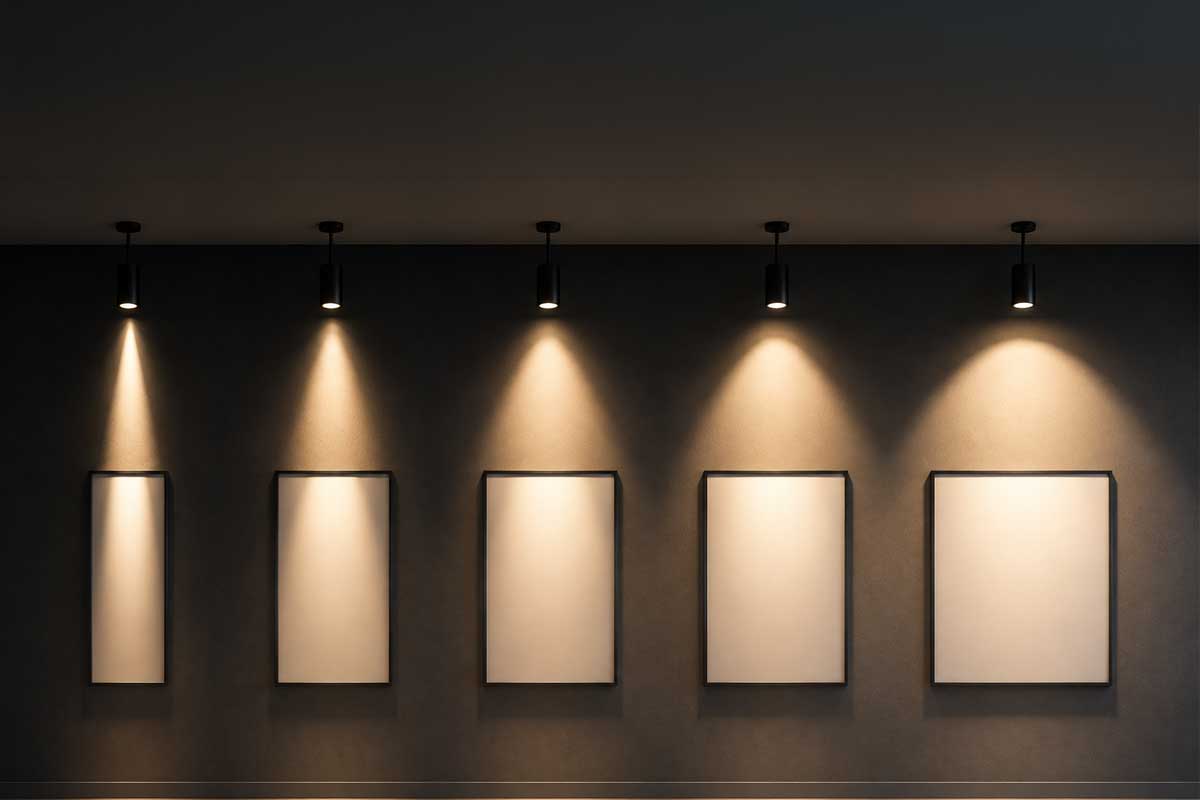
Accent lighting adds depth and character to a home. Instead of lighting the entire room, it highlights specific elements such as artwork, shelves, or architectural details.
This type of lighting can include wall spotlights, LED strips behind furniture, or decorative lamps placed on shelves. Accent lighting helps create visual contrast and gives the interior a more sophisticated look.
Choosing the right light intensity for each room
Another important step in lighting design is choosing the right light intensity. Modern lighting uses lumens instead of watts.
Lumens indicate the amount of visible light light light produces. Choosing the right number of lumens ensures that a room will be sufficiently bright without being harsh.
General recommendations:
- Small rooms – approximately 1,500–2,500 lumens
- Medium-sized rooms – approximately 2,500–4,000 lumens
- Large open spaces – 4,000 lumens and more
Instead of using a single powerful light source, it is often better to combine several smaller fixtures. This approach distributes the light more evenly and helps prevent harsh shadows or glare.
LED lighting is particularly well-suited for modern home lighting because it provides high light output with lower energy consumption.
Choosing the Right Color Temperature
Color temperature has a strong influence on how a room feels. It is measured in kelvins (K) and determines whether the light appears warm, neutral, or cool.

Warm light (2700K–3000K)
Warm light creates a soft, yellowish tone similar to that of traditional incandescent bulbs or candles. It creates a calm and relaxing atmosphere, which is why it is often used in living rooms and bedrooms.
A common question people search for online:
Why is warm light suitable for the home?
Warm light is pleasing to the eye and helps create a relaxing atmosphere after a long day. It also pairs well with materials such as wood, fabric, and warm-toned decor.
Neutral light (3500K–4000K)
Neutral light provides a balanced tone between warm and cool light. It appears brighter and cleaner, making it ideal for kitchens, bathrooms, and home offices.
This type of lighting improves visibility during activities such as cooking or grooming, while still maintaining a pleasant atmosphere.
Practical tips for designing apartment lighting
When designing lighting for an apartment, it is helpful to follow a few practical rules that improve both comfort and functionality.
Helpful tips include:
- Use multiple light sources instead of a single central ceiling lighting. Layered lighting creates a more balanced and visually appealing lighting scheme for your home.
- Install task lighting in areas where detailed work is performed, such as kitchen counters, work desks, or reading nooks.
- Choose warm light for relaxing spaces, such as living rooms and bedrooms, to create a cozy atmosphere.
- Use dimmable lighting whenever possible. It allows you to adjust the light intensity according to the time of day or your activity.
- Avoid placing bright lights directly in the field of vision. Placing lights slightly above or behind the user helps reduce glare.
These simple strategies can significantly improve the overall quality of lighting in your home.
Conclusion
Designing lighting for an apartment requires a careful balance between aesthetics, functionality, and technical solutions. By understanding layered lighting, choosing the right light intensity, and selecting the appropriate color temperature, it is possible to create an interior that feels comfortable and visually balanced.
Lighting should never be an afterthought. When designed correctly, it can enhance interior design, improve the everyday usability of a space, and create a pleasant atmosphere throughout the home.
Thanks to modern LED technology and flexible lighting systems, homeowners today have more options than ever before for designing modern home lighting that truly matches their lifestyle while highlighting the beauty of their interior.
Frequently asked questions about apartment lighting
How to properly design lighting for an apartment?
The foundation is a combination of ambient, task, and accent lighting. Proper lighting design should take into account the size of the room, daily activities, and the desired atmosphere.
How many lumens does an apartment need?
Small rooms typically require approximately 1,500–2,500 lumens, medium-sized spaces around 2,500–4,000 lumens, and larger open interiors more than 4,000 lumens.
What is the best light temperature for an apartment?
Warm light in the range of 2700K to 3000K is ideal for living rooms and bedrooms because it creates a pleasant and relaxing atmosphere. Neutral light around 4000K is suitable for kitchens, bathrooms, or home offices.
Is it better to have one central light or multiple light sources?
Most modern interiors use multiple layers of lighting. The combination of ceiling fixtures, lamps, and indirect lighting creates a more balanced and flexible lighting environment.
Why use layered lighting?
Layered lighting combines ambient, task, and accent lighting. This makes the interior more functional, comfortable, and visually appealing.
Is LED lighting suitable for an apartment?
Yes. LED lighting offers high efficiency, a long service life, and low energy consumption. Modern LED lighting also allow for dimming and adjusting the color temperature.
Is dimmable lighting worth it?
Dimmable lighting allows you to adjust the light intensity to suit different situations throughout the day. It helps create a pleasant atmosphere and can also help reduce energy consumption.
Looking for inspiration for lighting your home?
Browse our selection of designer lighting fixtures and find inspiration for modern lighting in living rooms, bedrooms, kitchens, and other interiors.
Browse lighting
Share:
Lighting loft apartment - industrial style in practice
Lighting design basics: what every architect should know