

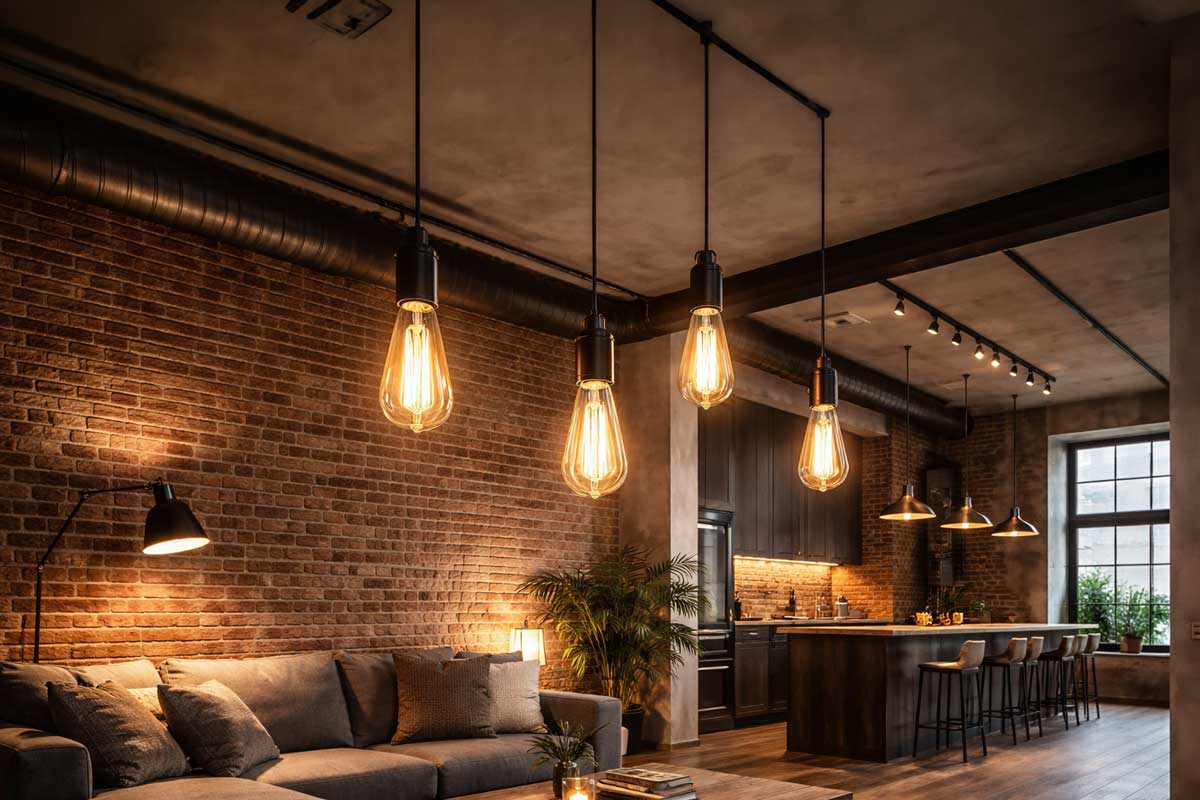
Loft apartments are known for their open floor plans, high ceilings, exposed materials, and raw architectural elements. Originally inspired by converted industrial buildings and warehouses, loft interiors often feature brick walls, concrete surfaces, metal structures, and large windows. Thanks to these unique architectural features, lighting plays a crucial role in defining both the atmosphere and functionality of a loft apartment.

In an industrial loft, lighting is not just about light intensity. It is a key design element that highlights the raw character of the space while ensuring comfort and practicality. Industrial lighting often combines metal lighting, exposed bulbs, track systems, and warm LED lighting to create a balanced environment.
In this guide, we’ll look at how to design lighting for a loft apartment, how industrial lighting works in practice, and what technical aspects need to be considered when planning lighting for large open interiors.
Why lighting is important in loft apartments
Loft apartments typically feature large open spaces and a minimum of interior partitions. While this creates an airy and modern environment, it also presents challenges when it comes to lighting design. A single ceiling light is usually not enough to effectively light the entire loft.
Properly designed lighting helps divide an open space into functional zones while maintaining an industrial aesthetic.
Well-designed loft lighting offers several advantages:
- Highlighting architectural elements – lighting accentuates the brick, concrete, steel beams, and textured surfaces typical of loft interiors.
- Creating visual zones – different types of lighting help define the living, dining, and work areas in an open space.
- Improved functionality – proper lighting ensures comfort while cooking, reading, or working.
- Preserving the industrial atmosphere—carefully selected lighting complement the raw and minimalist character of the space.
Because loft interiors emphasize openness and structure, lighting design must balance aesthetics with practical functionality.
Key characteristics of industrial lighting

Raw materials and surfaces
Industrial lighting often use materials such as steel, iron, aluminum, or sometimes patinated brass. Matte black finishes, brushed metal, and exposed structural elements are typical features.
These materials naturally complement loft interiors, which often feature concrete floors, brick walls, and metal structures.
Exposed bulbs and simple design
Many industrial light fixtures use exposed bulbs or minimal shading. This approach emphasizes simplicity and authenticity.
Typical examples include:
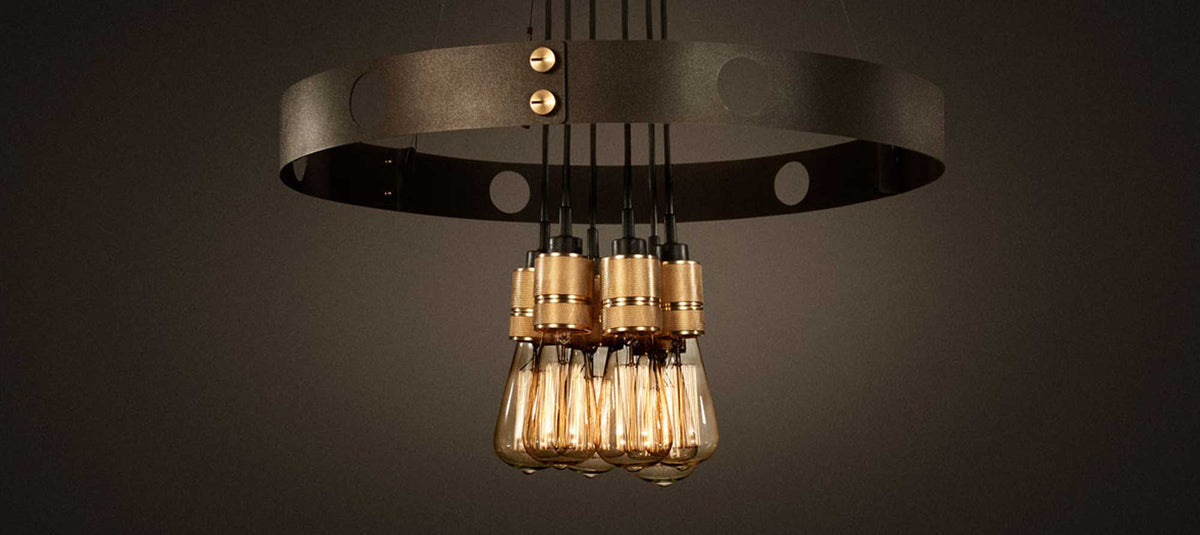
- pendant lighting with exposed Edison bulbs
- Metal dome-shaped lighting suspended from the ceiling
- cage lighting
These elements create a strong visual connection to the industrial history of loft spaces.
Track lighting systems
Track lighting is very popular in loft apartments because it allows for flexible light direction.

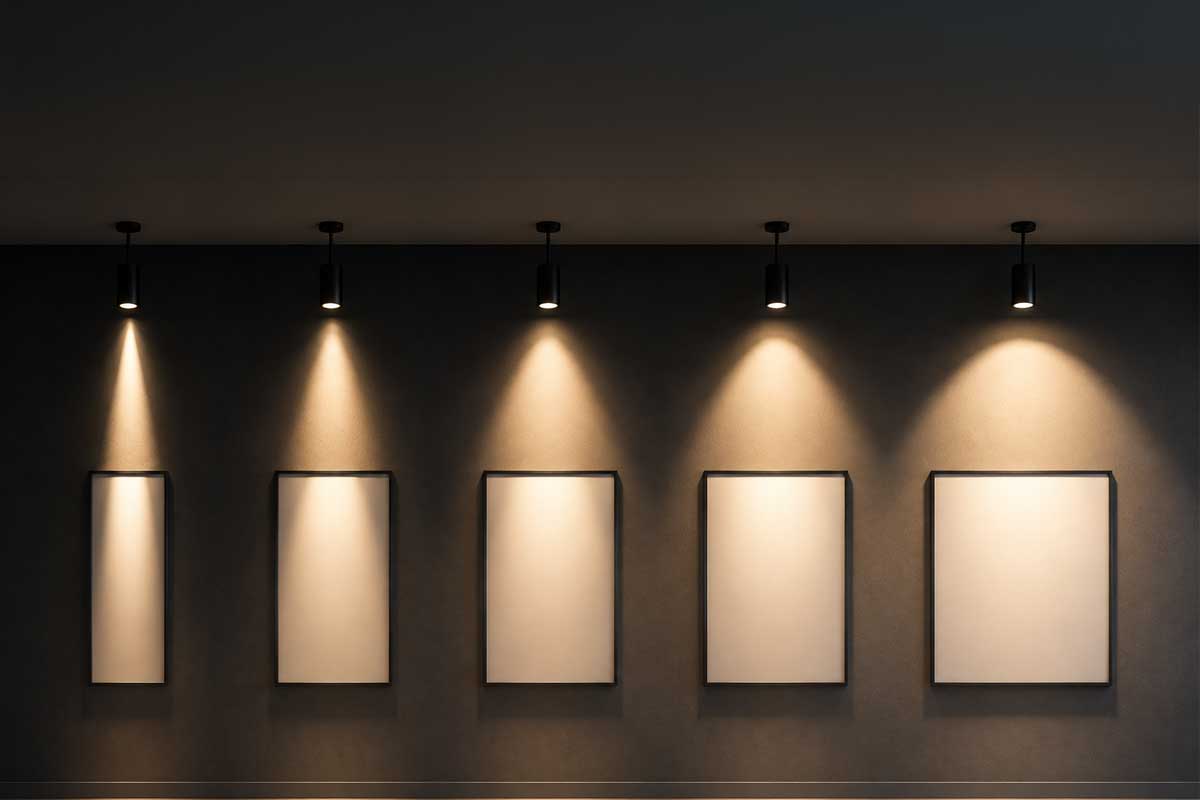
Track systems allow you to mount multiple spotlights on a single track, making it easy to illuminate specific areas or decorative elements such as paintings or shelves.
Layered lighting in a loft interior
Because loft apartments are large and open, designers often use layered lighting to achieve a balanced lighting environment.
Ambient lighting
Ambient lighting provides the basic illumination for a space. In loft apartments, for example, it comes from pendant lights, large ceiling lights, or indirect LED lighting.
High ceilings may require higher light output to ensure that the light is evenly distributed throughout the space.
Work lighting
Task lighting is designed for specific activities, such as reading, cooking, or working.
Examples include:
- Adjustable table lamps in work areas
- pendant lighting above the kitchen island
- reading lamps for the sofa or bedside
Task lighting improves visibility and reduces eye strain during concentrated work.
Accent lighting
Accent lighting highlights specific elements in an interior. It can draw attention to brick walls, paintings, or decorative shelves.
Effective solutions include:
- wall-mounted spotlights
- LED strips behind shelves or cabinets
- Directional track lighting
Accent lighting adds depth and visual contrast to a space.
Choosing the Right Light Temperature
Light temperature significantly influences the atmosphere of an industrial loft. It is measured in Kelvin (K) and determines whether the light appears warm or cool.

Warm light (2700K–3000K)
Warm light creates a cozy and pleasant atmosphere. It is often used in living rooms, bedrooms, and dining rooms.
A common question people search for online is:
Why is warm lighting suitable for home use?
Warm light has a softer character that promotes relaxation. It also pairs well with natural materials, such as wood or brick, which are often found in lofts.
Neutral light (3500K–4000K)
Neutral light appears brighter and more balanced. It is primarily used in kitchens, work areas, or wherever good visibility is important.
It helps preserve the modern and functional character of an industrial interior.
Technical aspects of loft lighting
Because loft apartments often have large open spaces, it is important to design the lighting correctly.
The two key parameters are:
- Luminous flux (lumens) – larger spaces require higher light output.
- Beam angle – a wide angle illuminates a larger area, while a narrow angle highlights specific elements.
We recommend using LED lighting because they provide high performance with low energy consumption.
Practical tips for lighting a loft
Designing lighting for a loft requires a balance between aesthetics and functionality. These tips can help:
- Combine multiple light sources instead of a single central light.
- Use track systems for flexible room lighting.
- Install dimmable lighting to adjust the light intensity.
- Choose industrial-style metal lighting.
- Use LED Edison bulbs to maintain a vintage look and save energy.
Visual inspiration for loft lighting
Visual inspiration helps you better understand how lighting works in practice.
Suitable images may include:
- loft apartments with brick walls and pendant lighting
- Examples of track lighting
- layered lighting diagrams
- Industrial kitchens with metal light fixtures
These visuals help demonstrate how lighting affects the overall impression of an interior.
Conclusion
Lighting a loft apartment requires careful planning due to its specific architectural features and open layout. By combining ambient, task, and accent lighting, you can create a space that is both functional and visually striking.
Understanding technical aspects such as lumens, beam angles, and color temperature helps ensure proper lighting functionality in large spaces. By combining industrial fixtures with warm LED light, you can achieve the ideal balance between modern comfort and industrial character.
Properly designed lighting transforms a loft apartment into a stylish, comfortable, and dynamic space that reflects the authentic spirit of industrial architecture.

Share:
Lighting a luxury apartment: a combination of ambient and accent lighting
How to properly design the lighting of the apartment step by step