

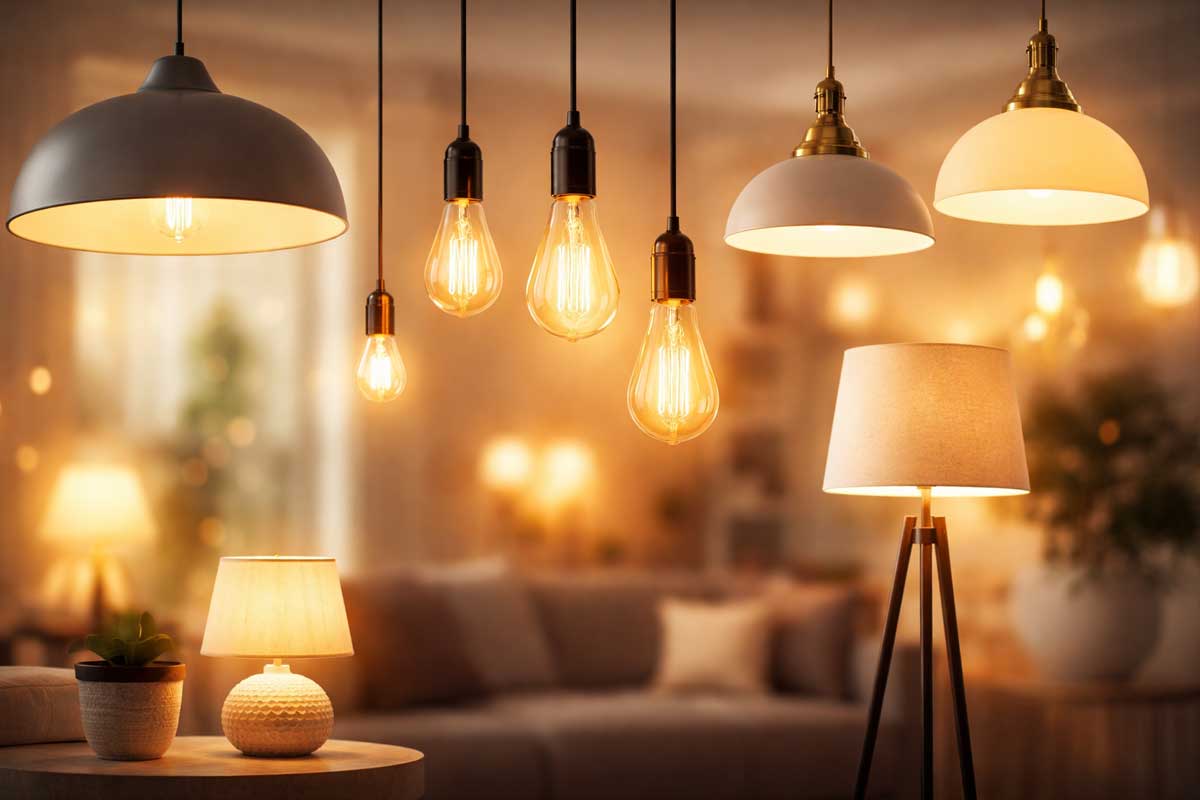
Many lighting issues don’t become apparent until the interior is finished. During the day, the room looks fine, but in the evening it turns out that the kitchen work area remains in shadow, there is unpleasant glare at the dining table, or the living room is lit by only one central light.
Situations like this are among the most common consequences of ill-conceived lighting design. Many people pay close attention to choosing flooring, furniture, or colors, while they don’t address the lighting concept until just before the interior is finished.
In this article, we’ll focus on the most common mistakes made in lighting design. You’ll learn why they happen, what problems they can cause, and what to keep in mind when planning individual rooms.

Article content
Why proper lighting design is important
One of the most common mistakes we encounter in lighting design is the attempt to illuminate an entire room with a single ceiling fixture. Although it may have sufficient output, the result is often an unevenly lit space with dark corners and unpleasant shadows.
Lighting significantly influences not only the appearance of an interior but also everyday comfort. It determines how well you can work in the kitchen, read in the living room, or relax in the bedroom. Properly designed lighting can make a space appear larger, highlight the materials used, and create a pleasant atmosphere regardless of the time of day.
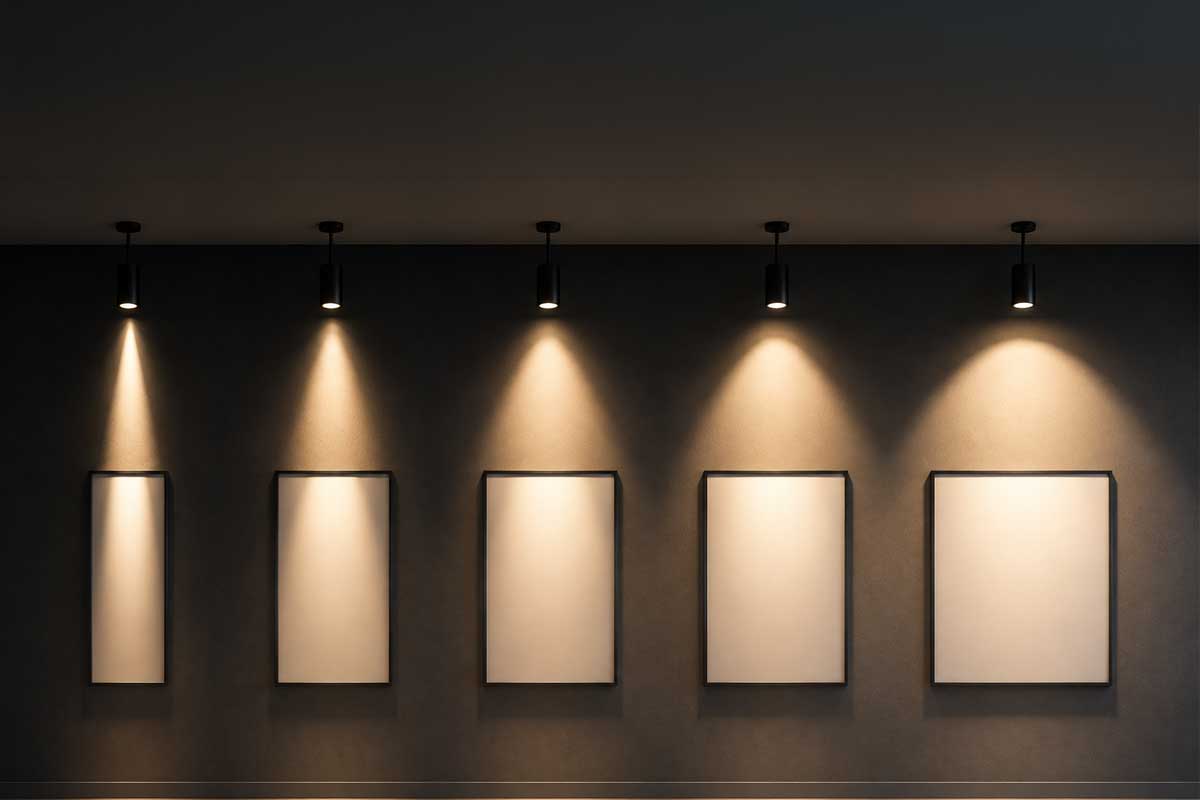
Most well-designed interiors combine several layers of lighting. The main light provides general illumination for the room, task lighting aids in specific activities, and accent lighting creates a cozy atmosphere and highlights the character of the interior.
Well-designed lighting provides:
- Greater comfort in everyday activities thanks to the right light intensity and placement.
- Even lighting without distracting shadows, which improves spatial orientation and the overall feel of the interior.
- More accurate rendering of colors and materials, which you will appreciate especially in the kitchen, bathroom, or living areas.
- The ability to adapt the atmosphere to the current situation, for example by dimming or combining different lighting scenes.
Investing in well-thought-out lighting design pays off every day. Unlike many other interior design elements, lighting influences every minute you spend at home.
Relying on a single light source
A single ceiling light in the middle of the room is still the most common lighting solution. In practice, however, this often results in some parts of the space remaining in shadow, while others are unnecessarily overlit.
A typical example is a living room, where the central light illuminates most of the room but does not provide enough light for reading on the couch or relaxing in the evening. A similar situation occurs in the kitchen, where people often cast a shadow over the countertop with their own bodies while working there.
Why is one ceiling light not enough?
Every part of a room serves a different purpose. You need a different amount of light when preparing food, when working on a computer, and when relaxing in the evening. Therefore, a single light source can rarely accommodate all situations.
In addition to a lack of light in specific areas, a flat appearance of the interior is often a problem. Without supplemental lighting, the textures of materials, decorations, and architectural elements—which could otherwise add depth and character to the space—are lost.
Which is the better solution?
When designing lighting, we recommend combining several layers of light. Each serves a different function, and together they create a more pleasant and functional space.
- General lighting – provides basic orientation within a room and even illumination of the space.
- Task lighting – directs light where it’s actually needed, such as over a kitchen counter, a desk, or a reading nook.
- Accent lighting – helps create atmosphere and highlights interesting interior features.
Combining multiple light sources allows you to adapt the lighting to the current situation and better respond to different activities throughout the day.
You can find more information about the different layers of lighting in our guide on how to combine lighting in interiors.
Wrong choice of light temperature
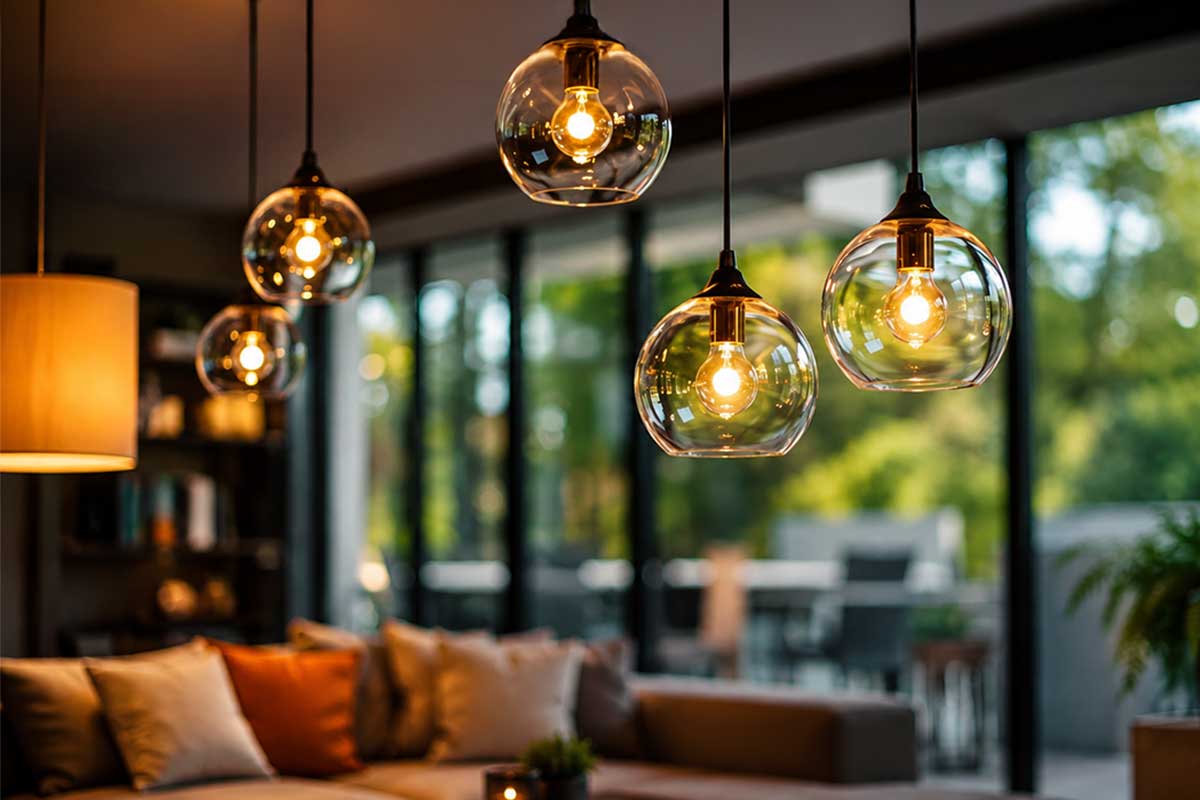
When choosing lighting fixtures, customers often focus on design, performance, or price, and consider light temperature only as a last consideration. Yet it is precisely this factor that determines how the interior will ultimately look and feel. It’s not uncommon for someone to buy light beautiful pendant light for their dining table, only to discover after the first evening that the space feels too cold and uninviting.
We encounter this situation quite often. Especially in new construction, there is a tendency to use the same color temperature throughout the entire home. The result can be, for example, a living room with lighting that is too cool or, conversely, a bathroom where warm light makes it difficult to see details during daily hygiene routines.
In practice, it is therefore often a good idea to adjust the light temperature to suit the character of each room. For example, when designing the lighting for the 2peaks mountain apartments, we used warm 2700 K light in the living areas and bedrooms, while the kitchen work surfaces were illuminated with neutral 4000 K light. This ensures that each part of the interior better suits its intended use.
Color temperature is measured in Kelvin (K) and affects not only the appearance of an interior but also how comfortable we feel in the space while performing various activities. If you’re unsure about the right choice, we cover this topic in more detail in our article on how to choose the right light temperature.
How light temperature affects the interior
Warm white (2700–3000 K) resembles the light from a classic incandescent bulb. We most often recommend it for living rooms, bedrooms, and other spaces intended for relaxation. It helps create a pleasant atmosphere in the evening and works well in combination with wood, textiles, and warmer interior tones.
Neutral white (3500–4000 K) is a versatile solution for rooms where various activities take place. We often use it in kitchen, bathroom, or home office designs, where accurate color rendering and sufficient visual comfort are important.
Cooler light (4500 K and above) highlights details and promotes concentration. It is used rather rarely in living spaces, but is much more common in home workshops, utility rooms, garages, or commercial spaces.
Poor lighting placement
Even light high-quality light may not work well if it is placed in the wrong location. We encounter this problem quite often, especially during renovations, when the placement of light fixtures is determined solely by the layout of the furniture or existing electrical outlets.
A typical example is a kitchen, where light ceiling light illuminates the user’s back instead of the work surface. Similarly, in home offices, glare appears on the monitor, or in living rooms, there is unpleasant glare when watching TV. The problem usually lies not in the lighting output, but in its placement.
Common mistakes in lighting placement
- Just one light in the middle of the room—some parts of the space remain poorly lit, creating stark contrasts between light and dark areas.
- Lack of lighting in work areas—the kitchen counter, desk, or reading nook—means there isn’t enough light where it’s actually needed.
- Lighting in your direct line of sight—whether you’re sitting on the sofa, at the dining table, or in your home office—can cause unpleasant glare.
- Light reflections from monitors and televisions—improperly directed light reduces comfort while working or watching a screen.
- Uneven placement of spotlights—spacing them too far apart creates dark spots and detracts from the overall impression of the space.
Many of these issues only become apparent after moving in, when we actually start using the room. That is why we recommend planning the lighting layout at the same time as arranging the furniture and individual functional zones.
How to design a lighting layout
Before you start choosing specific lighting, think about where you’ll spend most of your time in the room and what activities will take place there. The placement of light sources should correspond to this.
- Place task lighting directly above work surfaces or in their immediate vicinity
- Position reading lamps to the side of or slightly behind the user so that the light does not cause glare
- Complement your central lighting with additional light sources in areas where you move around or relax
- For TVs and monitors, avoid lights that create direct glare on the screen
- When using spotlights, ensure regular spacing and even coverage of the space
Well-placed lighting often makes a bigger difference than simply replacing fixtures with more powerful models. When light is where you actually need it, the space feels more natural and comfortable for everyday use.
Incorrect lighting intensity
When choosing lighting, many people focus primarily on the appearance lighting. However, it is only after installation that they realize the room appears darker than they expected, or, conversely, resembles an office environment. The cause is often not light poorly chosen light, but rather inappropriate light output.
Another common mistake is comparing light fixtures based solely on their wattage. However, with modern LED light sources, wattage does not indicate how much light light will actually provide. A much more important specification is the luminous flux, measured in lumens.
How can you tell if the amount of light isn’t right for the space?
- In the evening, it is necessary to turn on multiple lights at once to ensure the room is usable.
- The work surfaces appear dark even when the main lighting is on
- Part of the interior is significantly overlit, while other areas remain in shadow
- The light is uncomfortably bright, so people tend to dim or turn it off
- The colors and materials don't look natural, especially in the evening
Why are lumens important?
Luminous flux, measured in lumens (lm), indicates the amount of light emitted by light. This measurement allows for a much more accurate comparison of individual models than power consumption in watts.
For example, two LED lighting with the same power consumption can provide significantly different amounts of light. Therefore, when choosing a light, we recommend looking primarily at the lumen output and only then at the power consumption.
How much light does a room really need?
When choosing lighting, it is often not enough to consider only lighting lighting design or dimensions. A model that easily illuminates a small bedroom may not provide enough light in a spacious living room with high ceilings.
That is why we recommend focusing primarily on the luminous flux value in lumens. This indicates how much light light actually emits and will help you better assess whether it is suitable for a given space.
If you're not sure how much light you need, we've also prepared a detailed guide on how much light a living room, kitchen, and bedroom require.
As a general guideline, you can expect the following values for general lighting:
- Living room – 1,500–3,000 lm
- Bedroom – 1,000–2,000 lm
- Kitchen – 3,000–5,000 lm
- Home office – 3,000–5,000 lm
The values listed are intended as a general guide. The actual lighting requirements are influenced by factors such as room size, ceiling height, surface colors, and the amount of natural daylight.
Forgetting about dimming
Many households use the same amount of light regardless of the time of day or activity. However, what works well while cooking dinner or working at a desk may not be pleasant while watching a movie in the evening or spending time with family.
That is precisely why we recommend considering dimming right from the lighting planning stage. Adding it later is often more complicated and, in some cases, requires replacing fixtures, light sources, or switches.
We explain the benefits of dimming in more detail in the article on dimmable interior lighting.
In what situations will you appreciate dimming?
- during the day while working, cooking, or cleaning, when maximum light output is needed
- In the evening in the living room while watching TV or relaxing, when lower lighting intensity is usually more pleasant
- in the bedroom for evening reading or winding down before bed
- at the dining table during a family dinner or a get-together with friends
- in a home office, if the space is used for both work and everyday household activities
What should you consider when choosing?
Not every LED light can be dimmed automatically. When selecting a fixture, it is therefore necessary to verify whether dimming is supported by the fixture itself, the light source, and the dimmer used. Incompatibility between individual components is often one of the most common causes of problems after installation.
Users often only come to appreciate the ability to adjust light intensity through daily use of the interior. That is why, for example, in the 2peaks apartment project, we chose DALI lighting control, which allows for easy adjustment of lighting scenes according to the current situation. The same space can thus provide sufficient light for everyday activities during the day and offer a much calmer lighting environment in the evening.
Practical tips on how to avoid mistakes
Most lighting issues can be prevented during the interior design phase. If you’re unsure about which fixtures to choose or how to arrange them, we recommend following a few basic rules:
- Don’t start by choosing light fixtures. First, determine how the room will be used and where you’ll need the most light.
- Don’t rely on just one ceiling light. Most rooms work better with a combination of general, task, and accent lighting.
- Plan your lighting at the same time as you arrange your furniture. This will help you avoid situations where work surfaces, the dining table, or a reading nook are left in the dark.
- Pay attention to lumens, not just watts. It is the luminous flux that indicates whether light will provide sufficient brightness for a given space.
- Choose the light temperature based on the room’s purpose. What works in a bathroom or home office may not be suitable for a bedroom or living room.
- If possible, consider dimming when designing the electrical installation. Retrofitting is usually more complicated and often more expensive.
- Before making your final purchase, check the technical specifications. Pay particular attention to the color temperature, luminous flux, color rendering index (CRI), and dimmability.
When designing lighting, it pays to view the room as a whole. light well-chosen light is important, but its placement, light output, and how it is used in daily life are just as essential.
Conclusion
If we had to choose one piece of advice to follow when designing lighting, it would be simple: don’t think about the fixtures first, but about how you will actually use the space.
A kitchen has different requirements than a reading nook or a living room during evening relaxation. Lighting design should be based on these specific situations. This will help you avoid most of the problems we described in the article.
Well-designed lighting usually doesn’t draw unnecessary attention to itself. It simply works exactly where you need it and naturally enhances everyday life indoors.
Frequently Asked Questions About Lighting Design
What are the most common mistakes in lighting design?
The most common mistakes include relying on a single ceiling light, using the wrong color temperature, poor placement of fixtures, insufficient light intensity, and the lack of dimming. These shortcomings can result in dark corners, glare, or an unpleasant atmosphere in the room.
Why isn’t one ceiling light enough for the whole room?
A single central light is usually unable to evenly illuminate the entire space. This often results in shadows, dark corners, and reduced comfort during everyday activities. A better solution is a combination of ambient, task, and accent lighting.
What color temperature should you choose for each room?
Warm light in the range of 2700–3000 K is usually recommended for living rooms and bedrooms. For kitchens, bathrooms, or home offices, neutral white light around 3500–4000 K is more suitable, as it promotes better visibility and concentration.
What are lumens and why are they important?
Lumens indicate the amount of light emitted by a light source. The higher the number of lumens, the brighter the light. When selecting lighting fixtures, it is advisable to consider the luminous flux in lumens, rather than just the power consumption in watts.
How can you prevent glare indoors?
Glare can be reduced by properly positioning light fixtures, using diffusers, employing indirect lighting, and selecting the appropriate light intensity. It is also important to prevent the light source from shining directly into the eyes.
Is it worth using dimmable lighting?
Yes. Dimmable lighting allows you to adjust the light intensity according to the current situation. During the day, you can use the lighting at full power, while in the evening you can create a more pleasant and calmer atmosphere.
How to properly arrange lighting in a room?
Lighting should correspond to how the space is used. Task lighting belongs above work surfaces, reading lamps next to armchairs or beds, and ambient lighting should evenly cover the entire room without casting significant shadows.
Why is it important to combine multiple types of lighting?
The combination of ambient, task, and accent lighting ensures better functionality and a more pleasant atmosphere. Each type of light serves a different purpose, and together they create balanced interior lighting.
Are you looking for lighting for a specific room?
Choosing lighting right lighting isn’t just a matter of design. The amount of light, color temperature, mounting method, and dimming options also play an important role. Browse our selection of interior lighting fixtures and choose a solution that suits how you use your space.
Browse interior lighting
Share:
Design lighting in the restaurant: how to create the right atmosphere
Lighting a luxury apartment: a combination of ambient and accent lighting