

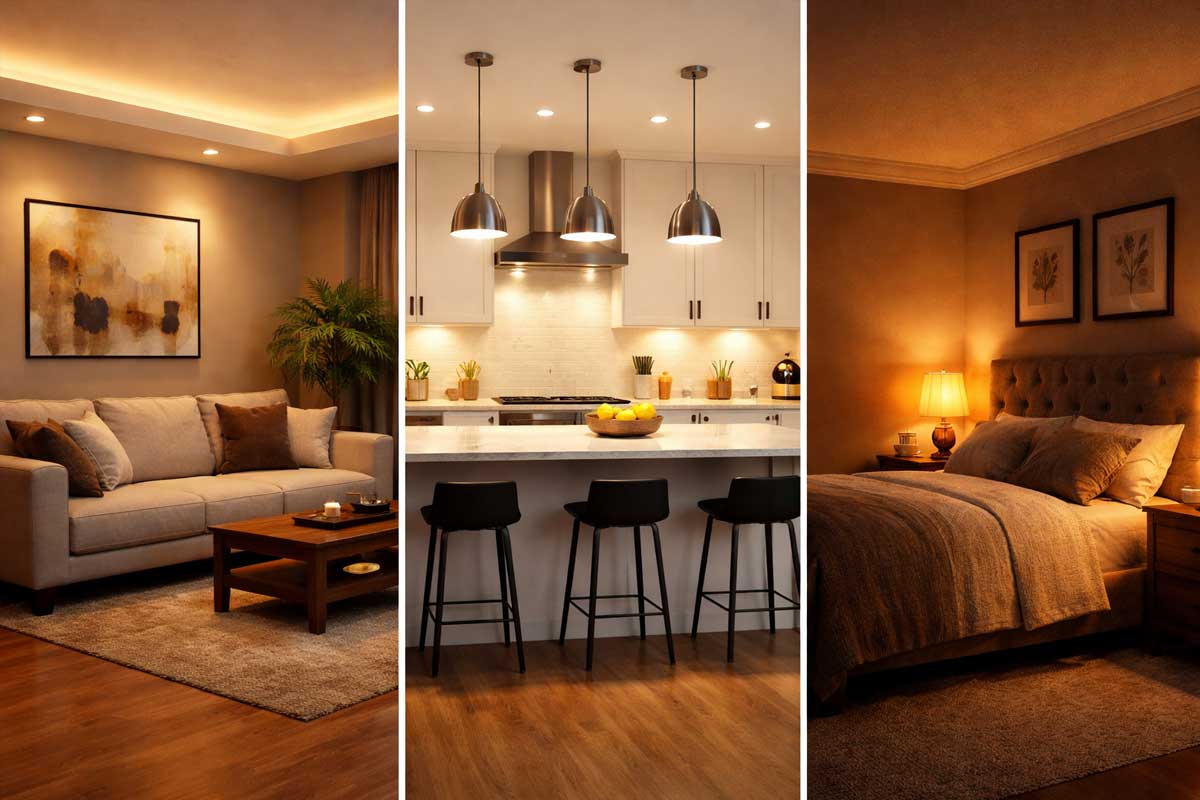
Lighting plays a crucial role in how comfortable and functional a home feels. Even a beautifully designed apartment can feel dull or unpleasant if the lighting isn’t properly planned. Many homeowners focus on furniture, decor, or wall colors, but it is actually the light that determines how a space looks and feels in everyday life.

One of the most common questions when planning interior lighting is: how much light does a room actually need? The answer depends on several factors, such as the size of the room, the ceiling height, and the activities that take place in the space. Kitchens usually require brighter lighting for food preparation, while bedrooms benefit from softer light that promotes rest and sleep.
Understanding how much light each room needs helps create an interior that is both practical and visually balanced. In this guide, we’ll look at how much light living rooms, kitchens, and bedrooms typically need, and what technical factors to consider when designing lighting.
Why the right level of lighting is important in interior design
Lighting is not just about visibility. The amount of light in a room directly affects comfort, mood, and the usability of the space. If the lighting is too dim, it is difficult to perform everyday activities such as reading, cooking, or cleaning. Conversely, light that is too bright can feel harsh and unpleasant.
A well-designed lighting system creates the right balance between brightness and atmosphere.
Important aspects of lighting include:
- Improved visual comfort – proper lighting reduces eye strain and makes it easier to perform daily activities.
- Everyday activities—such as cooking, reading, and working—require different levels of light intensity.
- Highlighting the interior – light accentuates textures, furniture, and decorative elements in the space.
- Creating atmosphere – different levels of brightness can calm, enliven, or make a space feel cozy.
When lighting is designed correctly, it improves both functionality and the overall living experience. That is why professional interior designers always address lighting in the early stages of the design process.
Understanding lumens: the basic unit of brightness
Modern lighting uses lumens instead of watts to measure brightness. Lumens indicate how much visible light a bulb or light produces.
The higher the lumen value, the brighter the light.

Several factors influence how much light a room needs.
Room size and layout
Larger rooms require more light because a larger area needs to be illuminated. Open-concept living spaces or open-plan kitchens and dining rooms often require more light fixtures to achieve even lighting.
Ceiling height
Rooms with higher ceilings usually require brighter lighting, as the light has to travel a greater distance before reaching the floor, tables, or furniture.
Room functions
The activities that take place in a room also determine the amount of light needed. Spaces intended for detailed work require more light than spaces intended for relaxation.
Tips for choosing the right brightness
- Consider the size of the room and the ceiling height when choosing light fixtures.
- Use multiple light sources instead of a single strong central light.
- Choose LED lighting that provide high light output with low energy consumption.
By understanding lumens and light intensity, you can create an environment that is pleasant and neither too dark nor too harsh.
How much light does a living room need?
The living room is usually the most multifunctional space in the home. It is used for relaxing, watching TV, socializing, reading, and sometimes even working.
It is precisely because of this diversity that lighting should be flexible and balanced.
Most living rooms require approximately 1,500–3,000 lumens, depending on their size and layout.
Recommended lighting layers
Well-designed living room lighting usually involves multiple layers:
- Ambient lighting – ceiling lighting or spotlights provide general lighting for the room.
- Task lighting – floor or table lamps provide focused light for reading or other activities.
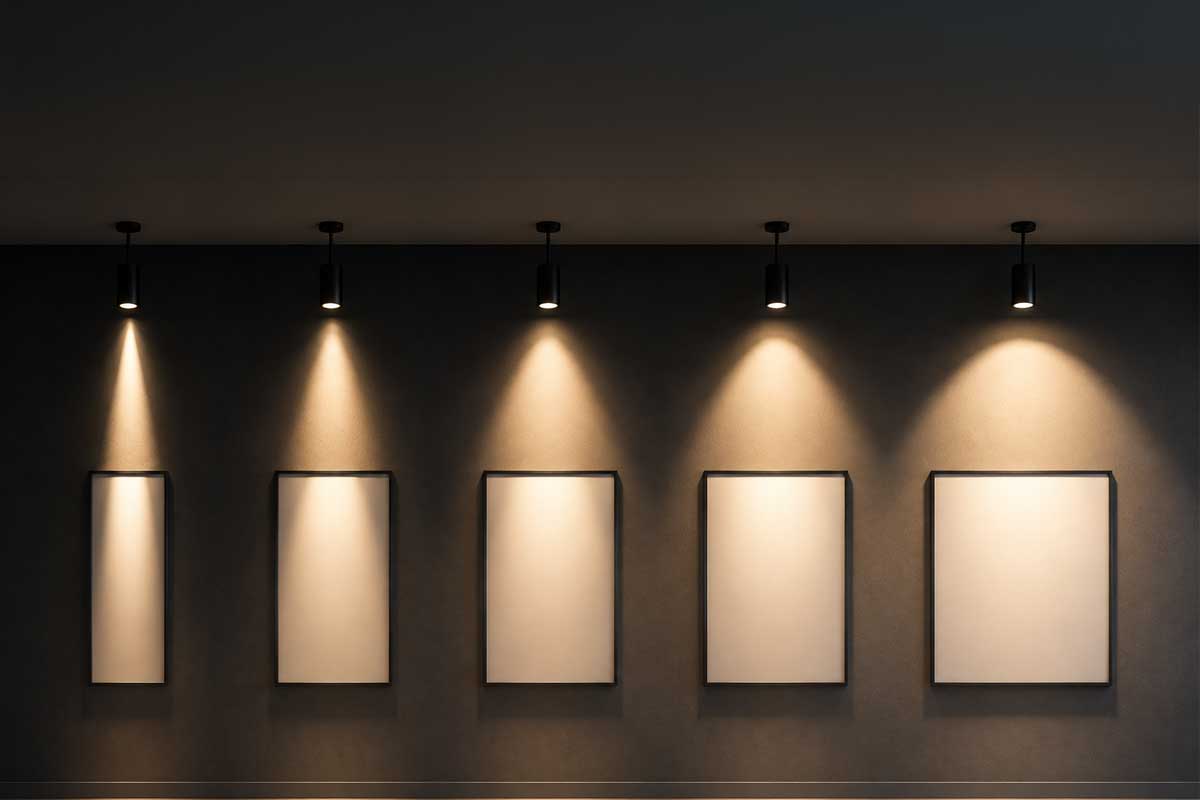
- Accent lighting—spotlights or LED strips—highlight shelves, paintings, or architectural details.
The combination of these types of lighting creates a pleasant atmosphere while providing sufficient light for everyday activities.
A common question is:
Why is warm light suitable for the home?
Warm light in the range of 2700K–3000K creates a pleasant and cozy atmosphere, which is why it is often recommended for living rooms and other relaxation areas.
How much light does a kitchen need?
The kitchen requires brighter lighting than most other rooms in the home. Cooking and food preparation involve detailed tasks that require good visibility.
Most kitchens require approximately 3,000–5,000 lumens, depending on the size of the space.
Why kitchens need brighter lighting
Cooking involves using sharp tools, reading recipes, and preparing ingredients. Without proper lighting, these activities can be difficult and potentially dangerous.
For this reason, kitchen lighting usually combines multiple layers of light.

Practical tips for the kitchen
- Install under-cabinet lighting to illuminate the countertop.
- Use ceiling lights to illuminate the entire kitchen.
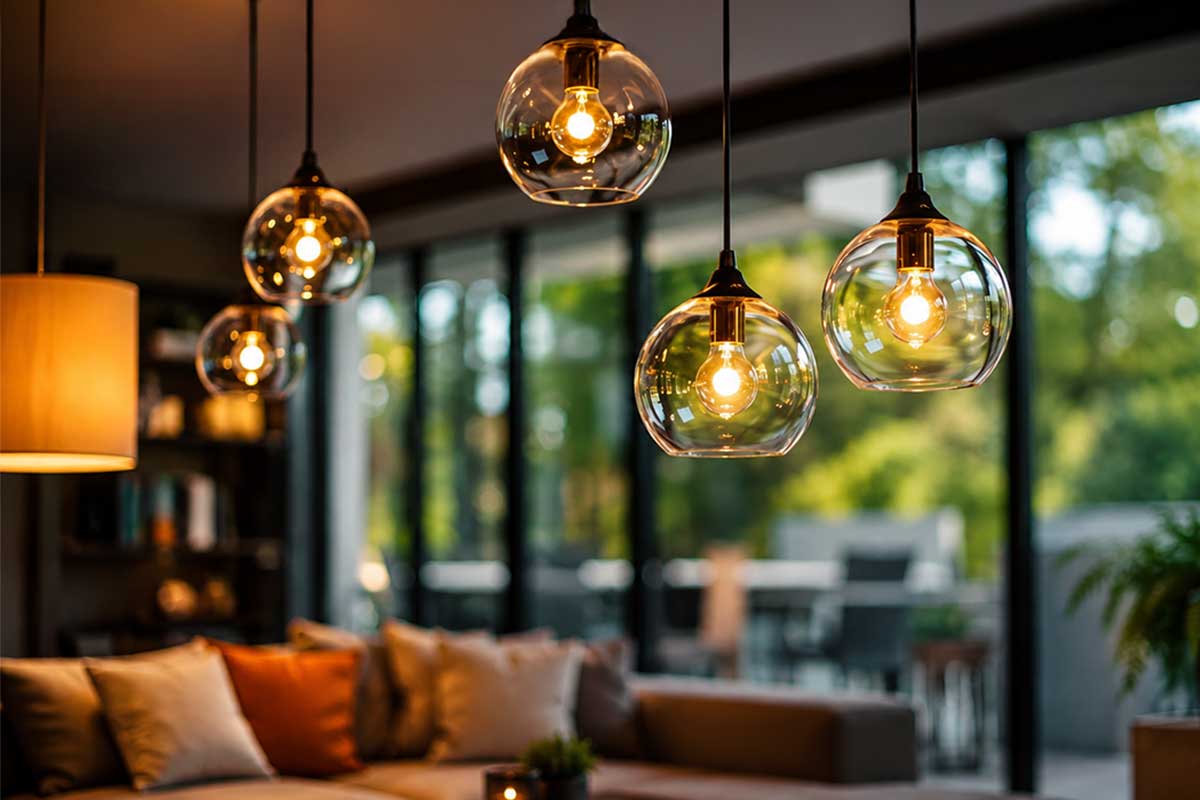
- Add pendant lighting above the kitchen island or dining table.
Neutral white light (3500K–4000K) is ideal for kitchens because it provides good visibility while creating a pleasant atmosphere.
How much light does a bedroom need?
The bedroom is a space intended primarily for rest, so the lighting should be softer and more subdued than in the kitchen or workspaces.
A typical bedroom requires approximately 1,000–2,000 lumens, depending on the size of the room.
How to create pleasant lighting in the bedroom
Lighting should promote relaxation while also facilitating activities such as reading or getting dressed.
- Soft ambient lighting for the entire room
- Reading lamps
- Accent lighting (e.g., LED strips) for a cozy atmosphere
Dimmable lighting is ideal because it allows you to adjust the brightness throughout the day.
Warm light is the best choice because it supports your natural sleep cycle.

Practical tips for lighting different rooms
Lighting design is easier if you follow a few basic rules.
- Combine ambient, task, and accent lighting
- Use dimmable light sources
- Avoid glare from direct light
- Choose energy-efficient LED bulbs with a long lifespan
When these rules are followed, lighting becomes not only a functional element but also an important part of interior design.
The right lighting not only improves visibility but also enhances the overall atmosphere of your home. With the right combination of light intensity and placement, you can create a space that is comfortable, functional, and visually appealing.
Conclusion
Understanding how much light each room needs is a key step in designing a functional interior. Living rooms, kitchens, and bedrooms have different requirements depending on their use.
The living room requires balanced, layered lighting; the kitchen needs brighter light for safety and visibility; and the bedroom works best with softer lighting that promotes relaxation.
With the right combination of lumens, color temperature, and multiple light sources, you can create lighting that enhances both comfort and usability in a space.
A well-thought-out lighting design will not only enhance the look of your interior but also help create a home that supports your daily life.
Share:
How to combine different types of lighting in the interior
Lighting installation for the 2peaks Apartments in the Ore Mountains