

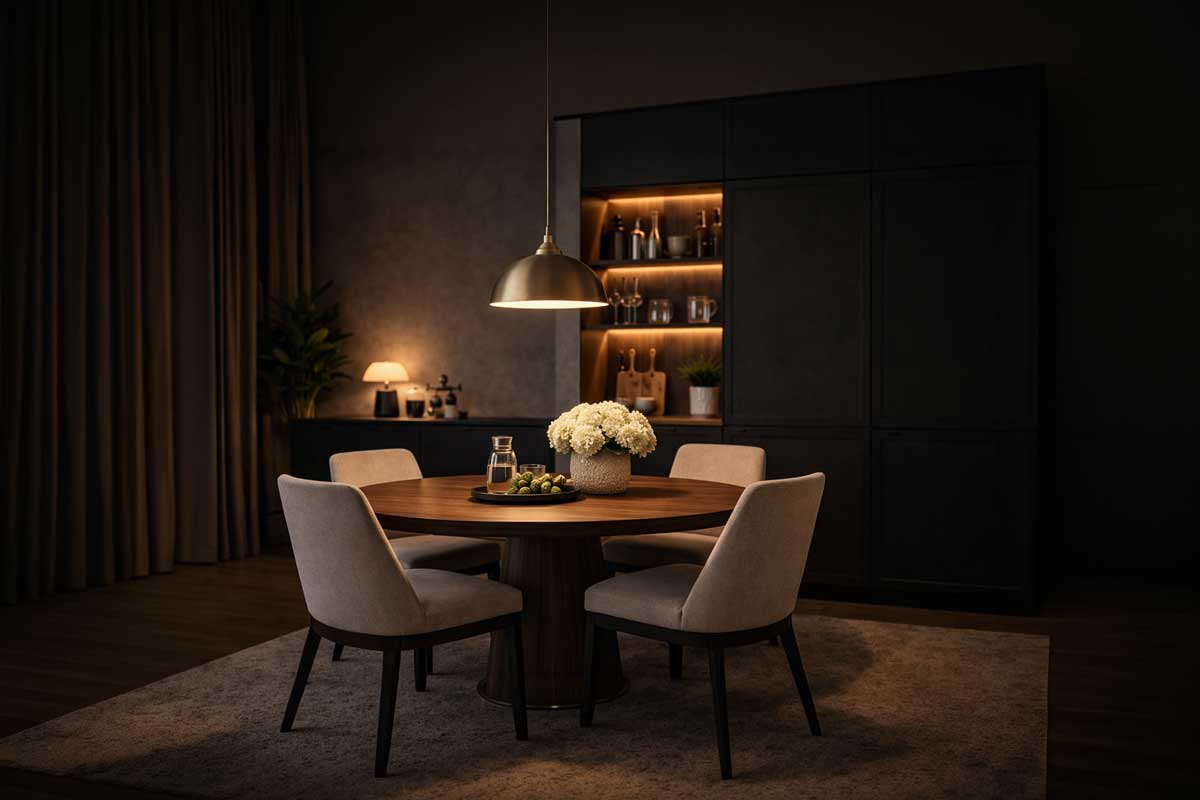
Lighting above the dining table is one of the most important lighting elements in an interior. light well-chosen light provides sufficient light for everyday dining, creates a pleasant atmosphere, and at the same time becomes a striking feature of the entire dining room or kitchen.
However, when making a selection, it’s not enough to base your decision solely on appearance. The correct size lighting, the hanging height, the light intensity, and the color temperature all play an important role. An improperly chosen chandelier can be dazzling, look out of balance, or fail to provide enough light for comfortable dining.
In this article, you’ll learn how to choose the right lighting for your dining table, how to determine the ideal size and hanging height, what kind of light to choose for round and rectangular tables, and what to look out for when making your selection. If you’re also interested in basic lighting parameters, we recommend starting with the article “What Are Lumens and How Many Do We Need for Each Room?”

Article Content
- Why is proper lighting above the dining table important?
- What type of lighting should you choose for your dining table?
- How do you choose the right size and placement lighting?
- What kind of light should you choose for your dining table?
- Common Mistakes When Choosing Lighting for a Dining Table
- How to Choose Lighting for Your Dining Table, Step by Step
- FAQ: Frequently Asked Questions
Why is proper lighting above the dining table important?
Today, a dining table is used for more than just dining. People often work at it, children do their homework there, or family and friends gather around it. Lighting, therefore, must do more than just look good—it should provide enough light for various activities while also creating a pleasant atmosphere.
light properly chosen light should provide sufficient light without dazzling those seated at the table. At the same time, it helps create a pleasant atmosphere, highlights the appearance of the food and the dining table’s materials, and naturally connects the dining area with the surrounding interior.
Many people choose light primarily based on its design. While design is certainly important, its size, hanging height, light intensity, and the right color temperature play an equally important role. Improperly chosen lighting can cause unpleasant glare, uneven illumination of a table, or, conversely, create dark spots that reduce comfort during everyday use.
If the dining table is the only place with light pendant light, don’t try to use it to light the entire room. A pendant light should primarily provide even lighting over the table surface. For pleasant lighting throughout the dining room, we recommend supplementing it with another light source, such as ceiling, wall, or indirect lighting.

What type of lighting should you choose for your dining table?
Choosing lighting for your dining table shouldn’t be based solely on its appearance. The table’s dimensions, the size of the room, and how you use your dining area are just as important. Different solutions work for a smaller round table than for a long dining table in an open space connected to the kitchen or living room.
The most popular choice is pendant lighting, which direct light directly onto the tabletop while creating a pleasant atmosphere. Depending on the shape of the table and the style of your interior, you can choose from several types of lighting.

Classic pendant light
light classic pendant light is the most common solution for small to medium-sized dining tables. Thanks to its central placement, it evenly illuminates the table surface while also serving as a natural focal point in the dining area.
Recommended for: round and square dining tables, or rectangular tables up to approximately 140 cm in length.
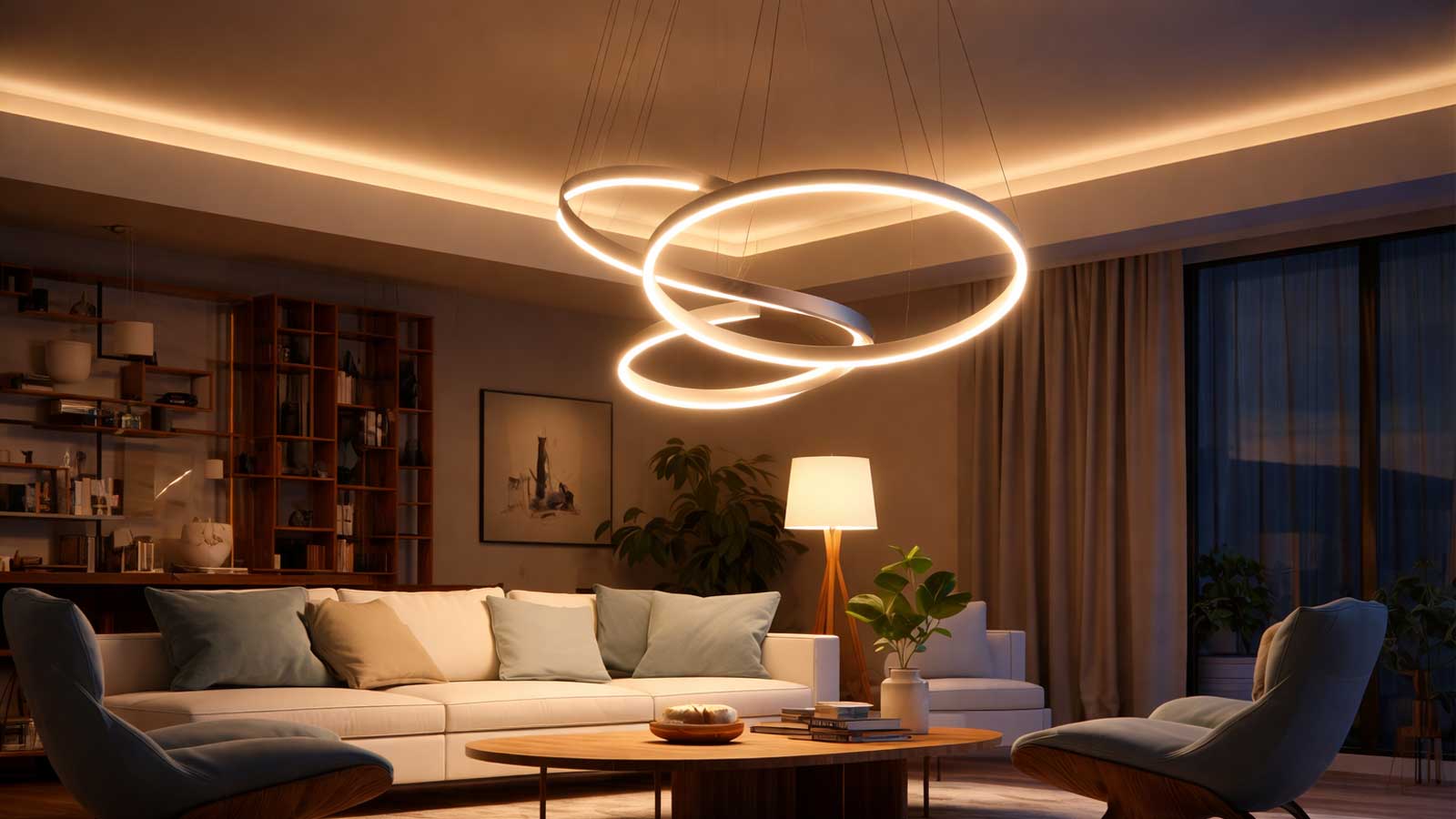
Linear pendant light
Linear pendant lighting are the ideal choice for rectangular dining tables. Their shape mirrors the length of the table, allowing them to evenly illuminate the entire surface without significantly darker spots at the edges. In modern interiors, they offer an elegant and highly functional solution.
Recommended for: rectangular dining tables, open-concept kitchens with dining areas, and modern interiors.
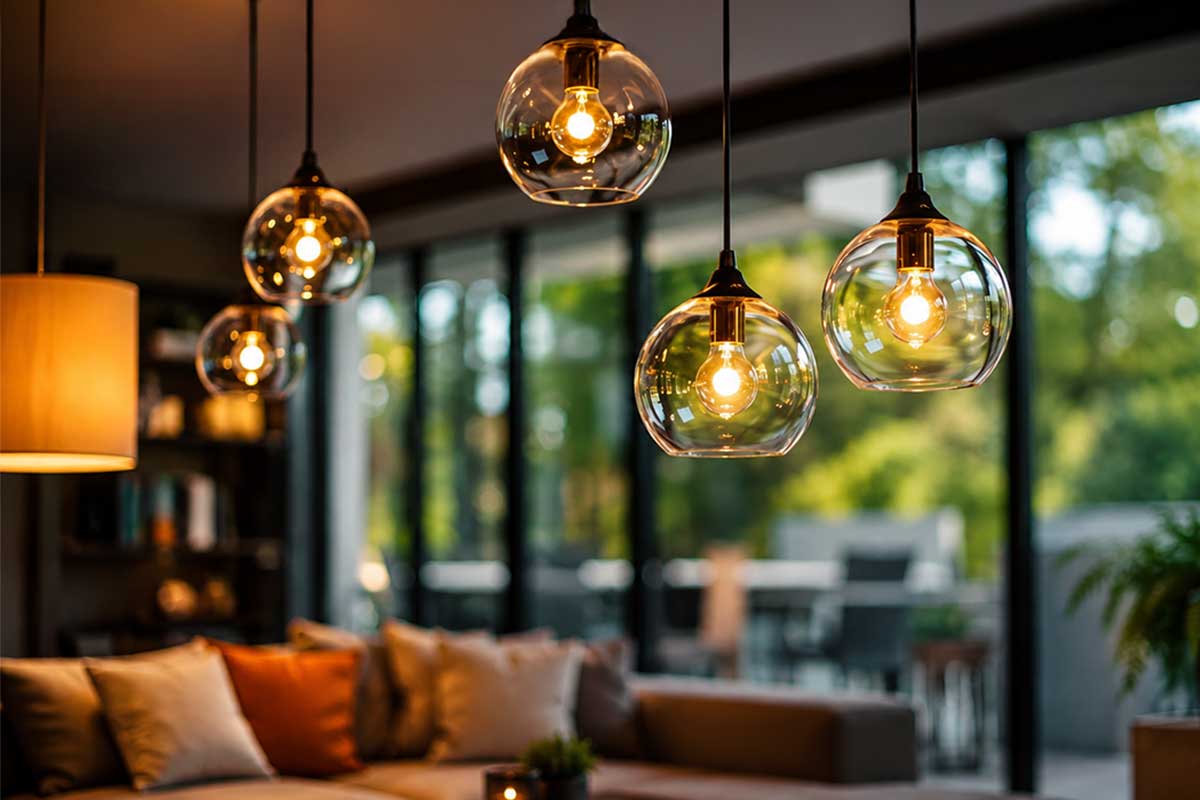
Set of multiple pendant lights
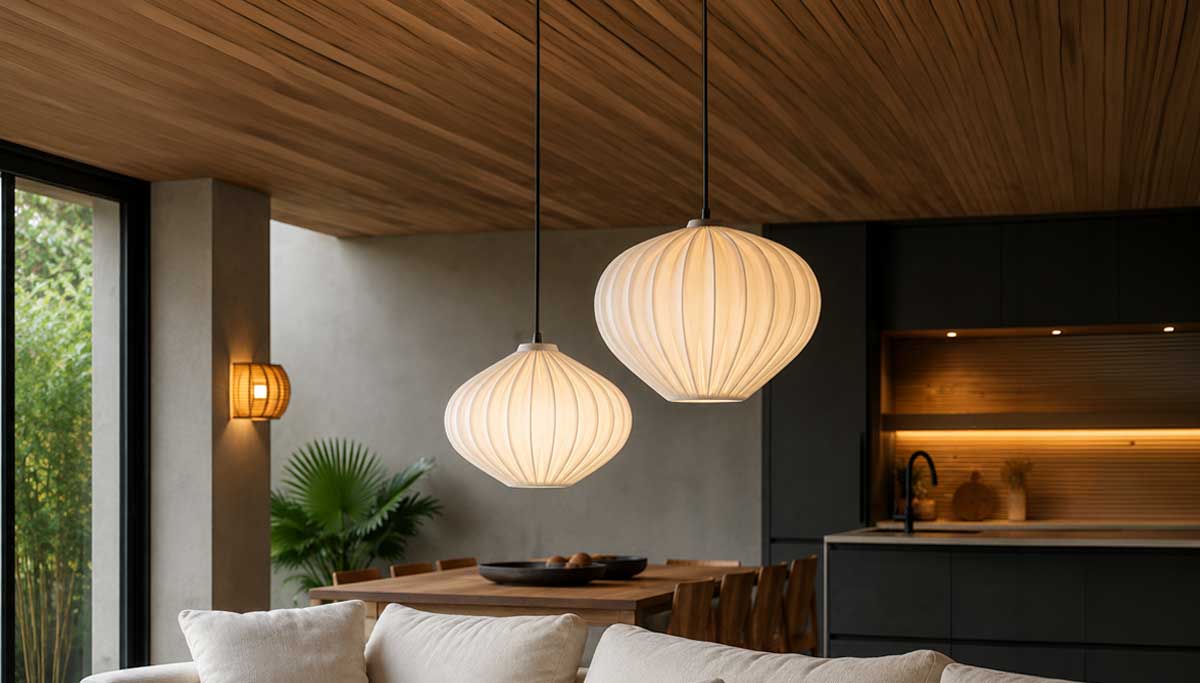
Two or three separate pendant lighting offer greater flexibility when lighting longer tables while also creating a striking architectural feature. Properly spaced lighting ensure even illumination of the entire dining area and allow for better customization of the look to suit a specific interior.
Recommended for: long dining tables, spacious dining rooms, and interiors where lighting is intended to be a prominent part of the overall design.
How do you choose the right size and placement lighting?
Choosing the right size and placement for lighting has a significant impact not only on the appearance of the dining area but also on the quality of the lighting. light that’s too small will easily get lost above the table and won’t provide enough light, while one that’s too large can look out of balance and unnecessarily dominate the entire space.
The height at which light is hung is just as important. If light is placed too high, the light will scatter throughout the entire room, and the dining table won’t be sufficiently lit. Converselylight hung too low can dazzle people sitting at the table or obstruct their view.
When choosing lighting, don’t base your decision solely on the room’s dimensions. The size of the dining table itself is much more important, because light pendant light is meant to evenly illuminate the table’s surface.
Recommended size and type lighting based on the dimensions of the dining table
| Dining Table Dimensions | Recommended lighting size | Recommended lighting type |
|---|---|---|
| 120 × 80 cm | 50–60 cm | One pendant light |
| 140 × 90 cm | 60–80 cm | One large pendant light |
| 160 × 90 cm | 70–90 cm | Linear or 2 pendant lighting |
| 180 × 90 cm | 80–100 cm | Linear or 2–3 pendant lighting |
| 200 × 100 cm | 90–120 cm | Linear or a set of 3 pendant lights |
In most homes, it is recommended to hang the bottom edge lighting approximately 70 to 90 cm above the dining table top. This height usually provides sufficient light for dining without light causing glare or obstructing the view between people seated at the table. For higher ceilings or larger light fixtures, it may be advisable to adjust the height slightly.

What kind of light should you choose for your dining table?
Choosing lighting right lighting isn’t the end of the story. Its lighting characteristics are just as important, as they influence the dining atmosphere, color accuracy, and overall comfort. When making your selection, it’s worth focusing primarily on color temperature, luminous flux, and the color rendering index (CRI).
Color temperature
Warm white (2700–3000 K) is most often recommended for the dining room, as it creates a pleasant and cozy atmosphere. If the dining table also serves as a workspace or a place to do homework, neutral white around 4000 K may be a suitable choice. It promotes better concentration but feels less cozy.
In most households, color temperature offers the best compromise 3000 K. It offers a pleasant, warm light that is suitable for both everyday dining and general activities at the dining table.
How many lumens are needed?
For a standard dining table, light with a luminous flux of approximately 1,500 to 3,000 lumens is usually sufficient. Larger tables or rooms with higher ceilings may require greater light output. If the dining area is part of an open-concept living space, it is recommended to combine light pendant light with additional ambient lighting.
Why is CRI important?
The Color Rendering Index (CRI) indicates how faithfully light renders actual colors. Above the dining table, we recommend choosing lighting with a CRI of 90 or higher, which will make food, decorations, and materials appear more natural and vibrant.
If you're unsure about the meaning of individual parameters, be sure to read our detailed guides on color temperature, lumens, and the color rendering index (CRI).

Common Mistakes When Choosing Lighting for a Dining Table
Even light high-quality, designer light may not meet expectations if it isn’t chosen or placed correctly. These are the most common mistakes we encounter when planning lighting for a dining table.
The light fixture is too small
One of the most common mistakes is choosing lighting that’s too small. Over a larger dining table, it looks out of proportion, and the light can’t illuminate the entire area evenly. When choosing a fixture, therefore, always base your decision primarily on the table’s dimensions, not just the size of the room.
Incorrect mounting height
If light is hung too high, the light is unnecessarily scattered throughout the room. Conversely, placing it too low can cause glare or obstruct the view between people sitting at the table. In most cases, a height of approximately 70 to 90 cm above the tabletop has proven to be suitable.
Insufficient light output
Insufficient lighting reduces comfort while dining and can be impractical for reading, working, or other activities at the dining table. If you use your dining area for multiple purposes, consider light brighter light or a dimmable option.
Inappropriate color temperature
Cool white light is generally not well-suited for the dining room. In most homes, warm white light in the range of 2700 to 3000 K creates a more pleasant atmosphere, promoting a relaxing dining experience and evening gatherings.
Forgetting the dimming option
light dimmable light allows you to adjust the brightness to suit different situations—from a family lunch to an evening get-together with friends. If this option is available, it’s worth considering it when making your selection.
Summary: How to Choose Lighting for Your Dining Table in 5 Steps
If you're not sure which light to choose, follow these five steps. They'll help you select lighting that not only looks good but also provides enough light for everyday use.
Measure your dining table
When choosing lighting, base your decision primarily on the dimensions of your dining table. Its size determines the appropriate type and size lighting pendant lighting.
Select the right type lighting
light single central pendant light is usually best suited for round tables, while light linear light or a cluster of pendant lights is often more practical for longer rectangular tables.
Choose the right size and hanging height
The size lighting should match the dimensions of the table, and the bottom edge lighting should generally be 70 to 90 cm above the dining table top.
Choose the Right Light
For most households, we recommend a color temperature of 3000 K, sufficient luminous flux based on the size of the table, and a color rendering index (CRI) of at least 90.
Consider the option of dimming
light dimmable light light allows you to adjust the brightness to suit various situations—from everyday meals to a festive dinner or a get-together with friends.
If you’re unsure about what to choose, always start with the dimensions of your dining table. The right size lighting, an appropriate hanging height, and warm light around 3000 K are a combination that will work well in most homes.
Well-designed dining table lighting should combine functionality with a pleasant atmosphere. If you take into account the size of the table, the proper placement lighting, and its lighting parameters, you’ll achieve lighting that works well for both everyday dining and special occasions.
Conclusion

Choosing lighting for your dining table is not just a matter of design. The right light should match the size of the table, provide enough light for everyday use, and create a pleasant atmosphere for dining together.
When making your decision, focus primarily on the appropriate type lighting, its dimensions, the hanging height, and the lighting specifications. If you’re unsure, follow the recommendations in this article—in most homes, they represent a tried-and-true solution that works well both practically and aesthetically.
Want to learn more about lighting? Continue to the Lighting Academy, where you’ll find detailed articles on color temperature, luminous flux, color rendering index (CRI), and other topics that will help you choose lighting for your entire interior.
FAQ: Frequently Asked Questions About Dining Table Lighting
How high should a chandelier be hung above the dining table?
In most homes, it is recommended to position the bottom edge lighting pendant lighting approximately 70 to 90 cm above the dining table top. This height usually provides sufficient light without obstructing the view between people seated at the table.
How big of light choose for over the dining table?
The size lighting should primarily correspond to the dimensions of the dining table. light with a diameter of approximately 50 to 60 cm is usually sufficient for smaller tables, while light larger or linear pendant light is generally more suitable for longer rectangular tables.
How many lumens do I need over my dining table?
For most dining tables, a light output of approximately 1,500 to 3,000 lumens is sufficient. The required light output depends on the size of the table, the ceiling height, and the amount of other lighting in the room.
What is the best color of light for above a dining table?
The most common choice is warm white (2700–3000 K), which creates a pleasant atmosphere for dining. If you also frequently use your dining table for work or study, neutral white around 4000 K may be a suitable alternative.
Is it better to have one light or multiple pendant lights?
It depends primarily on the shape and size of the table. A single central pendant light is usually suitable for round or smaller tables. For longer rectangular tableslight linear light or a set of two to three pendant lights is often more practical.
What CRI value should light above the dining table have?
We recommend choosing lighting with a CRI of 90 or higher. A higher color rendering index ensures a more natural appearance of food, wood, and other materials in your interior.
Is it worth it light dimmable light?
Yes. light dimmable light light makes it easy to adjust the brightness to suit different situations—from everyday dining and working at a desk to evening gatherings with family or friends.
What kind of light is best for a round dining table?
A single, centrally located pendant light is most commonly used above round dining tables. The light spreads evenly across the entire surface of the table, and the overall effect is balanced both functionally and aesthetically.
What kind of light should you choose for the dining table in an open-concept kitchen?
In open-concept layouts, we recommend coordinating the style and color temperature of the dining and kitchen lighting. Linear pendant lighting are often used above longer tables, as they help visually connect the dining area with the kitchen.
How far from the edges of the dining table should light be?
It is generally recommended that light be narrower than the dining table and that there be approximately 20 to 30 cm of free space on each side of the table. This ensures that the light is evenly distributed across the entire surface of the table, does not dazzle those seated, and that light appears balanced from an aesthetic standpoint.
Are you looking for the perfect lighting for your dining table?
Browse our selection of pendant lights, linear lights, and designer chandeliers perfect for above a dining table. We offer lighting for both small and large tables, as well as for modern interiors and timeless, classic dining rooms.
Browse pendant lighting
Share:
What are lumens, and how many do we need for each room?
How to Light a Bedroom Properly? A Complete Guide to Choosing Lighting