

Staircase lighting is often the last thing people consider when furnishing their homes. Yet stairs are among the areas where properly designed lighting has the greatest impact on safety and everyday comfort. Improperly placed lighting can cast shadows, cause glare, or make it harder to find your way while walking.
Well-designed staircase lighting, however, is not just a matter of safety. With the right lighting fixtures, you can highlight the interior architecture, make the space feel more open, and create a pleasant atmosphere both during the day and in the evening.
In this guide, we’ll show you how to properly light a staircase, where to place staircase lighting, what types of lighting are used, and what to keep in mind during the design process to ensure the result is not only functional but also aesthetically pleasing.
Article Content
- Why is proper staircase lighting important?
- What kinds lighting are suitable for staircases?
- Where should you place staircase lighting?
- What color of light should you choose for a staircase?
- What should you look for when choosing stairwell lighting?
- How to design staircase lighting step by step?
- Common Mistakes in Staircase Lighting
- FAQ: Frequently Asked Questions About Staircase Lighting
Why is proper staircase lighting important?
The staircase is one of the most frequently used areas in the home, yet its lighting is often overlooked. Many households rely solely on a single ceiling light, which, while it illuminates the space, also casts shadows on the stairs or causes unpleasant glare when walking. The result is reduced comfort and difficulty navigating, especially in the evening or at night.
Well-designed staircase lighting serves several purposes. It ensures safe movement between floors, helps highlight individual steps, and contributes to the overall atmosphere of the interior. The right lighting can transform a staircase into not only a practical element but also a design feature of the home.
When designing staircase lighting, we recommend considering safety as well as design. Instead of a single bright light, a combination of general lighting and stairwell fixtures or indirect LED lighting is usually a better solution. This distributes the light more evenly and makes the stairs easier to see without distracting glare.
There is no one-size-fits-all solution suitable for every staircase. A narrow staircase in a single-family home will have different requirements than an open staircase in a modern interior or stairs leading to the basement. That is precisely why it pays to tailor the lighting design to the specific space and how it is used.
What kinds lighting are suitable for staircases?
Choosing the right lighting depends primarily on the type of staircase, the size of the space, and the desired interior look. In most modern designs, several light sources are combined to ensure safe movement, even lighting, and a pleasant atmosphere. The following overview summarizes the most commonly used types of lighting and will help you choose the solution that best suits your staircase.
Recommended Lighting Types by Application
| Lighting Type | Main advantage | Recommended for |
|---|---|---|
| Recessed stairwell lighting | They gently illuminate each step without causing glare. | Modern single-family homes and apartments. |
| LED strips | They create continuous indirect lighting and highlight the architecture of the staircase. | Designer and open staircases. |
| Ceiling lighting | They provide the main lighting for the entire space. | Smaller staircases and stairwells. |
| Wall lighting | They complement the main lighting and help reduce shadows. | Wider staircases and high ceilings. |
| Lighting with motion sensors | It turns on automatically when motion is detected and saves energy. | Single-family homes and nighttime operations. |

Recessed stairwell lighting are among the most popular solutions. They gently illuminate individual steps, do not cause glare when walking, and provide elegant wayfinding lighting, especially in the evening and at night.
LED strips can be installed under the edge of the stairs, under the handrail, or in pre-installed profiles. The result is even, indirect light that highlights the staircase’s architecture and gives the interior a modern look.
They serve as the main source of light and provide sufficient illumination for safe movement on the staircase. They achieve the best results when combined with accent lighting on individual steps.
Automatic activation when someone enters significantly improves user comfort while also helping to save electricity. This solution is ideal especially for single-family homes and nighttime use.
In most modern interiors, we recommend combining general lighting with task lighting for stairs. The result is an evenly lit space that feels safer, looks more elegant, and blends better with the overall interior design.
Where should you place staircase lighting?
The placement of stairwell lighting affects not only the appearance of the interior but, above all, safety during everyday use. The right solution depends on the type of staircase, the building’s construction, and how it is used. The goal is to evenly illuminate each step, minimize shadows, and prevent unpleasant glare.

Recessed wall lighting
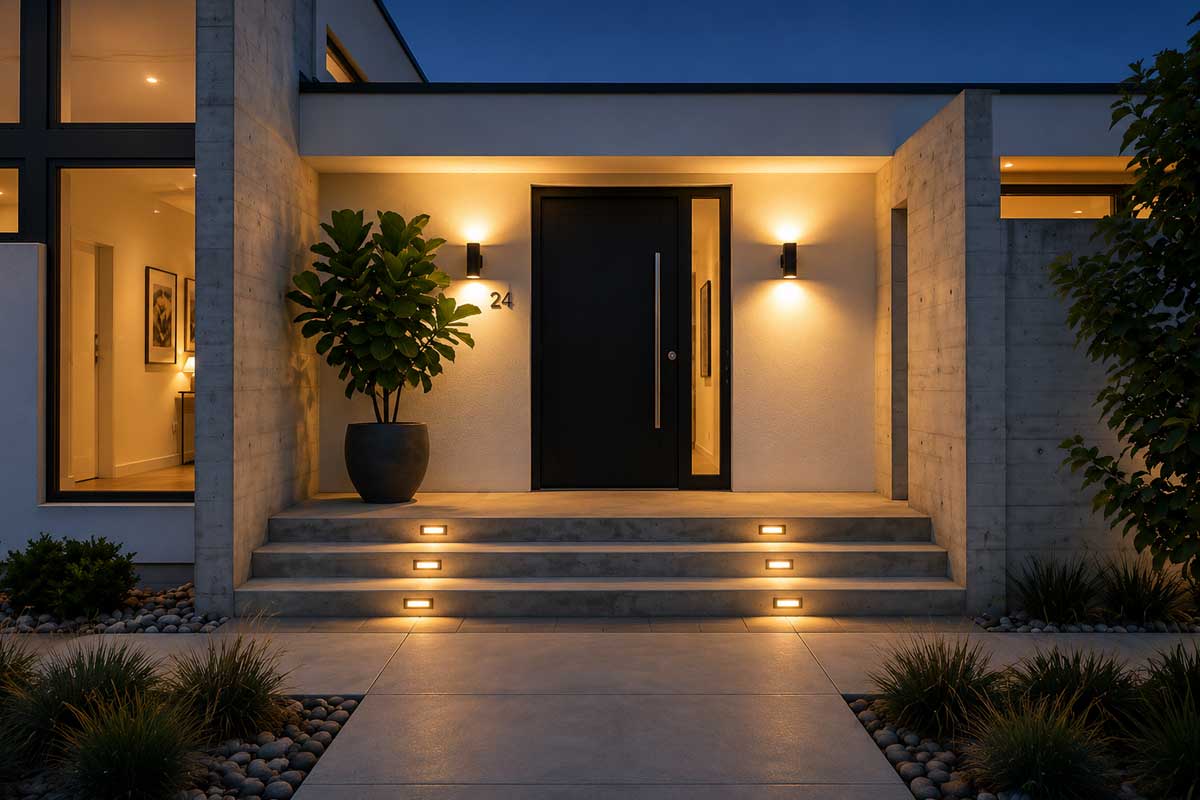
Recessed stairwell lighting are among the most commonly used solutions in modern interiors. Lighting are installed approximately 20–40 cm above the stairs and direct light onto the treads. They provide pleasant ambient lighting without unpleasant glare.
LED strips for under stairs
LED strips hidden under the edge of the stairs create a continuous line of light that makes it easier to find your way while also highlighting the shape of the staircase. They are particularly popular in modern interiors, where they emphasize clean lines and give the space an elegant look.
Ceiling or pendant lighting
The main light source provides sufficient illumination for the entire staircase. In taller stairwells, pendant lighting can also serve as a striking design element.
In modern designs, general lighting is often combined with accent lighting for individual steps. This ensures that the staircase is well-lit during normal use and at night, while the resulting lighting effect appears more natural and comfortable than when using a single light source.
What color of light should you choose for a staircase?
Color temperature affects not only the atmosphere of the interior but also how clearly individual steps are visible. Therefore, when making a selection, it is not only important how the light looks but also how it complements the lighting in the surrounding rooms. A staircase should appear as a natural part of the interior, not as a separate space with a completely different type of lighting.
| Light Temperature | The Nature of Light | Where it is most commonly used |
|---|---|---|
| 2700 K | Very warm, cozy light | Classic family homes, wooden staircases, interiors designed to create a cozy atmosphere |
| 3000 K | Warm white light | The most popular choice for modern single-family homes and apartments |
| 4000 K | Neutral white light | Offices, apartment buildings, commercial spaces, or minimalist interiors |
In most single-family homes, the most common light temperature is 3000 K, which offers a good balance between a pleasant atmosphere and sufficient visibility of the stairs. However, if warmer or, conversely, more neutral lighting is used in adjacent rooms, we recommend maintaining the same color temperature on the staircase as well. This creates a more unified and natural look for the entire interior.
If you're not sure which shade to choose, we recommend reading our article on color temperature (CCT), where we explain the different options in more detail.
What should you look for when choosing stairwell lighting?
When choosing stairwell lighting, appearance isn’t the only factor. It’s much more important that the light ensures safe movement up and down the stairs, doesn’t cause glare, and blends naturally into the overall interior design.
Light should fall on the tread of the stairs, not directly into your eyes. The right lighting significantly improves comfort and safety.
Recessed lighting look elegant and unobtrusive. Surface-mounted versions are suitable for areas where it is not possible to alter the wall structure.
For interior staircases, IP20 is usually sufficient. For outdoor use or in damp areas, we recommend a higher protection rating.
Dimmable lighting allows you to adjust the light intensity according to the time of day and create a more pleasant atmosphere in the evening.
In addition to light output, we recommend also considering the color temperature (CCT), color rendering index (CRI), and, if you’re looking directly into lighting, the UGR value.
Proper staircase lighting is achieved by combining all of these factors. Even light visually appealing light can be distracting if it causes glare or fails to adequately illuminate individual steps.
How to design staircase lighting step by step?
Every staircase is different, so there is no one-size-fits-all solution. Nevertheless, when designing lighting, it’s worth following a few basic steps. By doing so, you’ll create a space that is safe and functional while also blending naturally into the overall interior.

Design your main lighting
The key is to provide even lighting throughout the entire staircase. light main ceiling or pendant light should provide enough light to ensure safe movement both during the day and in the evening.
Add accent lighting
Recessed stair lighting or LED strips help highlight individual steps and make it easier to find your way, especially in the evening or at night.
Unify the color temperature
Stairwell lighting should complement the lighting in the surrounding rooms. In most single-family homes, warm white light with a color temperature of approximately 3000 K is most commonly used.
Keep comfort in mind for everyday use
If your layout allows it, consider using a motion sensor or dimmable lighting. This will increase your comfort while also helping you reduce electricity consumption.
Well-designed staircase lighting should not dominate the interior. Its main purpose is to ensure safe movement, highlight the architecture of the space, and blend naturally with the lighting in other parts of the house.
The staircase is just one part of the overall lighting design. If you’re planning the lighting for your entire interior, we recommend reading the article “How to Design Lighting Properly,” where you’ll find recommendations for individual rooms as well as guidelines for combining different types of light fixtures.
Common Mistakes in Staircase Lighting
Even high-quality lighting may not produce the desired result if they are not properly designed or positioned. When planning stairwell lighting, the same mistakes are often made, which can compromise safety, reduce comfort while walking, or detract from the overall appearance of the interior.
Only one main light
light single ceiling light is often unable to evenly illuminate an entire staircase. Shadows form on the stairs, which can make it difficult to find your way. You’ll achieve much better results by combining general lighting with stairway accent lights or LED strips.
Improperly Placed lighting
If the light does not illuminate the tread of the stairs or is placed too high, dark spots or unpleasant glare may occur. The correct placement of light fixtures is just as important as the selection of the fixtures themselves.
The light is too cold
Cool white light can make a living space feel uninviting and disrupt the flow between adjacent rooms. In most single-family homes, warm white light around 3000 K has proven to be the most suitable option.
Lack of wayfinding lighting
In the evening or at night, subtle lighting on individual steps significantly improves safety. Recessed stair lighting or LED strips make it easier to find your way while creating a pleasant atmosphere.
Non-uniform color temperature
Using different color temperatures on the staircase and in adjacent rooms can be distracting. For a natural-looking interior, we recommend maintaining the same light color throughout the entire connected space.
Omission of a motion sensor
It’s not always practical to search for a light switch on the stairs. A motion sensor enhances comfort and safety when moving around at night, while also helping to reduce electricity consumption.
By avoiding these mistakes, you’ll end up with a staircase that not only looks great but, above all, provides safe and comfortable movement throughout the day and evening.
Conclusion
Properly designed staircase lighting enhances safety during daily use and also significantly influences the overall impression of the interior. However, simply choosing light designer light is not enough—its placement, color temperature, light intensity, and the way individual light sources interact with one another also play an important role.
In most single-family homes, the best results are achieved by combining general lighting with task lighting for the stairs. If you take into account the proper placement of light fixtures, the appropriate color temperature, and a combination of general and task lighting during the design phase, you’ll end up with a staircase that is safe and comfortable while also becoming a natural part of the overall interior.
FAQ: Frequently Asked Questions About IP Ratings
What does IP mean for lighting fixtures?
The abbreviation IP (Ingress Protection) indicates the degree of protection an electrical device has against the ingress of solid particles and water. The first digit indicates protection against dust and contact, while the second digit indicates resistance to water.
What IP rating is suitable for a bathroom?
The appropriate IP rating depends on the area of the bathroom where light will be installed. Higher protection is usually required near the bathtub or shower than in the rest of the bathroom. When making your selection, always follow applicable standards and the manufacturer’s recommendations.
What IP rating should you choose for exterior lighting?
For covered patios and balconies, IP44 is usually sufficient. Exterior and garden lighting should have at least an IP65 rating, while we recommend choosing ground lighting or lighting near water with an IP67 rating or higher.
What is the difference between IP44, IP65, and IP67?
IP44 protects against splashing water and is suitable for covered exterior areas. IP65 withstands water jets and is used, for example, in facade lights. IP67 also allows for brief immersion in water, making it suitable for ground lighting or lighting near ponds.
Is a higher IP rating always better?
No. A higher IP rating provides a higher level of protection, but it is not necessary for every installation. The best choice is always the IP rating that matches the environment in which light will be used.
Can I use light indoor light outdoors?
In most cases, no. Interior lighting are not designed to withstand prolonged exposure to moisture, rain, or dust. For exterior use, always choose lighting with an appropriate IP rating designed for outdoor use.
Where can I find the IP rating lighting?
The IP rating is listed in the product’s technical specifications, in the catalog sheet, or on the lighting label. It is usually indicated as a designation, such as IP20, IP44, IP65, or IP67.
Can light exterior light with a higher IP rating also be used indoors?
Yes. Lighting with a higher IP rating can also be installed indoors without any problems. However, a higher degree of protection offers no practical advantage in most standard living spaces.
Find stairwell lighting for safe and stylish lighting
We’ll help you choose lighting that not only looks great but, above all, ensures safe and comfortable movement on your staircase. Our selection includes stairwell lighting, LED strips, and other solutions for modern single-family homes, apartments, and commercial spaces.
Browse staircase lighting

Share:
How to Light a Bedroom Properly? A Complete Guide to Choosing Lighting
IP protection explained: how to choose lighting for the bathroom and for exterior use