

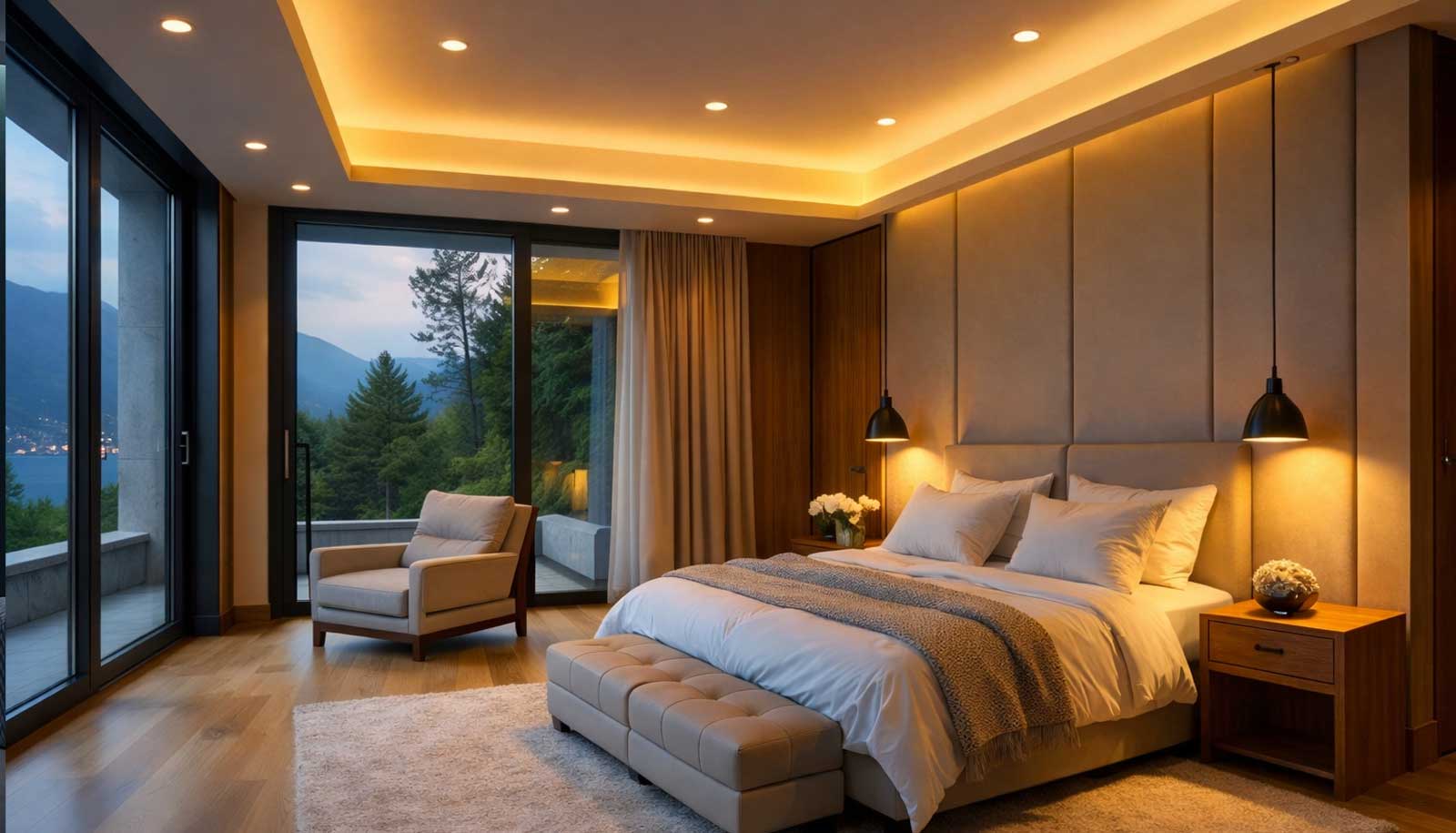
The bedroom is one of the most important rooms in the home, as it is where we rest, recharge our energy, and recover after a busy day. That is why the atmosphere in the bedroom should be calm, comfortable, and pleasant.
When furnishing a bedroom, many people focus primarily on furniture, wall colors, or decorative elements, but lighting often gets less attention—even though it has a significant impact on how the space actually feels.
The right lighting does much more than just illuminate a room. It affects our mood, comfort, and even the quality of our sleep. Light that is too bright or too cool can keep the body in a state of alertness and activity, which is not ideal for a space intended for rest. Conversely, soft and warm light in the bedroom helps the body relax and prepare for sleep.
That is why choosing the right bedroom lighting is very important. Well-designed lighting should create a relaxing atmosphere while providing enough light for everyday activities.
Article content
Why bedroom lighting is important
Lighting has a direct impact on our body’s natural sleep cycle, often referred to as the circadian rhythm. This rhythm responds to the alternation of light and darkness throughout the day. While brighter light during the day promotes alertness and concentration, softer and warmer lighting in the evening signals to the body that it is time to slow down and rest.
If the lighting in the bedroom is chosen poorly, it can disrupt this natural rhythm and negatively affect the quality of rest. Properly designed bedroom lighting, on the other hand, helps create a calm and comfortable environment that promotes relaxation and better sleep.
Just as with living room lighting, atmosphere, visual comfort, and the overall sense of well-being in the interior play an important role in the bedroom. Well-designed lighting should therefore enhance not only the aesthetics of the space but also everyday comfort and the practical use of the room.
The most important aspects of bedroom lighting include:
- Creating a relaxing atmosphere – Soft, warm light helps create a calm and cozy atmosphere, allowing the body to relax more easily after a long day and prepare for rest.
- Ensuring visual comfort – Lighting that minimizes harsh shadows and glare is easier on the eyes, especially when reading in the evening or using electronic devices before bed.
-
Supporting various activities – Today, bedrooms are often used for more than just sleeping. A combination of ambient, task, and accent lighting allows you to read comfortably, relax, or create a pleasant evening atmosphere.
It is for these reasons that interior designers often recommend using layered lighting in the bedroom, which combines multiple types of light to create a more balanced and comfortable environment.
Layered lighting: a balanced approach to lighting

Using only a single ceiling lighting in the bedroom often results in uneven lighting. Some parts of the room may be too bright, while others remain in shadow. Layered lighting solves this problem by combining multiple light sources.
It typically includes three basic types of lighting:
Ambient lighting
Ambient lighting is the main source of light in the bedroom. It provides basic lighting that allows people to move around the room comfortably and perform everyday activities.
Common ambient lighting solutions include ceiling lighting, LED panels, and pendant lighting. In the bedroom, however, this lighting should not be too intense. Soft, evenly diffused light is ideal, as it helps maintain a calm and relaxing atmosphere.
Work lighting
Task lighting is designed for specific activities that require better visibility. In the bedroom, it is most often used for reading, writing, or using a phone or tablet in bed.
Typical examples of task lighting include bedside lamps placed on a nightstand or adjustable reading lamps. These light sources illuminate precisely the area where light is needed, without unnecessarily lighting up the entire room.
Properly selected task lighting improves visibility while maintaining a pleasant atmosphere in the room.
Accent lighting
Accent lighting is primarily used to create a visual atmosphere in the bedroom. It is not the main source of light, but adds subtle layers of light that make the space feel cozy.
Popular LED lighting elements for the bedroom include LED strips behind the headboard, soft wall lighting, or subtle lighting behind shelves. These elements add depth and character to the interior.
How to Choose the Right Light Temperature for Your Bedroom

Light temperature is one of the most important parameters when designing bedroom lighting. It determines the color tone of the light and is measured in kelvins (K). A properly selected color temperature significantly influences the atmosphere of the bedroom and the quality of rest.
Warmer light is usually best for bedrooms, as it helps create a calm and relaxing atmosphere suitable for evening rest.
2700K–3000K
Warm white light that creates a cozy and relaxing atmosphere, ideal for rest, relaxation, and quality sleep. This type of lighting is most commonly used in modern bedrooms and relaxation areas.
3000K–3500K
A slightly brighter and more neutral light that remains pleasant while providing better visibility for activities such as reading, getting dressed, or other everyday tasks in the bedroom.
Warm light resembles the natural light of sunset, which helps the body gradually wind down and prepare for sleep.
How to choose the right light output (lumens)
With modern LED lights, light intensity is measured in lumens, not watts. Lumens indicate the amount of visible light produced by a light source. The appropriate light output depends primarily on the size of the bedroom and the desired atmosphere.
| Bedroom size | Recommended power | Recommendations |
|---|---|---|
| Small bedrooms | 1,500–2,500 lumens | It provides ample light without feeling too intense. |
| Medium-sized bedrooms | 2,500–3,500 lumens | Balanced lighting suitable for everyday use. |
| Large bedrooms | 3,500 lumens and above | It helps evenly illuminate the entire space without any dark corners. |
Instead of a single very powerful light source, it is often better to combine several smaller fixtures, which create softer, more pleasant, and visually balanced lighting.
Why dimmable lighting is a smart choice

Modern bedroom lighting often uses dimmable lighting today because it offers greater flexibility.
By dimming the lights in the evening, you can create a softer, calmer atmosphere that promotes relaxation. Conversely, during the day, you can turn up lighting same lighting to provide enough light for everyday activities.
Dimmable lighting makes it easy to adjust the atmosphere in your bedroom according to the time of day or your current activity.
Conclusion
Choosing the right lighting for the bedroom is not just a matter of design, but also an important part of overall comfort, relaxation, and quality sleep. By combining ambient, task, and accent lighting, choosing a warmer light temperature, and using dimmable fixtures, you can create a balanced environment that feels cozy and functional while enhancing the pleasant atmosphere of the entire interior.
Well-designed bedroom lighting can significantly improve not only the visual appearance of the interior but also the overall sense of comfort and the quality of rest, making the bedroom a truly peaceful and harmonious space for relaxation.
Frequently asked questions about bedroom lighting
Is warm or cool light better for the bedroom?
Warm light is usually recommended for the bedroom because it creates a calmer and cozier atmosphere suitable for relaxation and rest. Cool light has a more energetic effect and is used primarily in work or technical spaces.
What light temperature is best for a bedroom?
For most bedrooms, warm light with a color temperature between 2200K and 3000K is ideal. Warmer shades of light have a calming effect and promote evening relaxation.
How many lumens should a bedroom have?
Smaller bedrooms typically require approximately 1,500–2,500 lumens, while larger bedrooms may require 3,500 lumens or more. A combination of multiple light sources is ideal, rather than a single very bright lighting.
Is cool light suitable for a bedroom?
Cool light is generally not recommended for the bedroom, as it has a more energizing effect and can interfere with relaxation before bedtime. Warmer light is more pleasant for relaxation areas.
Why use dimmable lighting in the bedroom?
Dimmable lighting allows you to easily adjust the light intensity according to the time of day or your current activity. In the evening, it helps create a softer, calmer atmosphere suitable for relaxation.
Where should I place lamps in the bedroom?
Lamps are most often placed on bedside tables next to the bed or as wall lighting above the headboard. It is important that they provide enough light for reading without causing unpleasant glare.
How to create cozy bedroom lighting?
Cozy bedroom lighting typically combines warm light, multiple layers of lighting, and indirect light sources, such as LED strips or lamps with soft, diffused light.
Looking for the right lighting for your bedroom?
Browse our selection of designer lighting fixtures, lamps, and modern LED lighting for cozy and functional bedrooms.
Browse lighting
Share:
Understanding the layers of lighting in the children's room
How to choose exterior lighting for your garden and patio