

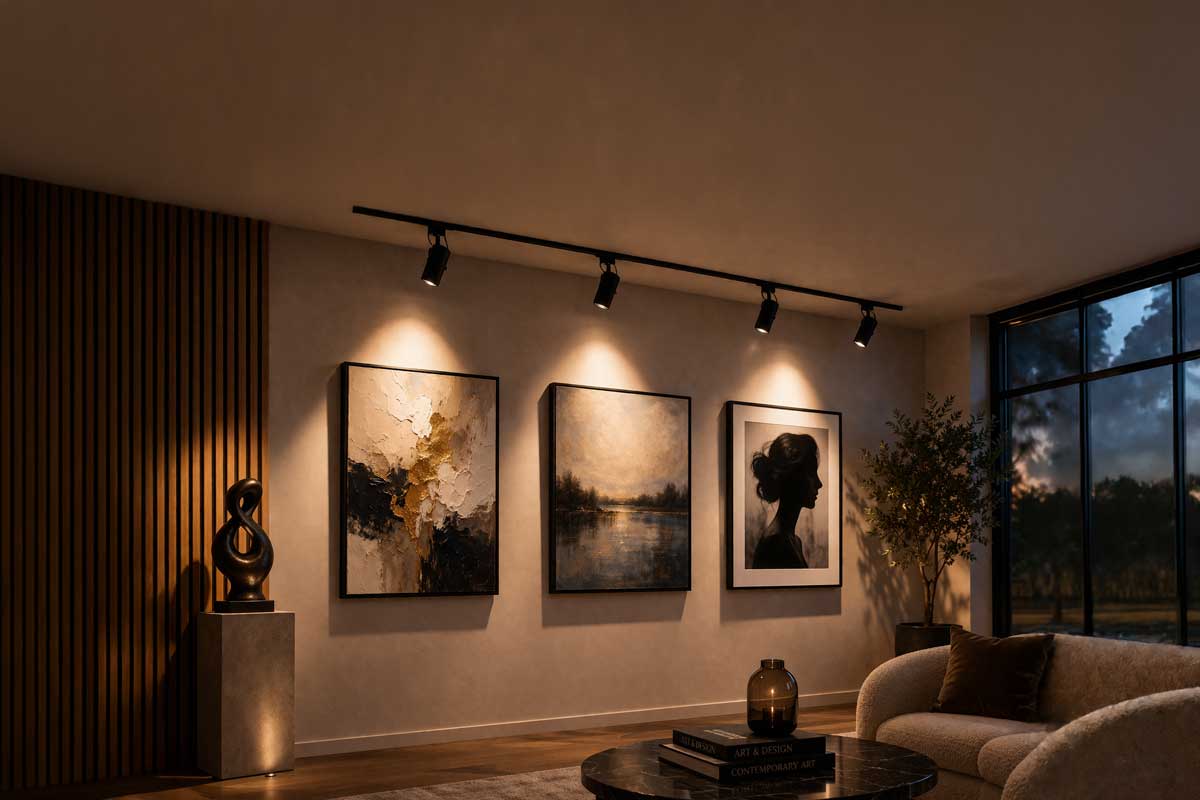
Creating an art gallery in your home is a great way to showcase personal collections and add character to your living space. Many homeowners display paintings, photographs, sculptures, or decorative objects as part of their interior design. However, without the right lighting, even the most beautiful work of art can lose its visual impact.

Lighting plays a key role in highlighting the details, colors, and textures of works of art. A well-designed lighting system helps transform an ordinary wall into a professional-looking gallery. In interior design, this usually involves a combination of ambient lighting and accent lighting so that the artwork becomes the main visual element of the room without disrupting the overall atmosphere.
In this guide, we’ll show you how to properly light an art gallery in your home, explain the technical aspects of art lighting, and provide practical tips for creating a visually balanced and elegant display.
Why proper lighting is important for works of art
Works of art are heavily dependent on lighting, which reveals their true appearance. Proper lighting helps viewers clearly see color nuances, textures, brushstrokes, and fine details. Conversely, poor lighting can cause glare, shadows, or faded colors.
A well-designed lighting plan offers several advantages when displaying art in a home gallery.
- Improves visibility of details – Proper lighting allows you to perceive subtle textures and color differences.
- It creates a visually dominant element—accent lighting draws attention directly to the artwork.
- It adds depth to walls – Lighting helps create contrast and visual dimension in a space.
- Enhances the atmosphere of a room – Carefully placed lights contribute to a sophisticated interior environment.
Because many works of art are valuable or delicate, lighting should not only enhance their presentation but also protect them from excessive heat or UV radiation.
Basics of Lighting in Art Galleries
Effective art lighting requires more than just installing a lamp above a frame. Interior designers typically use a layered approach to lighting to achieve visual balance and proper illumination.
Ambient lighting
Ambient lighting provides basic illumination for the entire room. It ensures that the space feels pleasant and is easy to navigate, while also preventing stark contrasts between light and dark.
In home interiors, ambient lighting is usually created using:
- recessed ceiling lights
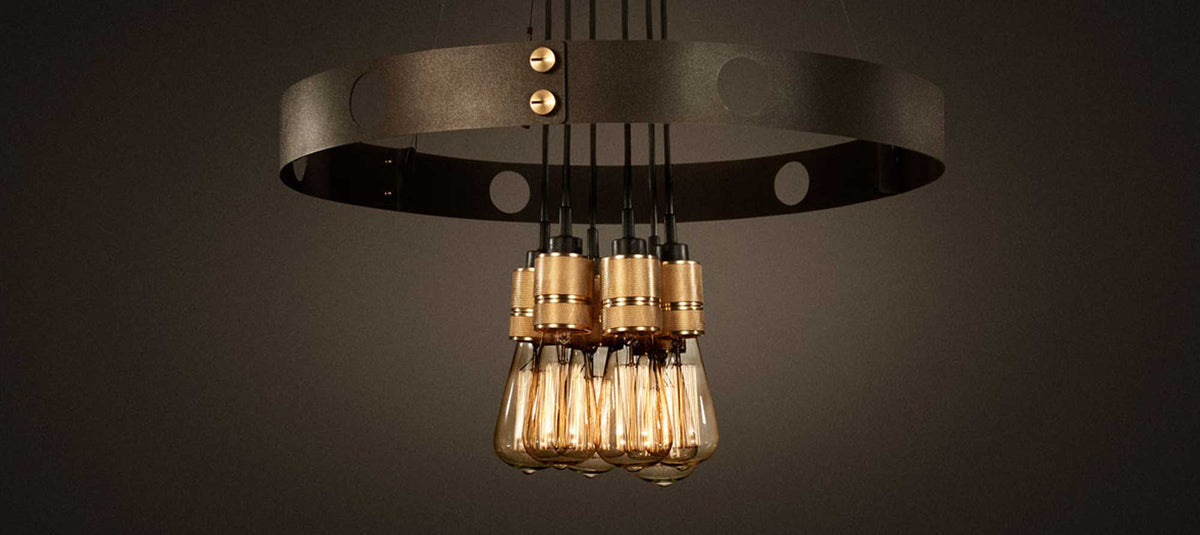
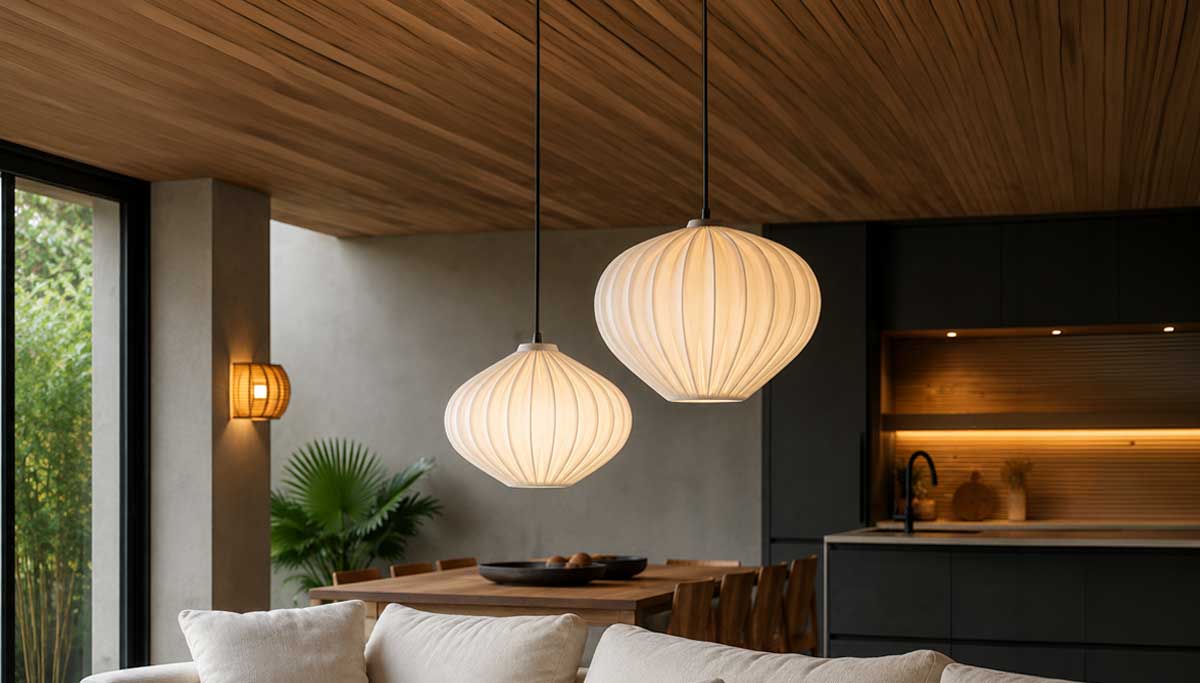
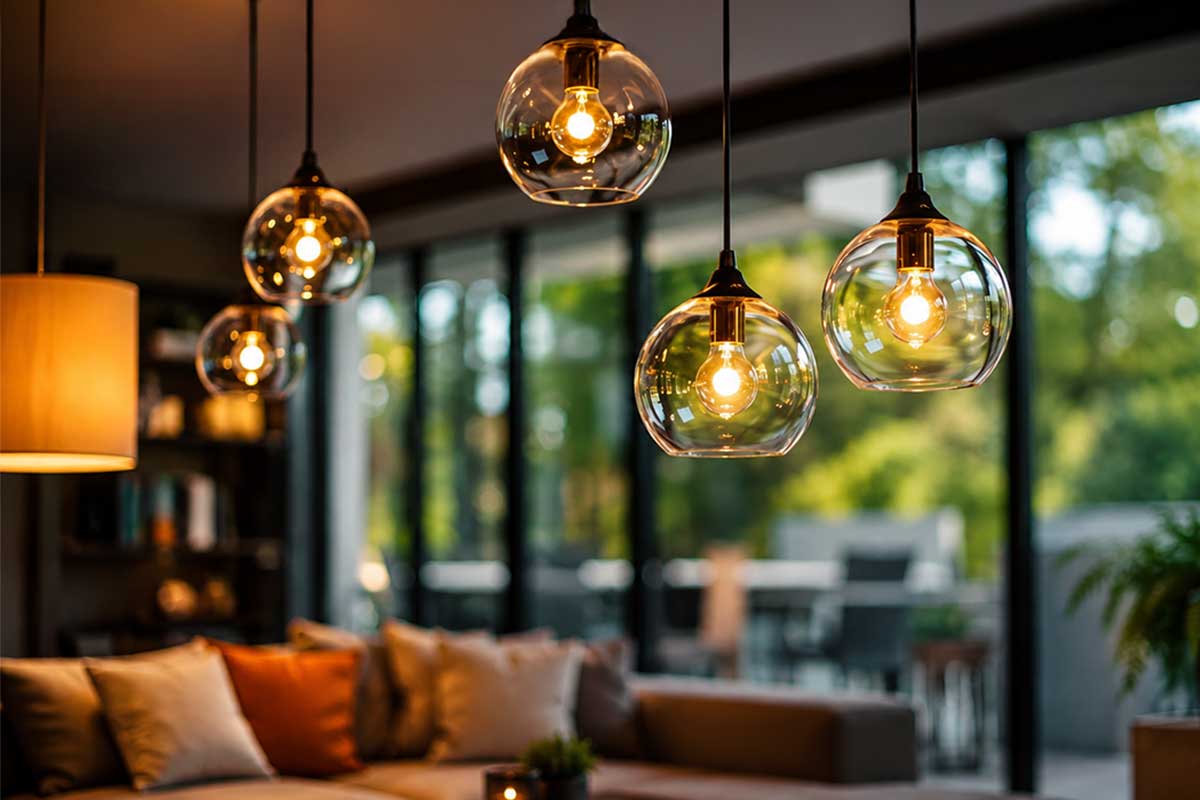
- pendant lights or designer lights
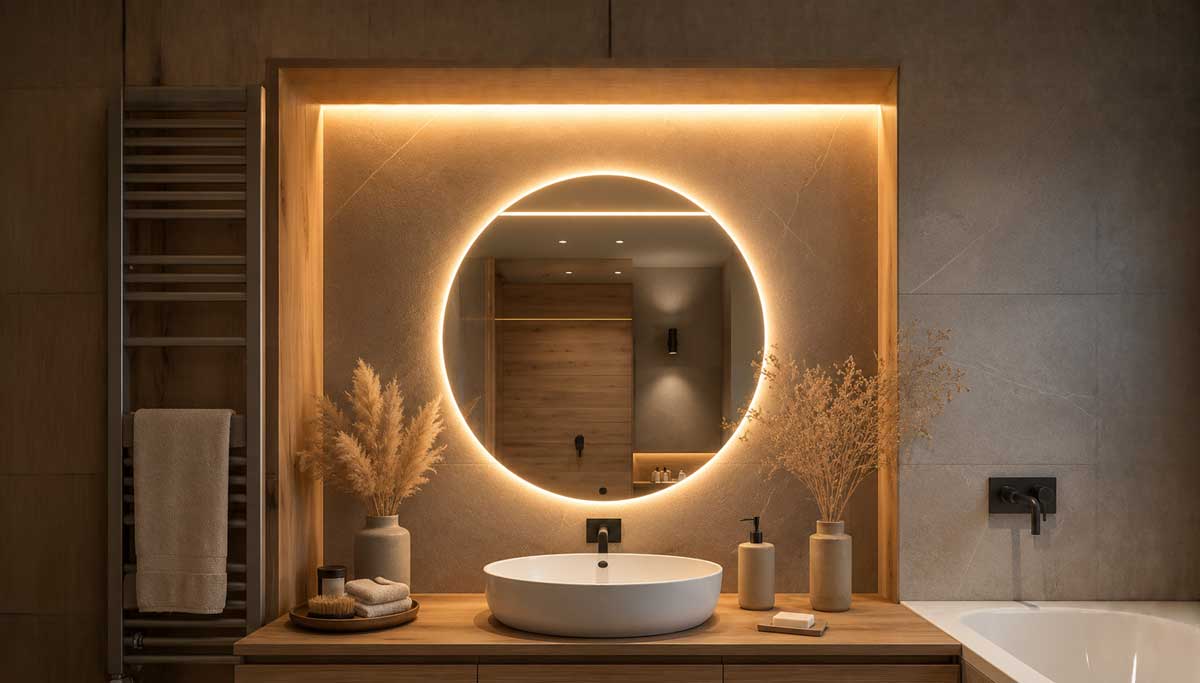
- indirect LED ceiling lighting
Ambient lighting should be soft enough to ensure that the artwork highlighted by accent lighting remains the main visual element.
Accent lighting
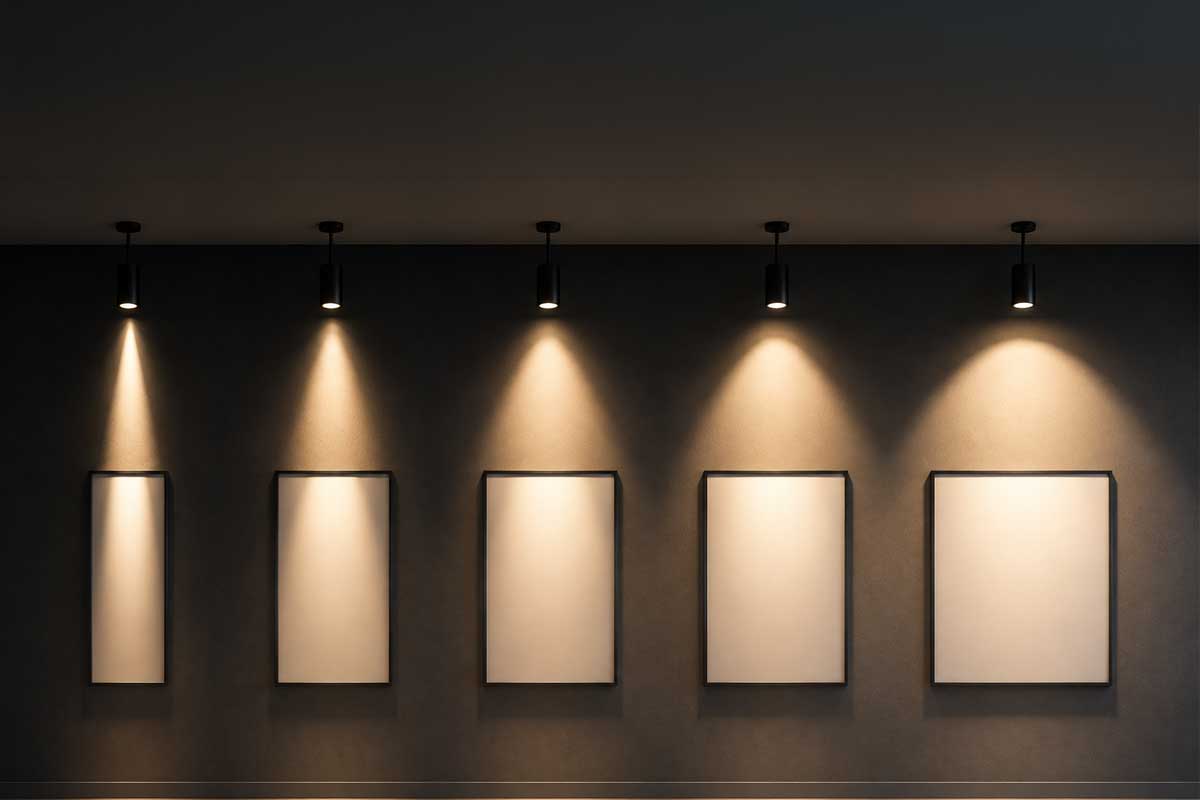
Accent lighting is the most important element in lighting an art gallery. It is designed specifically to highlight paintings, photographs, or sculptures.
Common accent lighting solutions include:
- adjustable track lighting
- recessed spotlights
- picture lighting installed above the artwork
- Directional LED spotlights
Accent lighting is usually more intense than ambient light to create contrast and draw attention to the artwork.

Work lighting
Although it is not always necessary, task lighting can be useful in certain situations. For example, if artwork is placed in a reading nook or studio, additional light may be needed for close inspection.
Table lamps or adjustable wall lamps can provide targeted lighting without disrupting the overall concept of the gallery.
Choosing the Right Light Temperature for Art
Color temperature is a key factor in art lighting because it affects how colors appear under artificial light. It is measured in Kelvins (K) and determines whether the light appears warm or cool.
Warm light (2700K–3000K)
Warm light creates a soft, yellowish tone that evokes a cozy and pleasant atmosphere. It is ideal for living spaces where comfort and relaxation are important.
Warm light is often used in living rooms and home galleries featuring traditional art or materials with warm tones, such as wood or textiles.
A common question is:
Why is warm light suitable for home use?
Warm light creates a relaxing atmosphere and complements natural materials in the interior, making it ideal for residential spaces.
Neutral light (3000K–4000K)
Neutral light provides a cleaner and more balanced tone. It is commonly used in galleries because it allows colors to appear more accurately and naturally.
Many professional galleries prefer neutral white light because it offers better color visibility without creating an overly harsh atmosphere.

The Importance of CRI in Art Lighting
Another important technical parameter in art lighting is the color rendering index (CRI).
CRI measures how accurately colors are rendered under artificial lighting compared to natural daylight. The value ranges from 0 to 100.
For lighting artwork, experts usually recommend a CRI of 90 or higher. A high CRI ensures that the colors in paintings and photographs appear natural and vivid.
Poor-quality lighting with a low CRI can distort colors and make art appear dull or inaccurate.
Using high-quality LED lights with a high CRI is one of the best ways to achieve a professional presentation of art in your home.
Practical tips for lighting art at home
Designing a home gallery requires careful placement of lights. Even small adjustments to the position of a light can significantly improve the visual impression.
A few practical tips:
- Use a 30° beam angle – This angle helps minimize glare and unwanted shadows.
- Install adjustable lighting – Track systems or movable spotlights allow for precise adjustment of the light direction.
- Do not place lights directly above eye level—this will prevent glare and improve viewing comfort.
- Use dimmable lighting – It allows you to adjust the brightness according to the time of day or the atmosphere.
- Choose LED lighting—LEDs produce minimal heat and are gentler on works of art than traditional light bulbs.

These techniques help create a professional presentation of art while maintaining a pleasant atmosphere.
Visual inspiration for your home gallery
Including visual examples in lighting guides helps readers better understand design principles.
Suitable images for this topic may include:
- Examples of track lighting used to illuminate paintings
- Living room walls arranged like a gallery
- diagrams showing the correct lighting angle
- accent lighting that highlights sculptures or decorations
These visuals provide inspiration and help you imagine how lighting can transform the presentation of art.
Conclusion
Lighting an art gallery in a home interior requires a careful balance between design, functionality, and the protection of the artwork. By combining ambient and accent lighting, you can create a visually appealing display that highlights the beauty of each piece.
Understanding technical factors such as color temperature and CRI, along with proper lighting placement, helps achieve a professional result. Well-designed lighting not only highlights art but also adds elegance and character to the interior.
With the right lighting strategy, any wall can be transformed into an elegant gallery that changes the atmosphere of your entire home.
Share:
Lighting design basics: what every architect should know
How to combine different types of lighting in the interior